
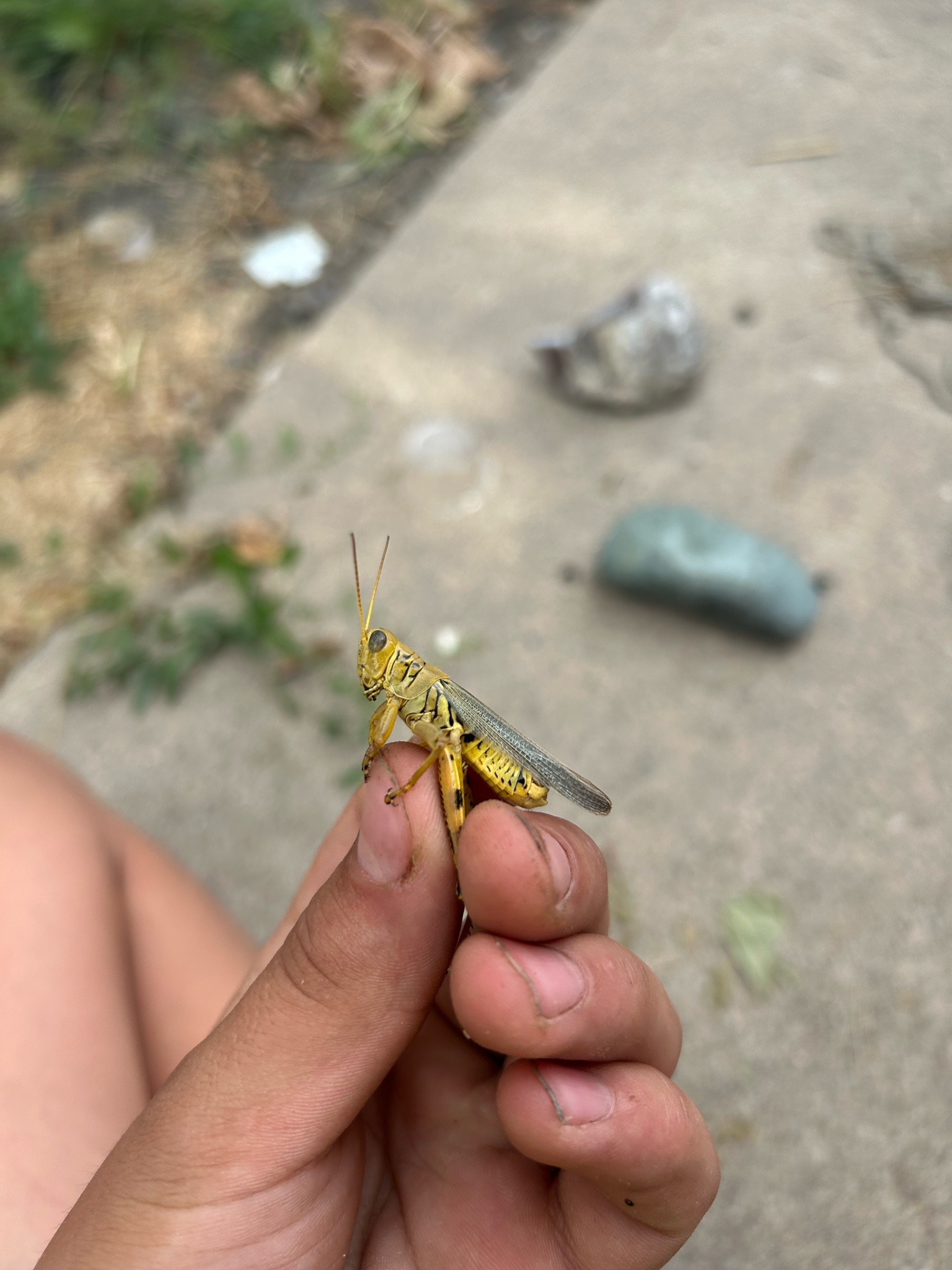
Community identification
Differential Grasshopper
Melanoplus differentialis
- Order & Family
- Orthoptera: Acrididae
- Size
- 1.5 to 2 inches (38 to 50 mm)
Natural Habitat
Grasslands, open fields, agricultural lands, overgrown weeds, gardens, and urban areas
Diet & Feeding
Herbivorous; feeds on a wide variety of vegetation including grasses, crops (corn, soybeans, cotton), weeds, and garden plants
Behavior Patterns
Diurnal species active during warm summer months; undergoes incomplete metamorphosis (egg, nymph, adult); powerful jumpers capable of flight; can form large swarms in peak populations
Risks & Benefits
Risks: Can cause significant agricultural and garden damage as a major crop pest during population outbreaks. Benefits: Serves as a vital food source for birds, small mammals, reptiles, and spiders, contributing to ecosystem food webs.