
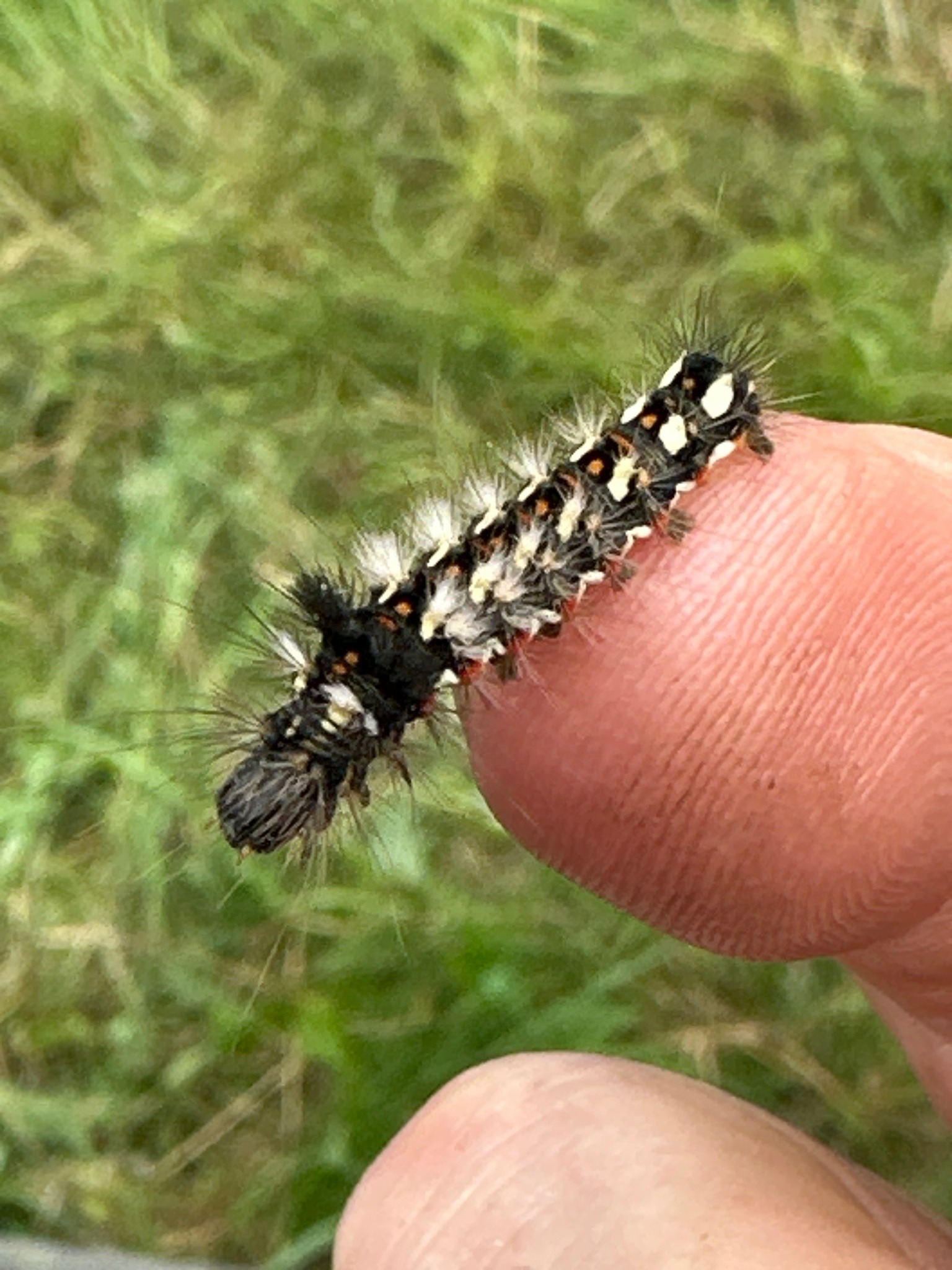
Community identification
White-marked tussock moth caterpillar
Orgyia leucostigma (likely)
- Order & Family
- Lepidoptera; Erebidae (formerly Lymantriidae)
- Size
- Larvae typically reach 25–35 mm (1–1.4 in) long.
Natural Habitat
Woodlands, gardens, parks, and urban landscapes across much of eastern and central North America, especially on deciduous trees and shrubs.
Diet & Feeding
The caterpillar feeds on a wide range of hardwoods, ornamentals, and shrubs, including oak, maple, apple, and willow.
Behavior Patterns
Solitary, active mostly during the day, and develops through several hairy larval stages before pupating in a loose silk cocoon. Adults are sexually dimorphic: females are wingless, while males fly and locate females by pheromones.
Risks & Benefits
Barbed hairs can cause itchy dermatitis or eye and respiratory irritation; avoid handling. It is a native herbivore and occasional pest, while also serving as prey for birds and parasitoids.