
Community identification
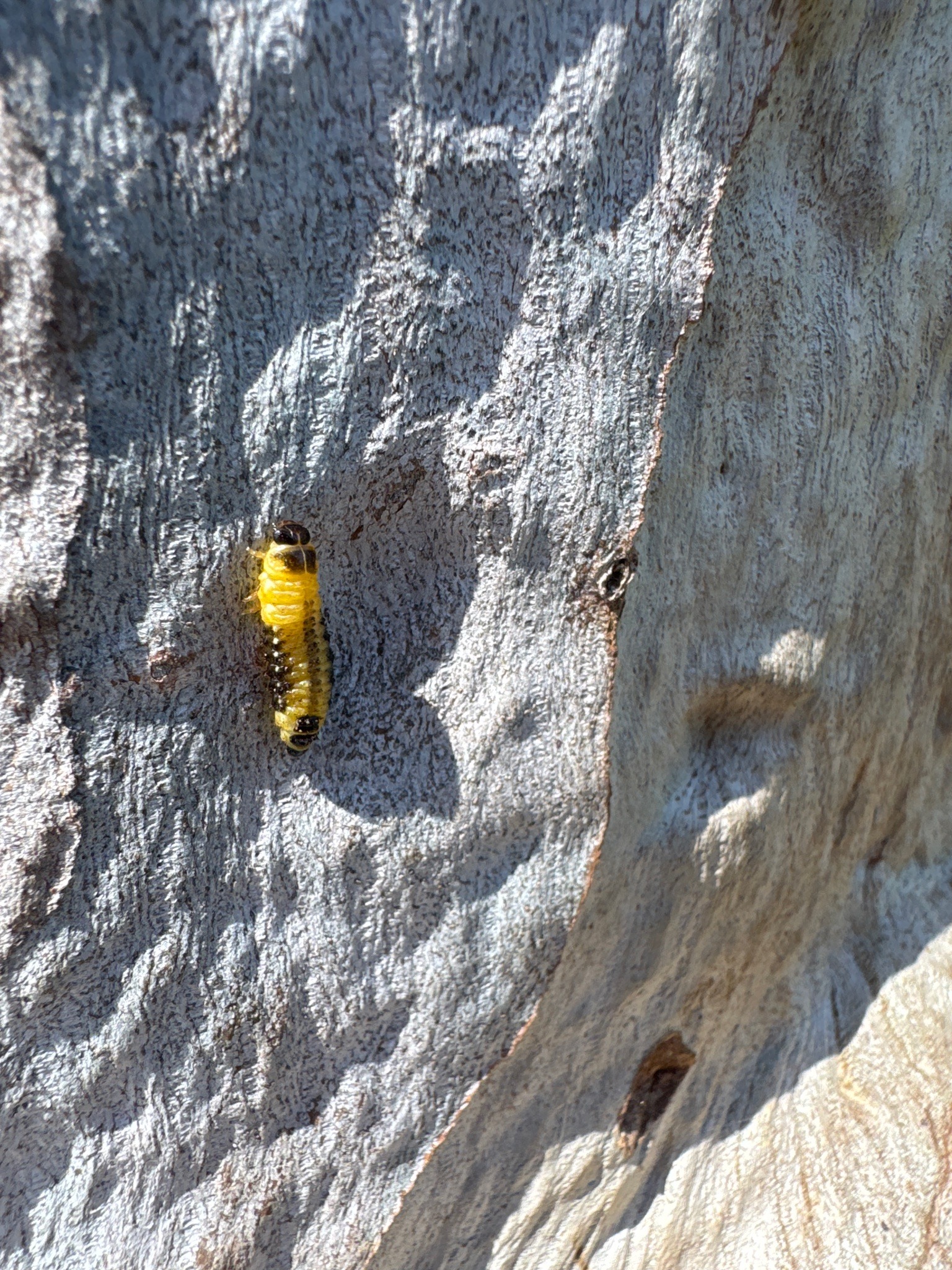
Elm sawfly larva (probable)
Cimbex americana
- Order & Family
- Hymenoptera; Cimbicidae
- Size
- Larvae typically reach about 25–35 mm (1–1.4 in) long.
Natural Habitat
Larvae occur on the foliage of elm, willow, and related deciduous trees, often wandering on trunks when mature. Adults frequent woodland edges and gardens.
Diet & Feeding
The caterpillar-like larva chews leaves, sometimes causing noticeable defoliation on individual branches. Adults feed mainly on plant fluids or may feed little.
Behavior Patterns
The larva curls or drops when disturbed and eventually enters soil or leaf litter to form a cocoon. Despite its caterpillar appearance, it has several pairs of abdominal prolegs and is a sawfly larva, not a moth caterpillar.
Risks & Benefits
It is harmless to people and does not sting in the larval stage. It contributes to food webs, though heavy local infestations can stress young or ornamental trees.