
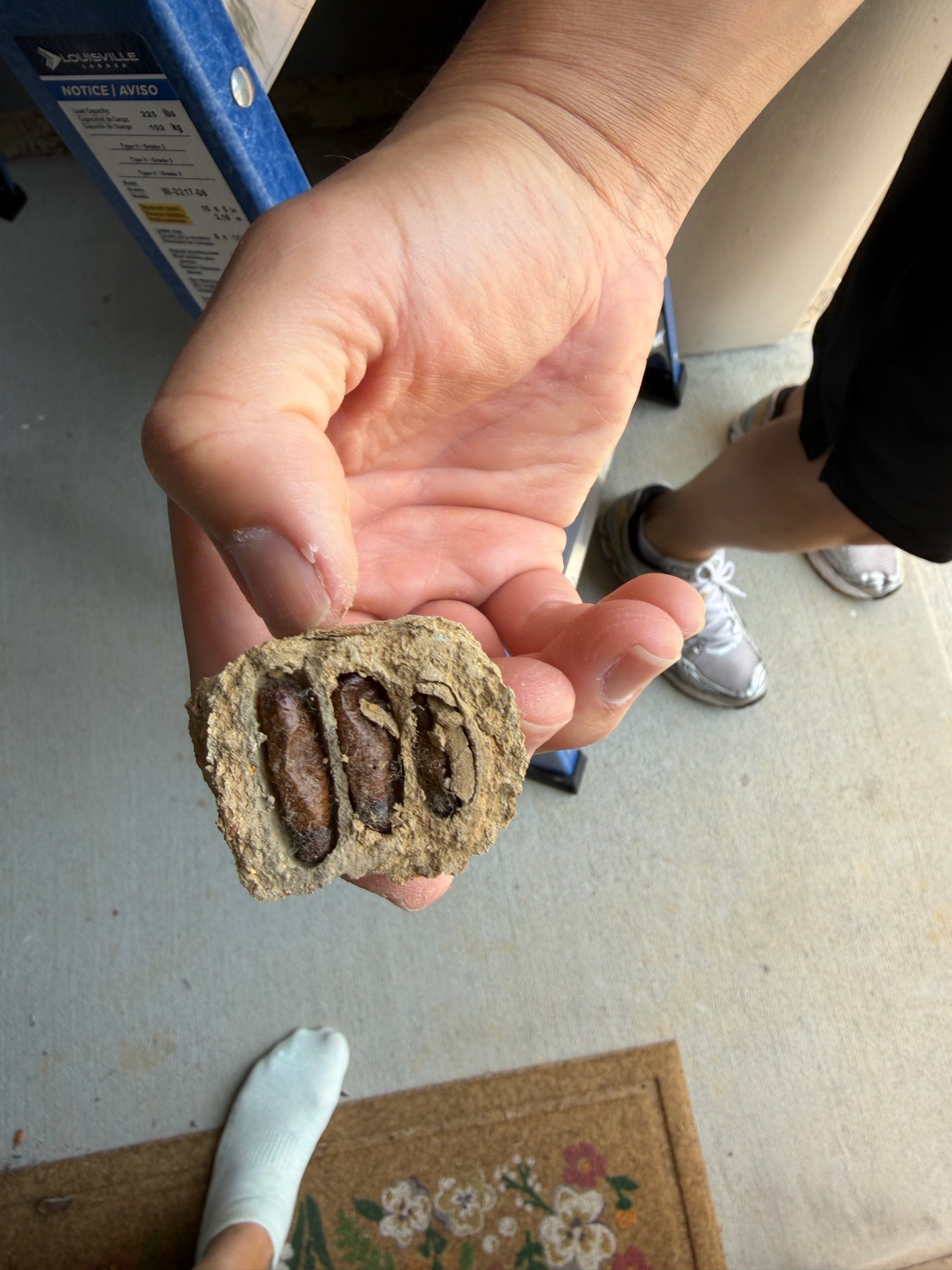
Paper wasp nest with developing larvae
Polistes spp. (likely a paper wasp)
- Order & Family
- Hymenoptera; Vespidae
- Size
- Adults are typically 12–25 mm long; mature larvae are roughly 10–20 mm, depending on species and stage.
Natural Habitat
Nests occur under eaves, in sheltered wall cavities, garages, porches, and other protected structures. Paper wasps are common in temperate and subtropical regions.
Diet & Feeding
Larvae eat masticated insects and spiders supplied by adult workers. Adults mainly consume nectar, fruit juices, and other sugary liquids.
Behavior Patterns
Females build open-comb nests from chewed wood fibers mixed with saliva; the pictured nest appears to contain capped pupal cells and larvae. Colonies are seasonal, with new queens overwintering and founding nests in spring.
Risks & Benefits
Adults can sting repeatedly when the nest is disturbed, posing a greater risk to allergic individuals. They benefit ecosystems by controlling caterpillars and other insect pests and by pollinating flowers.