
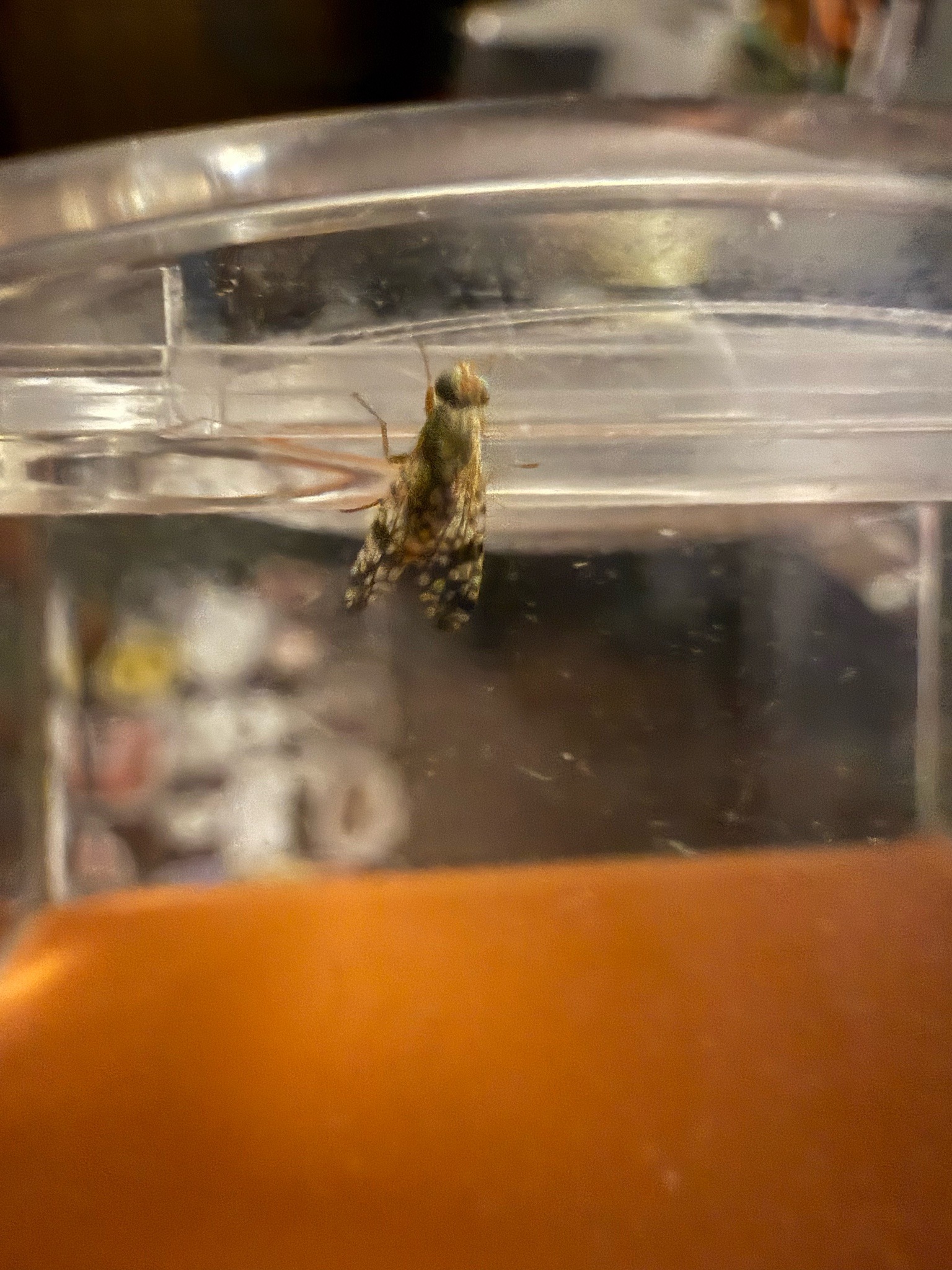
Community identification
Deer fly
Chrysops spp.
- Order & Family
- Order: Diptera, Family: Tabanidae
- Size
- 6 to 12 millimeters in length
Natural Habitat
Woodlands, wetlands, and areas near water sources such as streams, ponds, and marshes.
Diet & Feeding
Adult females feed on vertebrate blood (including humans and livestock) for egg production, while both males and females feed on flower nectar and plant secretions for energy.
Behavior Patterns
Active during warm daylight hours, females are persistent and painful biters that target the head and neck of hosts. Larva develop in damp soil or mud near water, feeding on organic matter or other small organisms.
Risks & Benefits
Risks include painful bites that can cause swelling and irritation, and they are potential vectors for certain livestock and wildlife diseases. Benefits include serving as a food source for birds, spiders, and other predators in the ecosystem.