
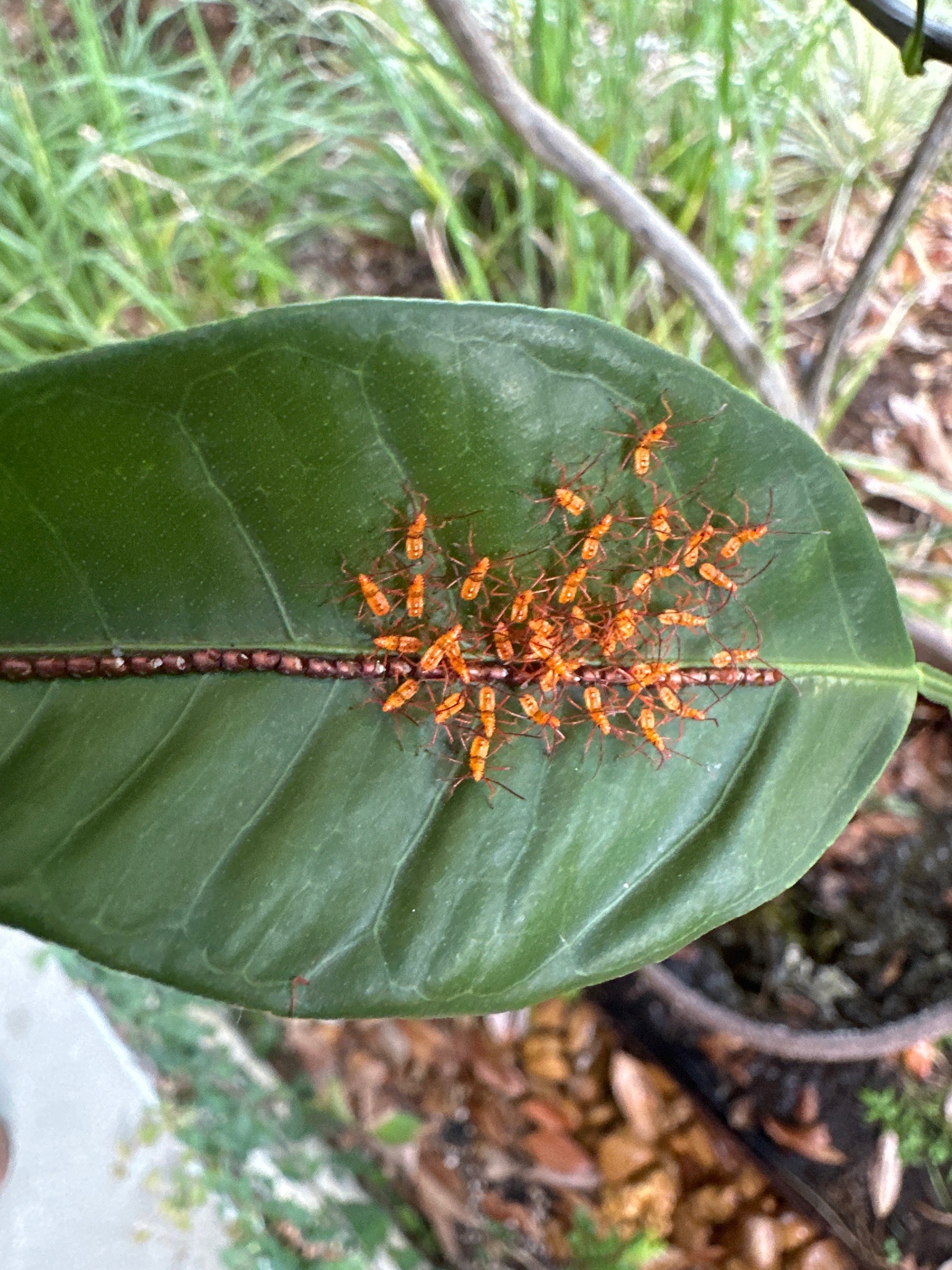
Milkweed bug (likely small milkweed bug)
Lygaeus kalmii
- Order & Family
- Hemiptera; family Lygaeidae
- Size
- Adults are about 10–13 mm long; nymphs are smaller and wingless.
Natural Habitat
Open, sunny habitats with milkweed and related plants, including meadows, roadsides, gardens, and woodland edges. The pictured aggregation may be on a non-host plant temporarily.
Diet & Feeding
Nymphs and adults pierce seeds and other tissues of milkweeds (Asclepias) and sometimes other plants, sucking plant juices. They may also consume small insects or sap opportunistically.
Behavior Patterns
Often aggregate in large groups, especially as nymphs, and use their orange-and-black coloration as a warning signal after sequestering milkweed toxins. Adults overwinter in sheltered vegetation or leaf litter.
Risks & Benefits
They are not dangerous to people and do not bite defensively. Usually minor garden pests, they also serve as prey for birds and other predators; their coloration can indicate chemical defense.