
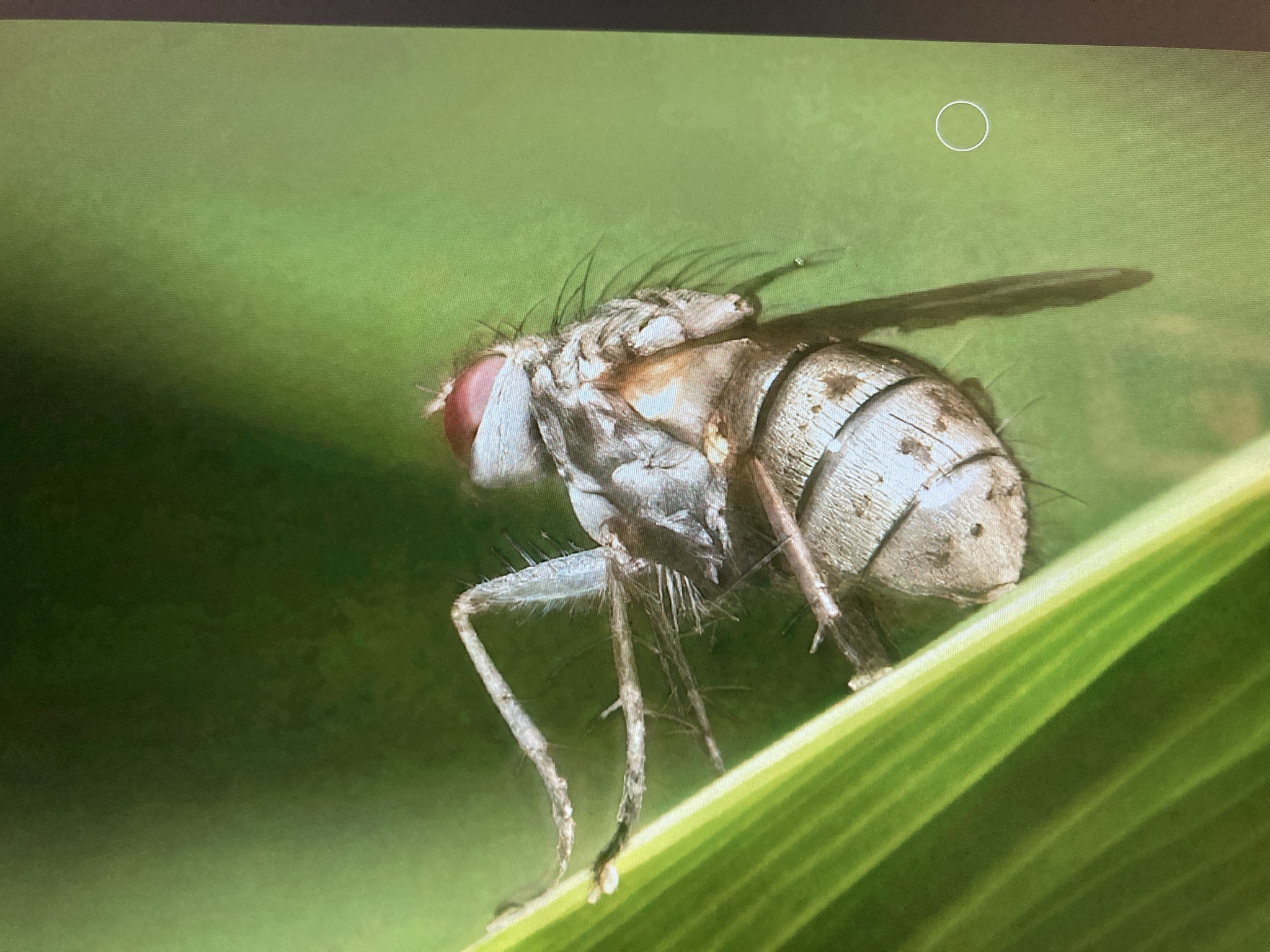
Bottle fly (greenbottle or bluebottle fly)
Lucilia spp. (greenbottle flies) or Calliphora spp. (bluebottle flies)
- Order & Family
- Diptera, Calliphoridae
- Size
- About 6–14 mm (0.24–0.55 in) long, depending on species.
Natural Habitat
Found worldwide around carrion, animal waste, garbage, flowering plants, and buildings. Adults commonly rest on vegetation and sunlit surfaces.
Diet & Feeding
Adults feed on liquids from carrion, feces, garbage, nectar, and other decaying organic matter. Larvae consume decaying animal tissue and occasionally wounds.
Behavior Patterns
Strong fliers attracted to odors of decomposition; adults may overwinter or shelter indoors. Females lay eggs on carrion or organic refuse, and larvae develop through three maggot stages before pupating.
Risks & Benefits
They can mechanically transmit pathogens and contaminate food, though they are not usually aggressive toward people. Larvae rapidly recycle carcasses and waste; some species are used medically to clean necrotic wounds.