
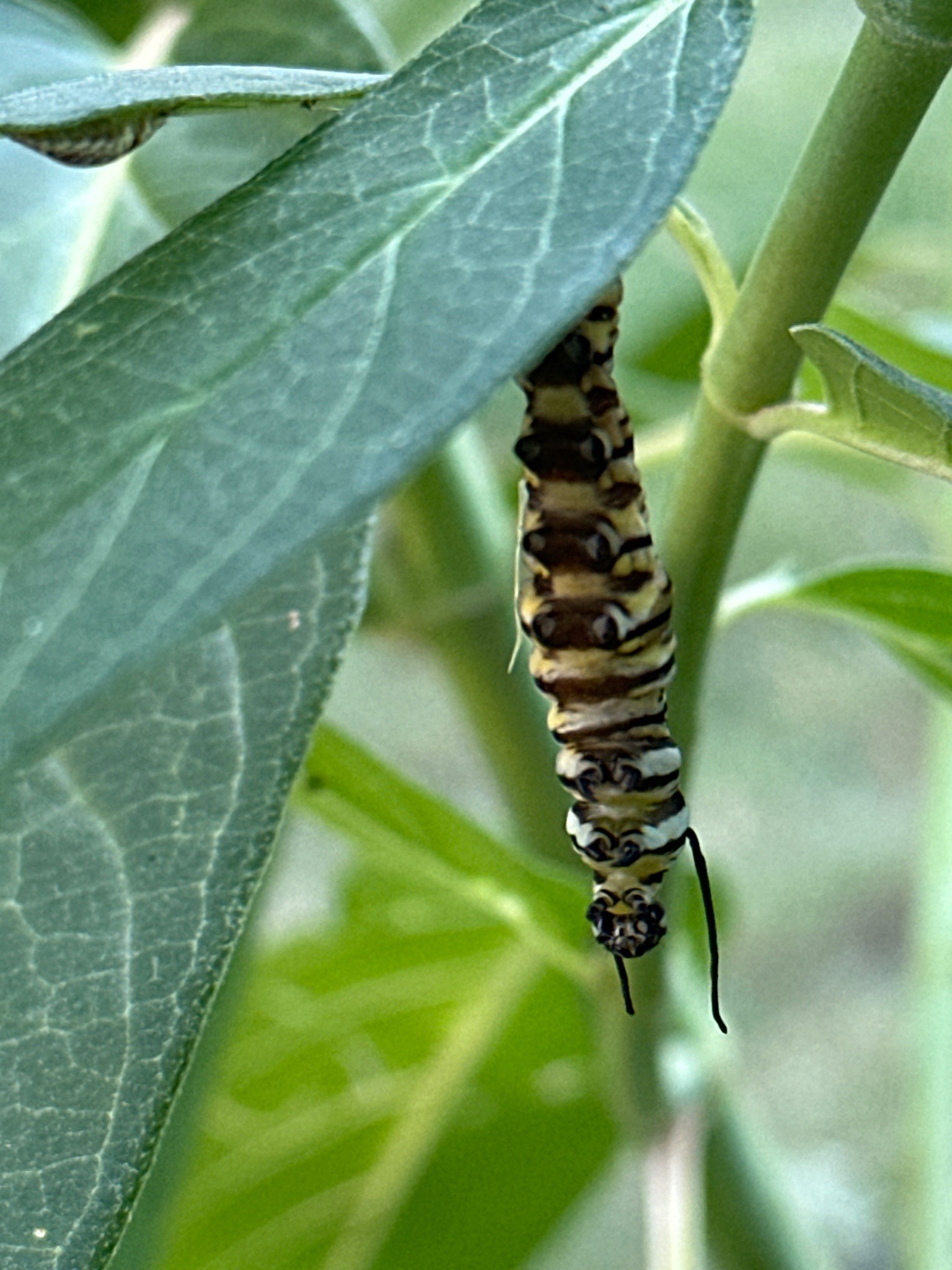
Monarch caterpillar (monarch larva)
Danaus plexippus
- Order & Family
- Lepidoptera; Nymphalidae
- Size
- About 2–50 mm (0.08–2 in), depending on instar; mature caterpillars are typically 35–50 mm long.
Natural Habitat
Milkweed plants in meadows, prairies, gardens, roadsides, and other open habitats throughout the Americas. Larvae remain on or near milkweed.
Diet & Feeding
Feeds almost exclusively on milkweeds (Asclepias species), consuming leaves and occasionally flowers. Milkweed toxins are sequestered in its body.
Behavior Patterns
Passes through five larval instars, molting between each, then forms a chrysalis and emerges as an adult butterfly. Its conspicuous stripes and paired filaments advertise chemical defenses; it may drop or thrash when disturbed.
Risks & Benefits
Harmless to people when handled normally, though milkweed compounds make it unsuitable for ingestion. It is an important pollinator as an adult and a major prey item despite its defenses; monarch populations face habitat loss and pesticide exposure.