
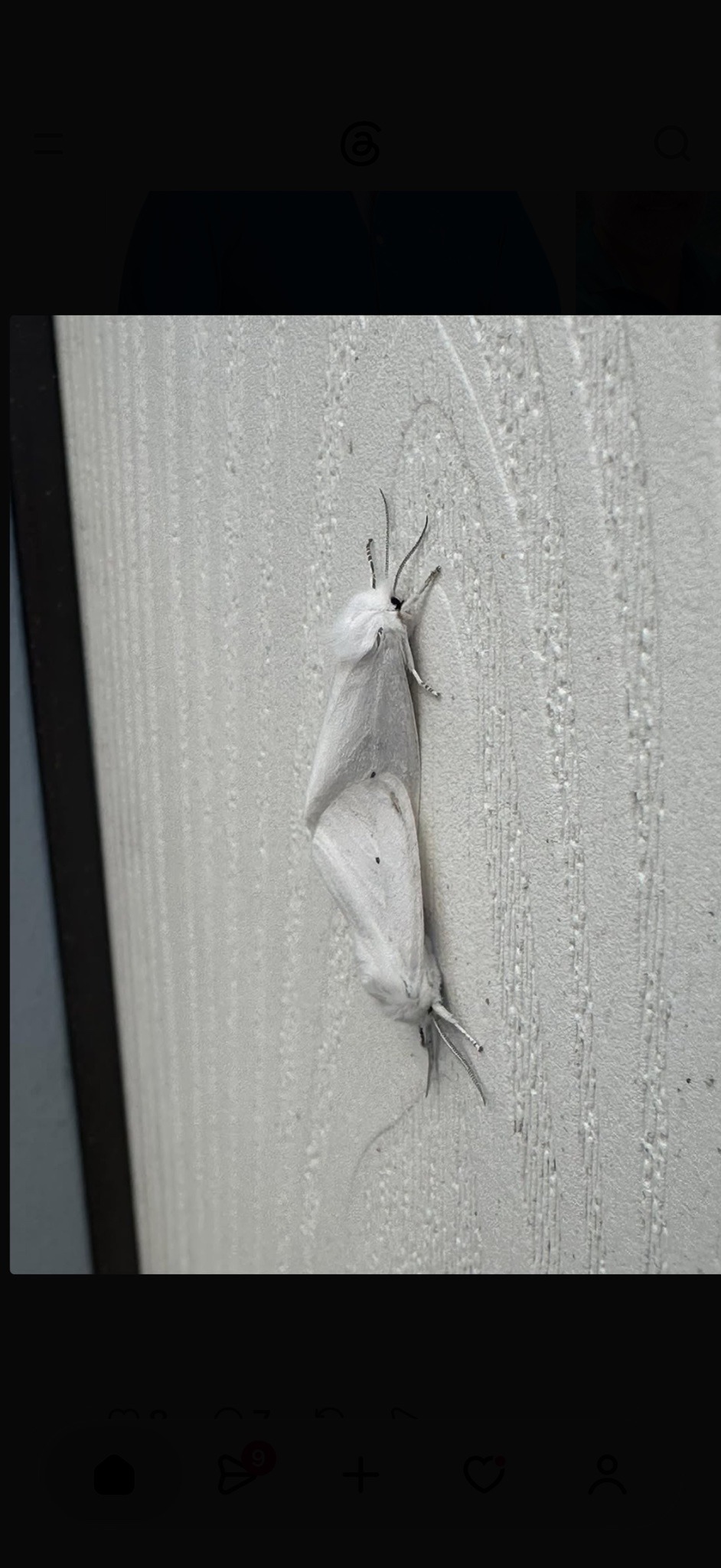
Community identification
White plume moth
Likely *Pterophorus pentadactyla*
- Order & Family
- Lepidoptera; Pterophoridae
- Size
- Wingspan typically 25–35 mm (about 1–1.4 in). Its wings are deeply divided into narrow, feather-like lobes.
Natural Habitat
Gardens, woodland edges, hedgerows, and other areas with herbaceous plants; adults often rest on walls, fences, and buildings.
Diet & Feeding
Larvae feed mainly on bindweed (*Convolvulus* and related plants), consuming leaves and flowers. Adults generally do not feed or take only small amounts of nectar.
Behavior Patterns
Primarily nocturnal, with a weak, fluttering flight; it rests with wings folded into a distinctive plume shape. Several generations may occur in warmer regions, and larvae pupate on or near host plants.
Risks & Benefits
Harmless to people, pets, and buildings. Larvae can damage bindweed and other ornamental plants, while adults contribute modestly to pollination and local food webs.