
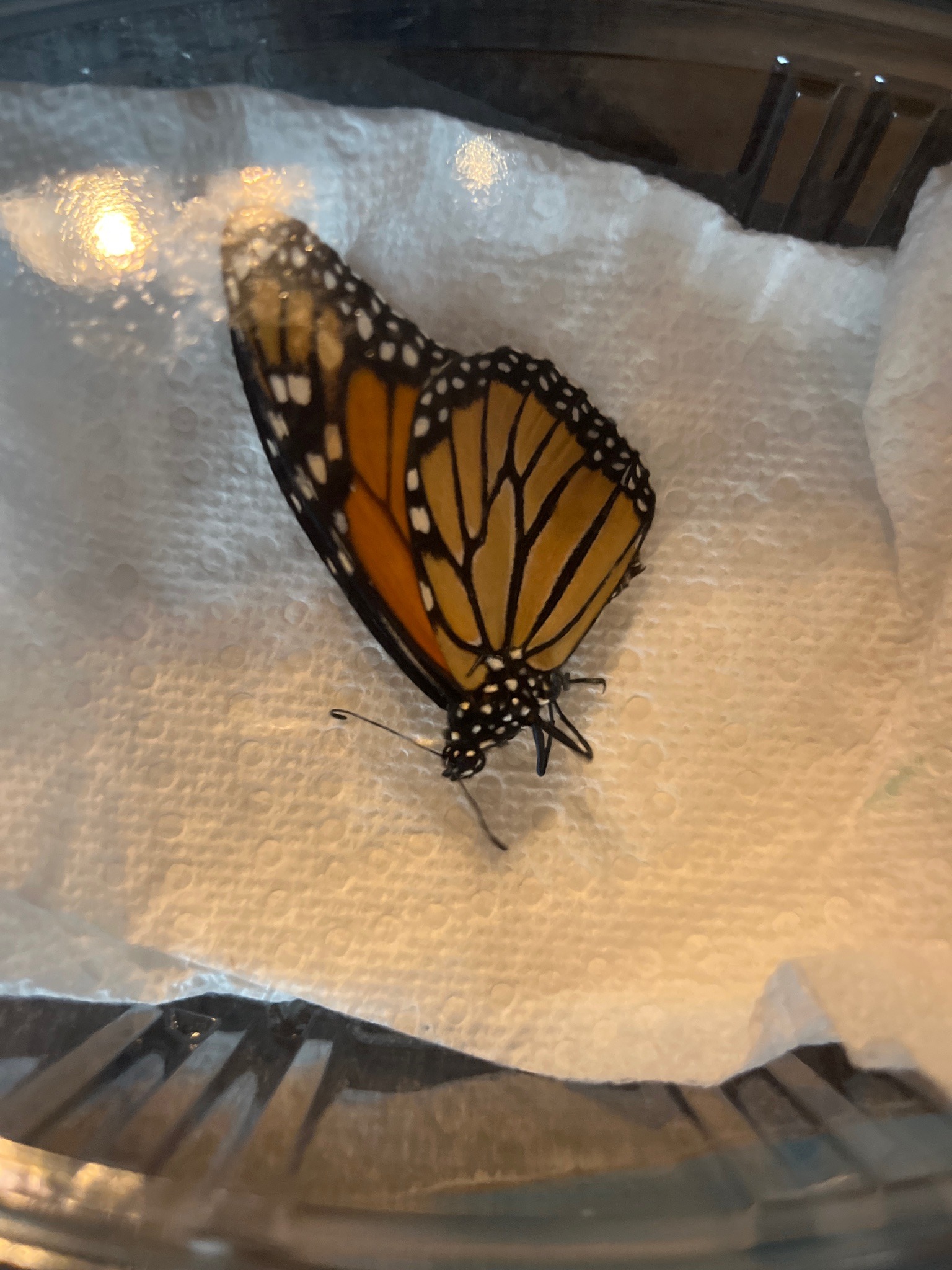
Monarch butterfly
Danaus plexippus
- Order & Family
- Lepidoptera: Nymphalidae
- Size
- Wingspan of 8.9–10.2 cm (3.5–4.0 inches)
Natural Habitat
Fields, meadows, weed patches, roadsides, and urban gardens containing milkweed species
Diet & Feeding
Caterpillars feed exclusively on milkweed leaves (Asclepias spp.); adults feed on nectar from a wide variety of flowers including milkweed, coneflowers, and goldenrod.
Behavior Patterns
Famous for their multi-generational annual migration across North America to overwintering grounds in Mexico and coastal California. Adults undergo complete metamorphosis (egg, larva, pupa, adult). They sequester cardiac glycosides from milkweed plants during the larval stage, making them foul-tasting and poisonous to predators.
Risks & Benefits
Harmless and non-dangerous to humans, though poisonous if eaten by pets or predators. They are important natural pollinators and serve as an iconic bioindicator species for habitat conservation.