
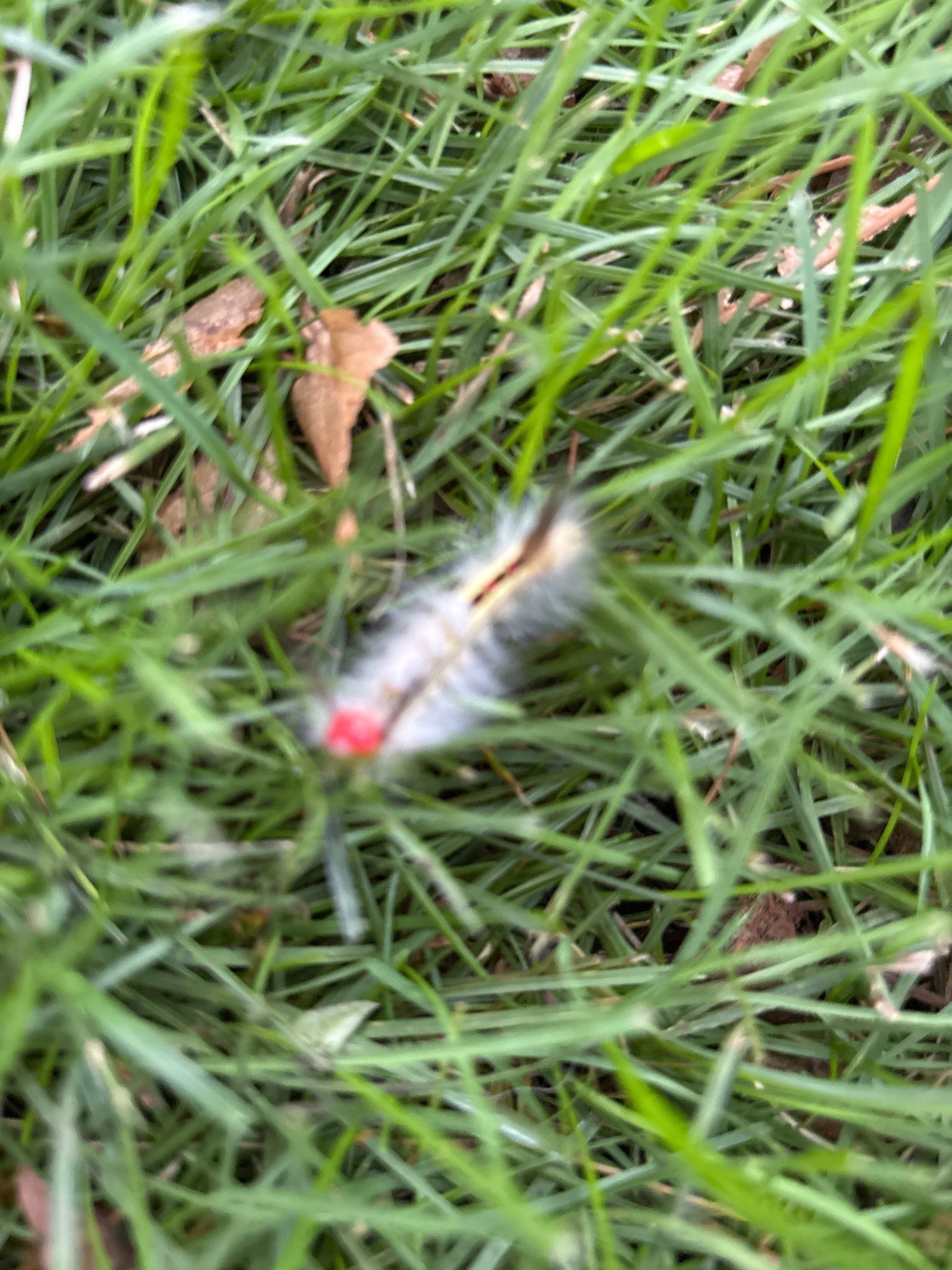
White-marked tussock moth caterpillar (likely)
Orgyia leucostigma
- Order & Family
- Lepidoptera; Erebidae (subfamily Lymantriinae)
- Size
- About 25–35 mm (1–1.4 in) long when mature.
Natural Habitat
Gardens, lawns, forests, and landscaped areas across much of eastern and central North America. Larvae feed on many deciduous trees, shrubs, and ornamentals.
Diet & Feeding
Caterpillars chew foliage from a broad range of host plants, including oak, maple, fruit trees, and ornamentals. Adults generally do not feed.
Behavior Patterns
Larvae are active mostly during warmer months and may wander on vegetation or the ground before pupating. Their conspicuous hairs and red head are characteristic; females are wingless, while males are winged.
Risks & Benefits
Barbed urticating hairs can cause itchy, irritating rashes or eye and respiratory irritation, especially on sensitive people. They are native herbivores and provide food for birds and other predators, though outbreaks can defoliate plants.