
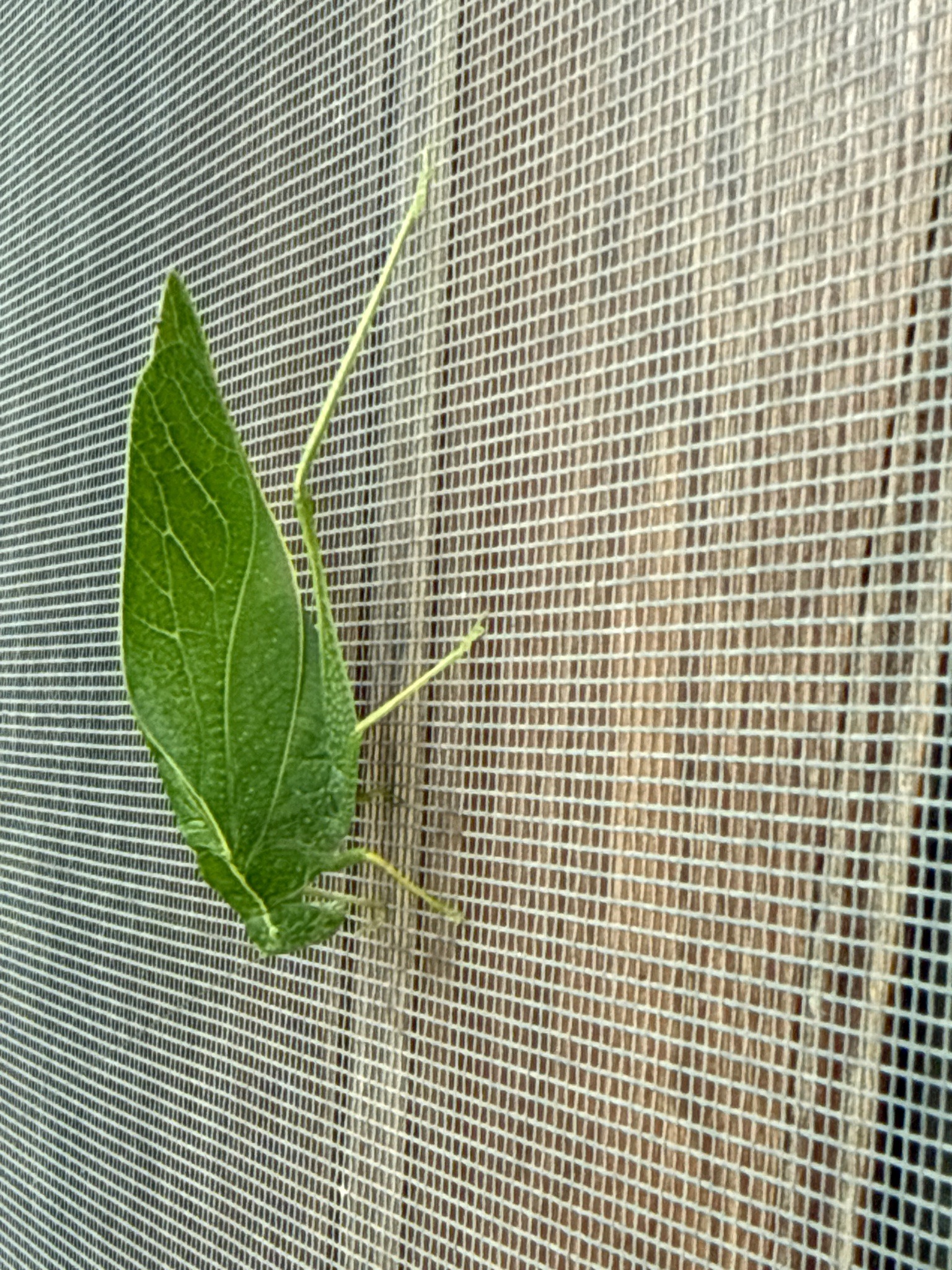
Community identification
Katydid (likely a conehead katydid)
Neoconocephalus sp.
- Order & Family
- Orthoptera; Tettigoniidae
- Size
- Typically 30–50 mm (1.2–2 in) long, excluding the antennae; antennae may exceed body length.
Natural Habitat
Vegetation, grasslands, woodland edges, gardens, and areas near lights; this individual is resting on a screened surface.
Diet & Feeding
Primarily grasses and other plant material, with occasional insects or animal matter. Feeding is usually nocturnal.
Behavior Patterns
Nocturnal and strongly camouflaged among leaves and grass; males produce loud calling songs by rubbing their wings. Females insert eggs into plant tissue or soil, and nymphs resemble smaller wingless adults.
Risks & Benefits
Harmless to people and not known to transmit disease. It contributes to food webs and may occasionally damage grasses or garden plants when abundant.