
Community identification
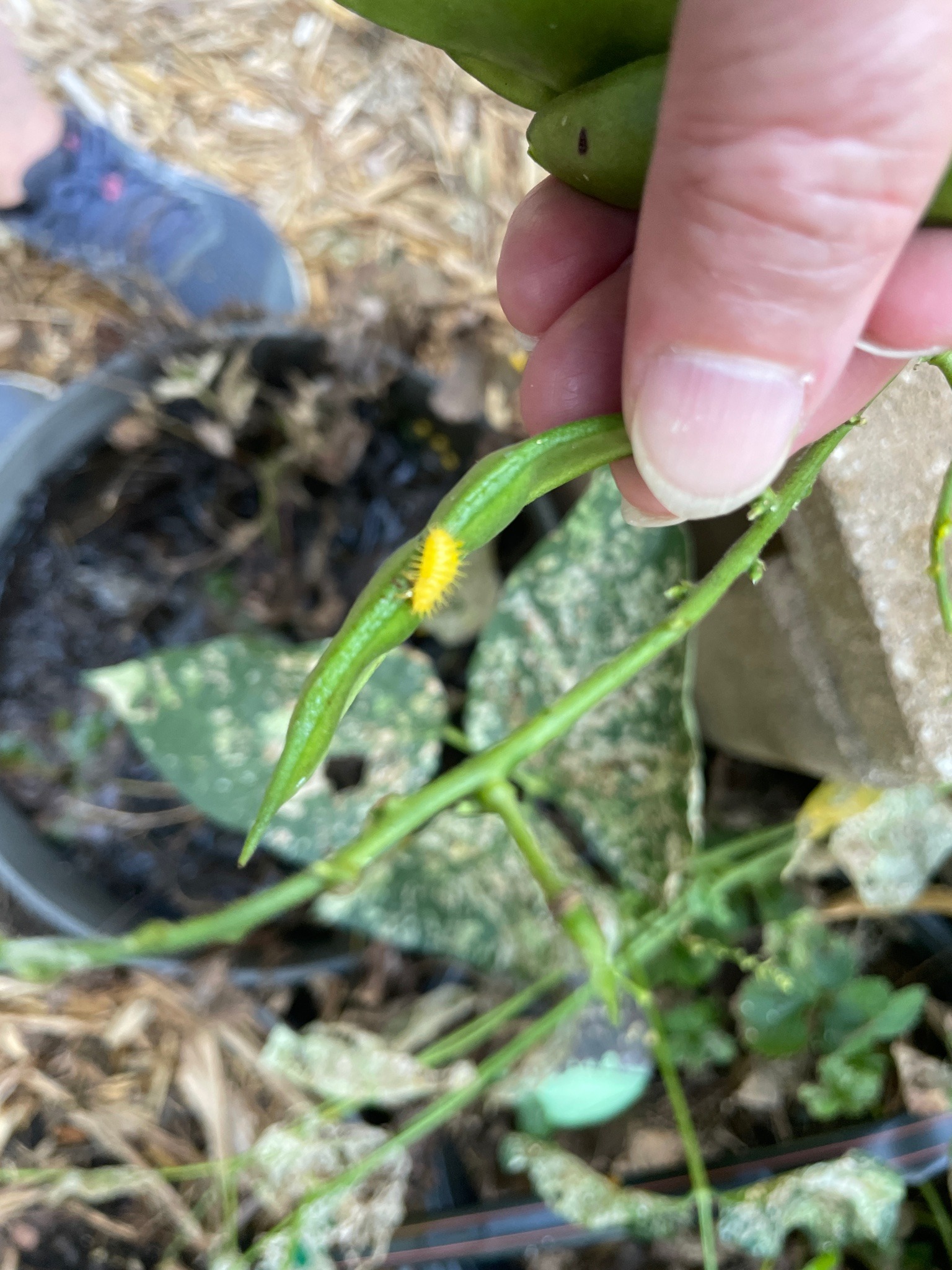
Aphid (likely oleander aphid)
Aphis nerii
- Order & Family
- Hemiptera; Aphididae
- Size
- Adults are about 1.5–2.5 mm long; the yellow, elongated insects shown are likely nymphs or wingless adults.
Natural Habitat
Found in colonies on tender stems, leaf undersides, and flower buds of milkweed-family plants, including oleander and some succulents. Common in gardens and warm climates.
Diet & Feeding
Feeds by piercing plant tissue and sucking phloem sap. It may cause curling, yellowing, stunted growth, and sticky honeydew buildup.
Behavior Patterns
Usually forms dense, sedentary colonies and reproduces rapidly by live birth, often without males. Winged forms develop when colonies become crowded or host plants decline, dispersing to new plants.
Risks & Benefits
Generally harmless to humans and not dangerous to handle, but heavy infestations weaken ornamental plants and promote sooty mold. They provide prey for lady beetles, lacewings, hoverfly larvae, and parasitoid wasps.