
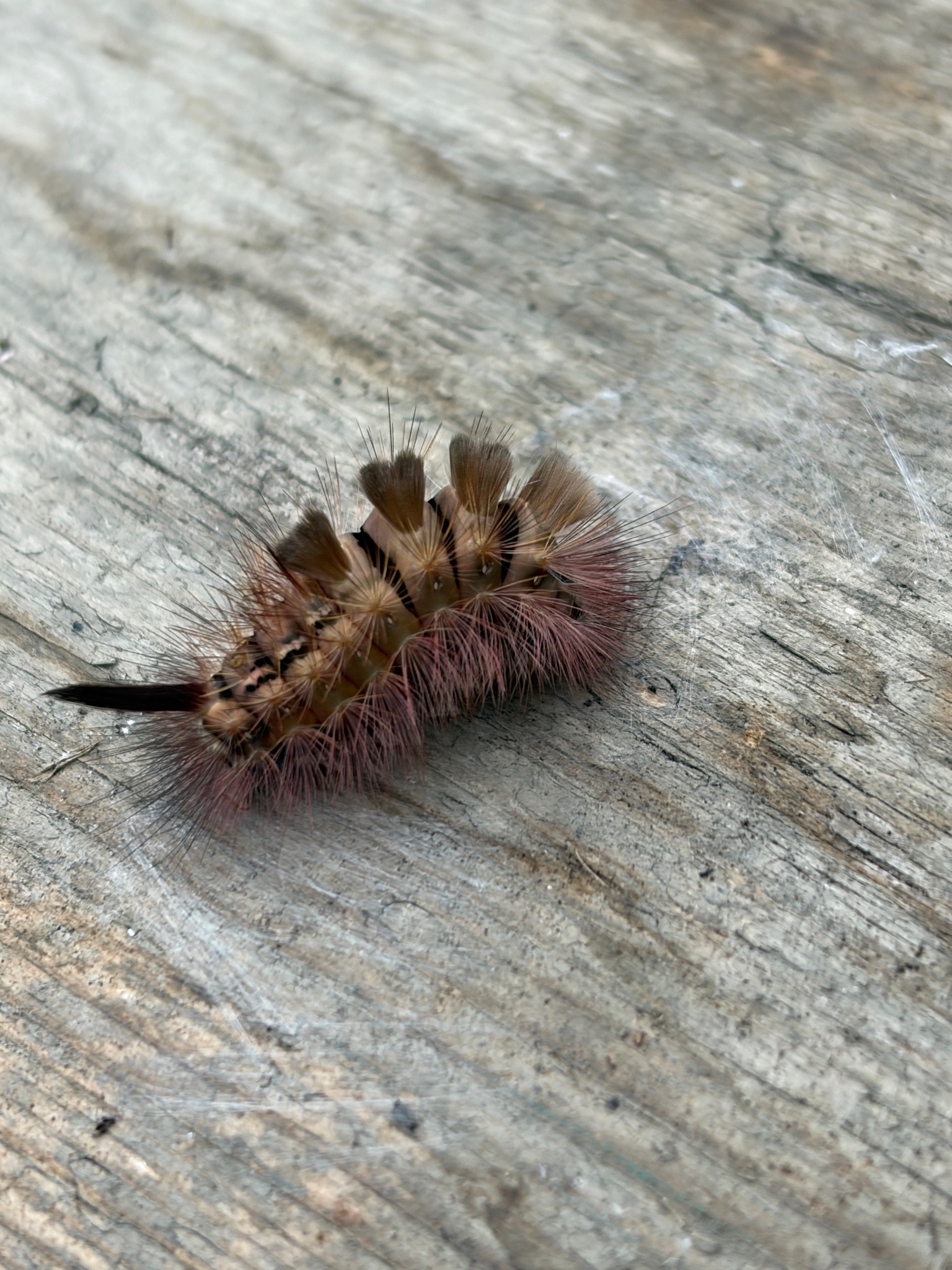
White-marked tussock moth caterpillar
Orgyia leucostigma
- Order & Family
- Lepidoptera; family Erebidae, subfamily Lymantriinae
- Size
- Larvae typically reach 25–35 mm (1–1.4 in) long.
Natural Habitat
Forests, woodland edges, gardens, parks, and urban landscapes across much of eastern and central North America. Larvae feed on deciduous and some coniferous trees and shrubs.
Diet & Feeding
Caterpillars chew leaves of many trees and shrubs, including oak, maple, birch, willow, and fruit trees. Adults do not feed; females are wingless and males consume little or no food.
Behavior Patterns
The hairy larva is recognized by its red head, paired hair tufts, and dark dorsal brushes. It pupates in a silken cocoon; adults emerge in summer, mate, and females deposit egg masses on or near the cocoon.
Risks & Benefits
Barbed hairs can cause itchy, painful dermatitis or eye irritation, so avoid handling. It is a native herbivore and food source for predators, though outbreaks can defoliate ornamental and forest trees.