
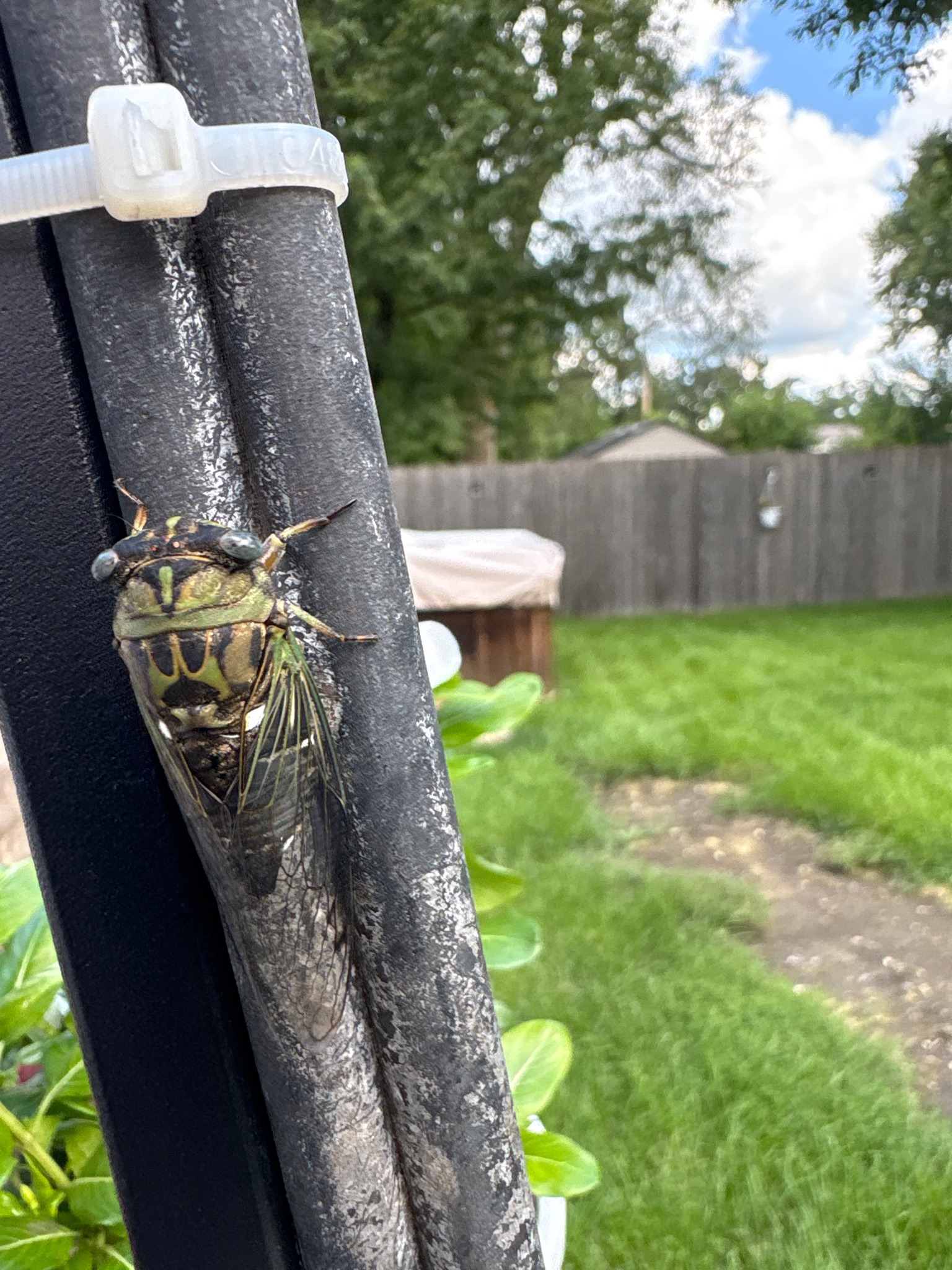
Community identification
Dog-day cicada
Neotibicen canicularis (likely)
- Order & Family
- Hemiptera; Cicadidae
- Size
- About 25–35 mm (1–1.4 in) long, excluding wings; wingspan is roughly 50–75 mm (2–3 in).
Natural Habitat
Woodlands, suburban yards, and landscapes across much of North America, especially where mature trees provide roots and branches.
Diet & Feeding
Nymphs suck xylem fluids from tree roots underground; adults drink small amounts of plant fluid from twigs and generally do not damage established plants.
Behavior Patterns
Nymphs spend several years underground, then emerge, molt, and call loudly from trees during summer. Adults mate, lay eggs in woody twigs, and die within weeks.
Risks & Benefits
Harmless to people and pets and they do not bite or sting. They serve as prey for wildlife, aerate soil as nymphs, and contribute nutrients after mass emergences.