
Community identification
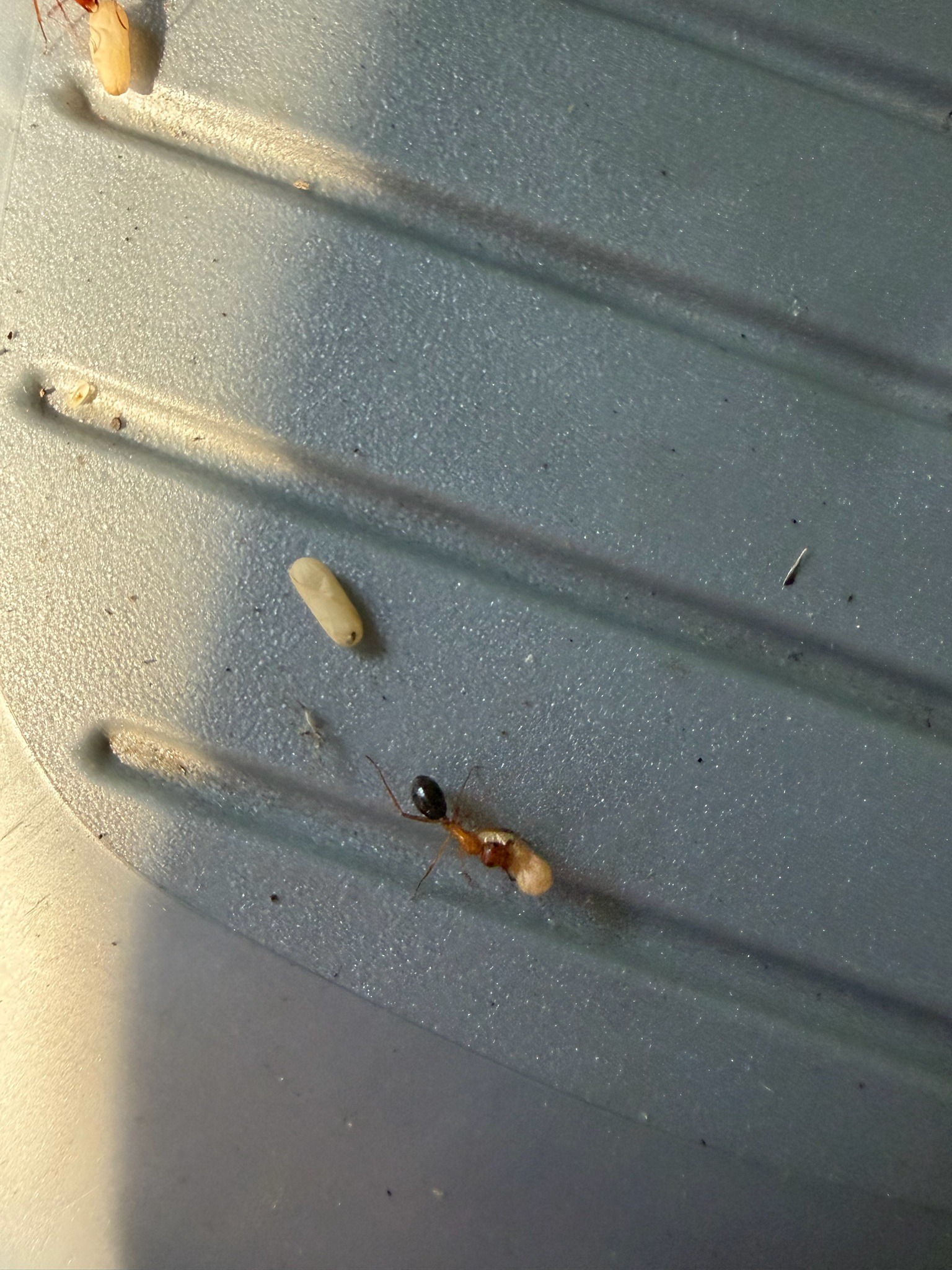
Ant alate (winged reproductive), with nearby ant pupae
Formicidae; species cannot be determined reliably from this image
- Order & Family
- Hymenoptera, family Formicidae
- Size
- Typically 2–15 mm for workers; reproductive ants are often larger, depending on species.
Natural Habitat
Nests in soil, wood, wall voids, or other sheltered sites; the pictured individuals appear displaced from a colony.
Diet & Feeding
Workers commonly eat sugars, nectar, honeydew, seeds, insects, and scavenged food. Larvae are fed by workers; pupae do not feed.
Behavior Patterns
Colonial and highly social, with workers caring for brood and reproductives producing new colonies. Winged adults commonly swarm for mating, after which queens shed their wings and establish nests.
Risks & Benefits
Most ants are harmless and beneficial predators, scavengers, soil mixers, and seed dispersers. Some species can sting or bite, contaminate food, or damage wood and structures; species-level identification is needed to assess risk.