
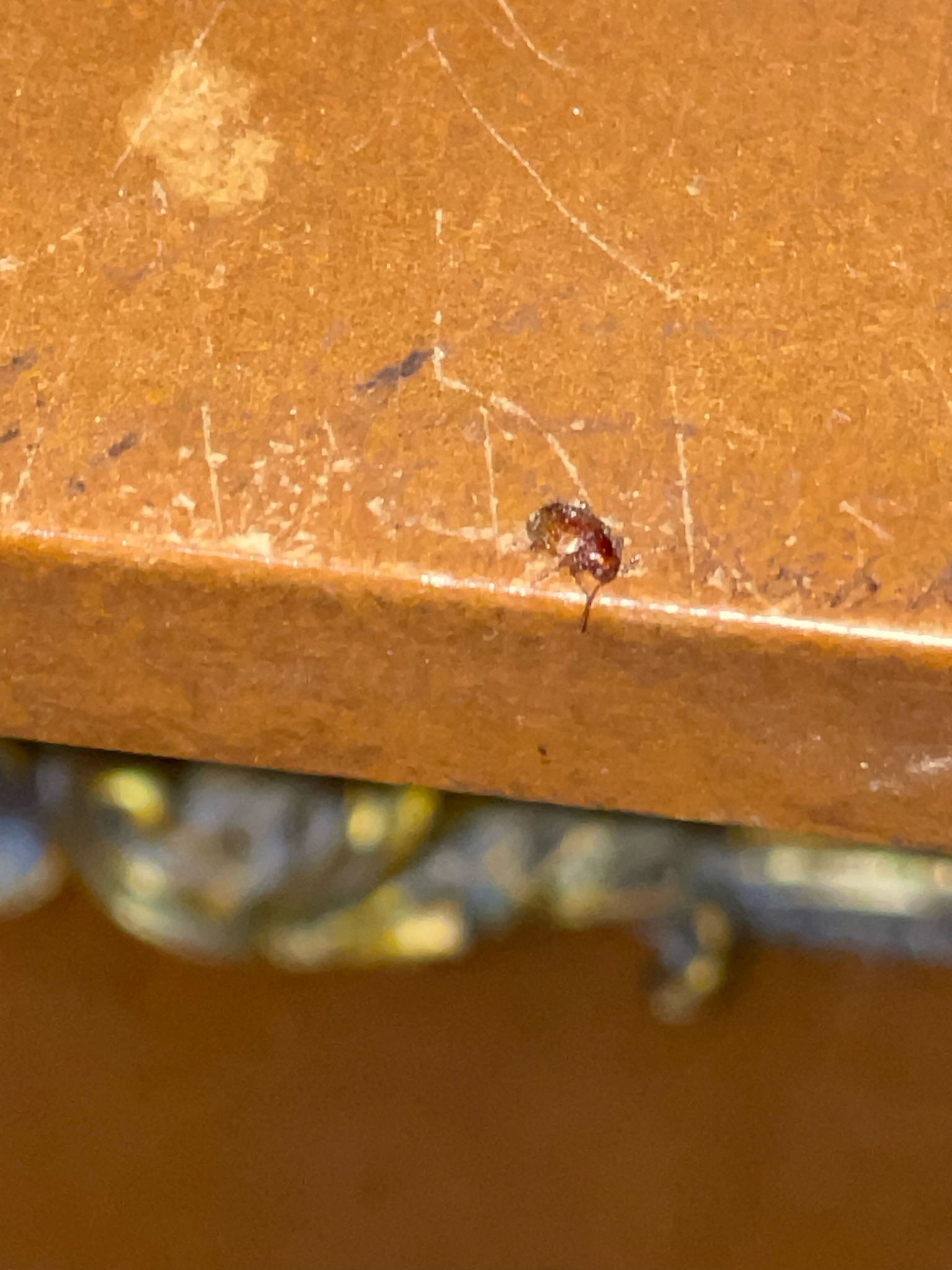
Cat Flea / Dog Flea
Ctenocephalides felis (or Ctenocephalides canis)
- Order & Family
- Order Siphonaptera, Family Pulicidae
- Size
- 1.5 - 3 mm (1/16 to 1/8 inch)
Natural Habitat
Indoors on domestic pets, bedding, carpets, upholstered furniture, and outdoors in shaded, moist areas frequented by animal hosts.
Diet & Feeding
Hematophagous; adults feed exclusively on the blood of mammals (such as cats, dogs, and humans) and birds. Flea larvae feed on organic debris, especially adult flea feces ('flea dirt').
Behavior Patterns
Wingless parasite with a laterally flattened body adapted for moving through host fur. Known for exceptional jumping ability enabled by resilin in their legs. Females lay eggs directly on hosts, which drop off into the surrounding environment where larvae mature.
Risks & Benefits
Risks: Caused itchy, inflamed bites on humans and pets; can trigger flea allergy dermatitis (FAD); can transmit tapeworms (Dipylidium caninum) and bacterial pathogens (e.g., Bartonella henselae, the cause of cat scratch fever). Benefits: None to humans; serves as a minor food source for spiders and ants.