
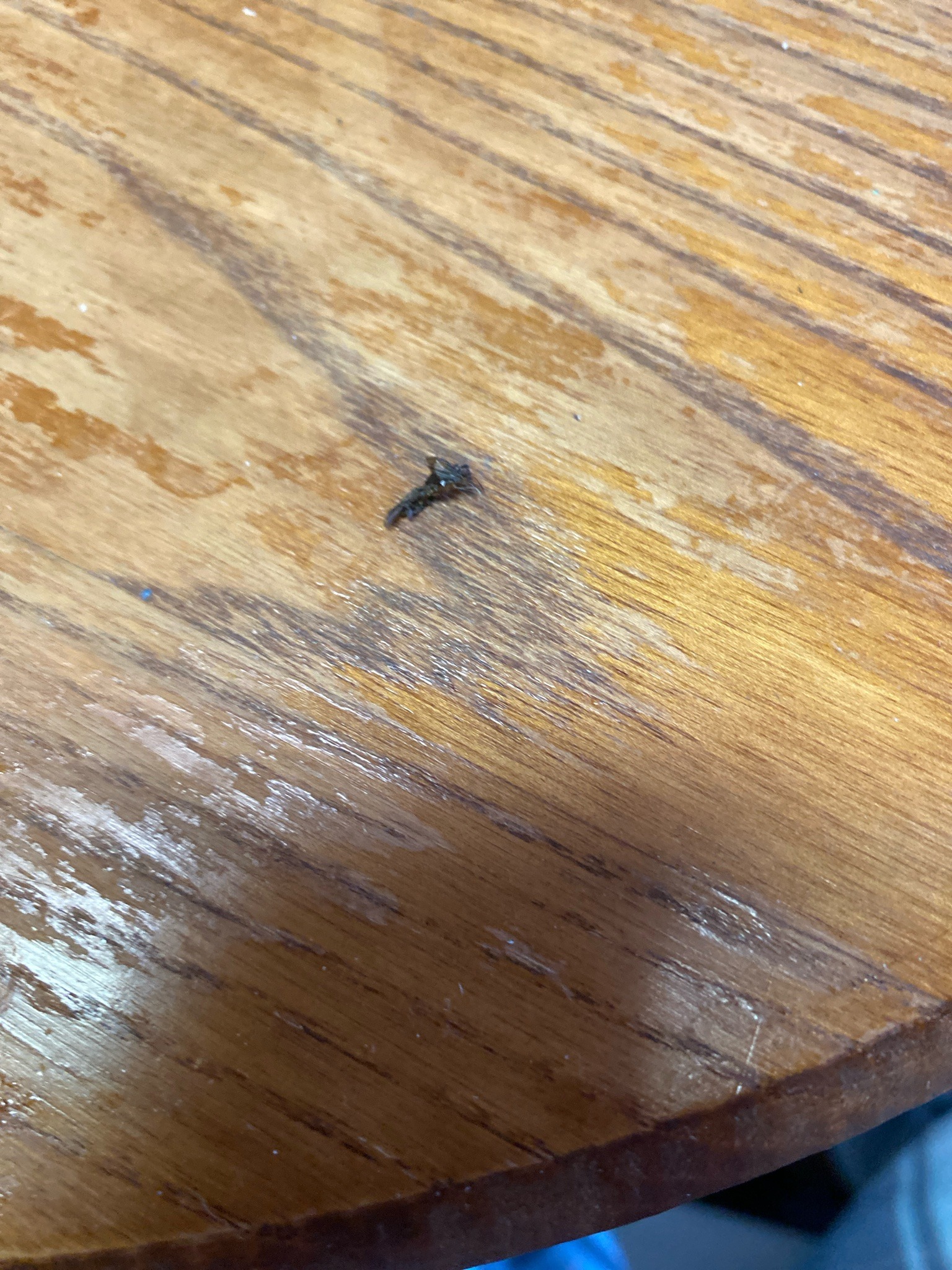
Small winged ant (likely a male or alate)
Formicidae, genus/species indeterminate
- Order & Family
- Hymenoptera; Formicidae
- Size
- Approximately 3–6 mm based on the image; size varies widely among ant species.
Natural Habitat
Colonies occur in soil, leaf litter, rotting wood, wall voids, and structural wood, depending on species. Winged individuals appear indoors when colonies reproduce or are disturbed.
Diet & Feeding
Workers commonly eat sugars, nectar, honeydew, dead insects, and scavenged food. Males and reproductive females primarily focus on mating and colony founding rather than feeding.
Behavior Patterns
Winged ants emerge during synchronized mating flights, often attracted to light, humidity, or warm conditions. Males usually die after mating; queens shed their wings and establish new colonies.
Risks & Benefits
Generally harmless and beneficial as predators, scavengers, soil aerators, and seed dispersers. Indoor colonies may contaminate food or cause nuisance; this image does not show the traits needed to distinguish ants from termite swarmers confidently.