
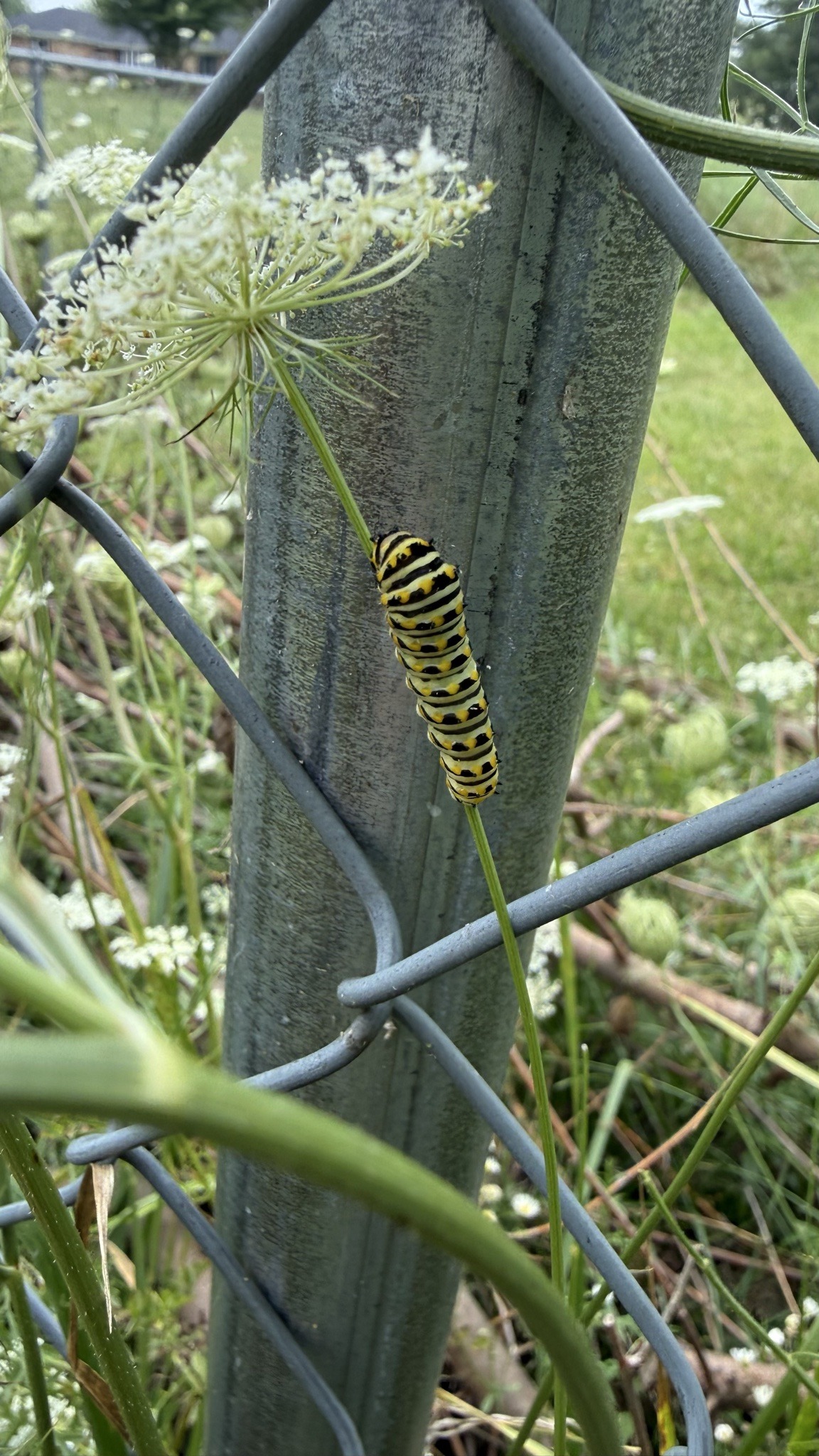
Community identification
Black swallowtail caterpillar
Papilio polyxenes (likely)
- Order & Family
- Lepidoptera; Papilionidae
- Size
- Mature larvae typically reach about 35–45 mm (1.4–1.8 in) long.
Natural Habitat
Open fields, meadows, gardens, roadsides, and other sunny areas with plants in the carrot family (Apiaceae).
Diet & Feeding
Feeds on foliage of Apiaceae, including fennel, dill, parsley, carrot, and native wildflowers such as the plant shown. It may consume flowers and developing seeds as well as leaves.
Behavior Patterns
The caterpillar passes through several molts and often rests exposed on host plants; when disturbed, it may evert an orange, foul-smelling forked gland called an osmeterium. It eventually pupates in a camouflaged chrysalis and emerges as a swallowtail butterfly.
Risks & Benefits
Harmless to people and pets, though it can be a minor garden herbivore. It supports food webs as prey and develops into a pollinating adult butterfly.