
Community identification
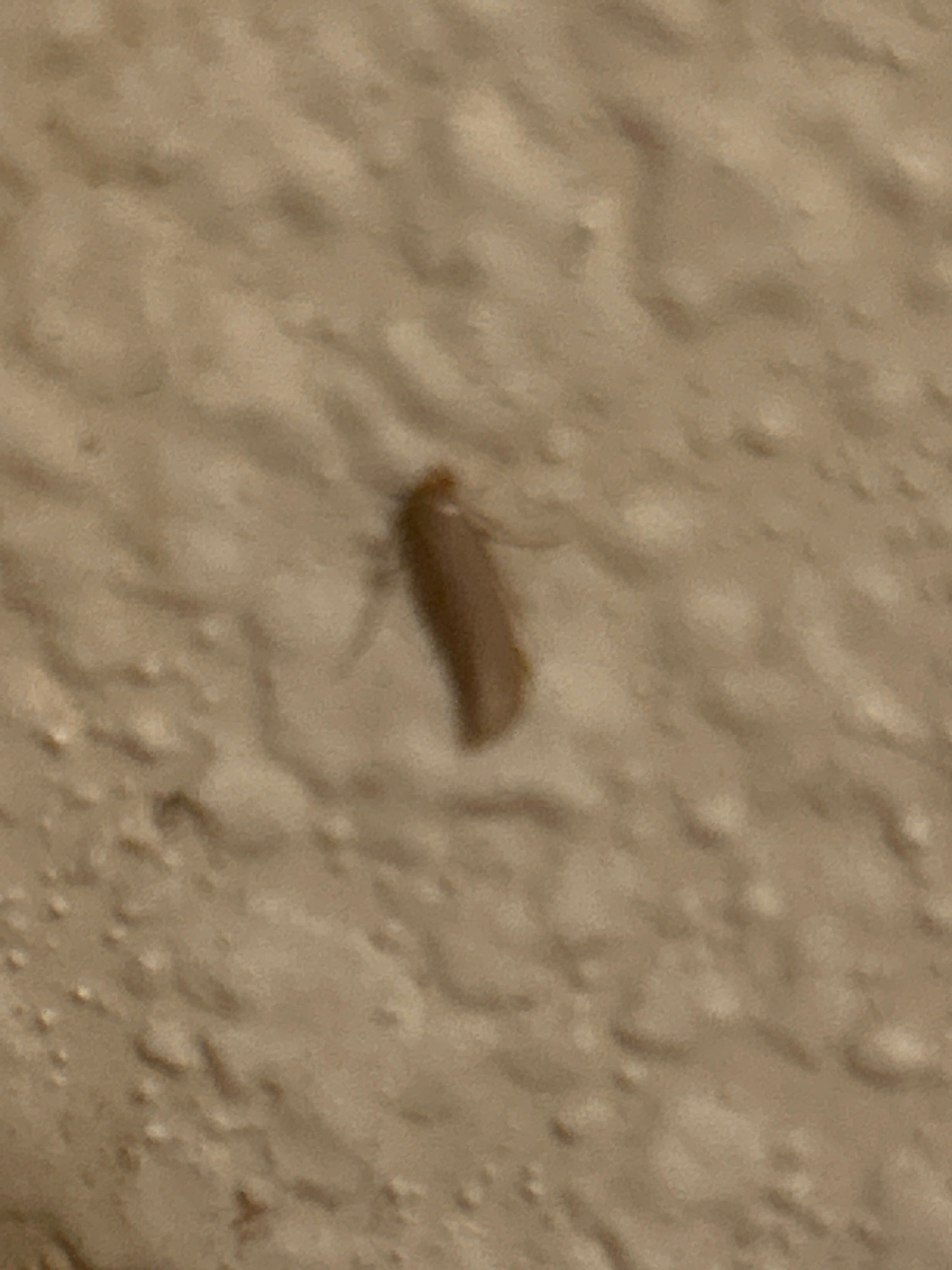
Small household moth
Likely a tineid moth; species cannot be identified from this blurry image.
- Order & Family
- Lepidoptera; likely Tineidae
- Size
- About 5–15 mm long, depending on species.
Natural Habitat
Often found indoors on walls near lights; related species may breed in closets, stored foods, or natural fibers.
Diet & Feeding
Adults generally take little or no food; larvae feed on materials such as wool, feathers, lint, or stored foods, depending on species.
Behavior Patterns
Typically rests with narrow wings folded over the body and may flutter when disturbed. Larvae develop in a concealed food source; adults are often attracted to indoor lights.
Risks & Benefits
Usually harmless to people. Some household moth larvae can damage clothing or contaminate stored food.