
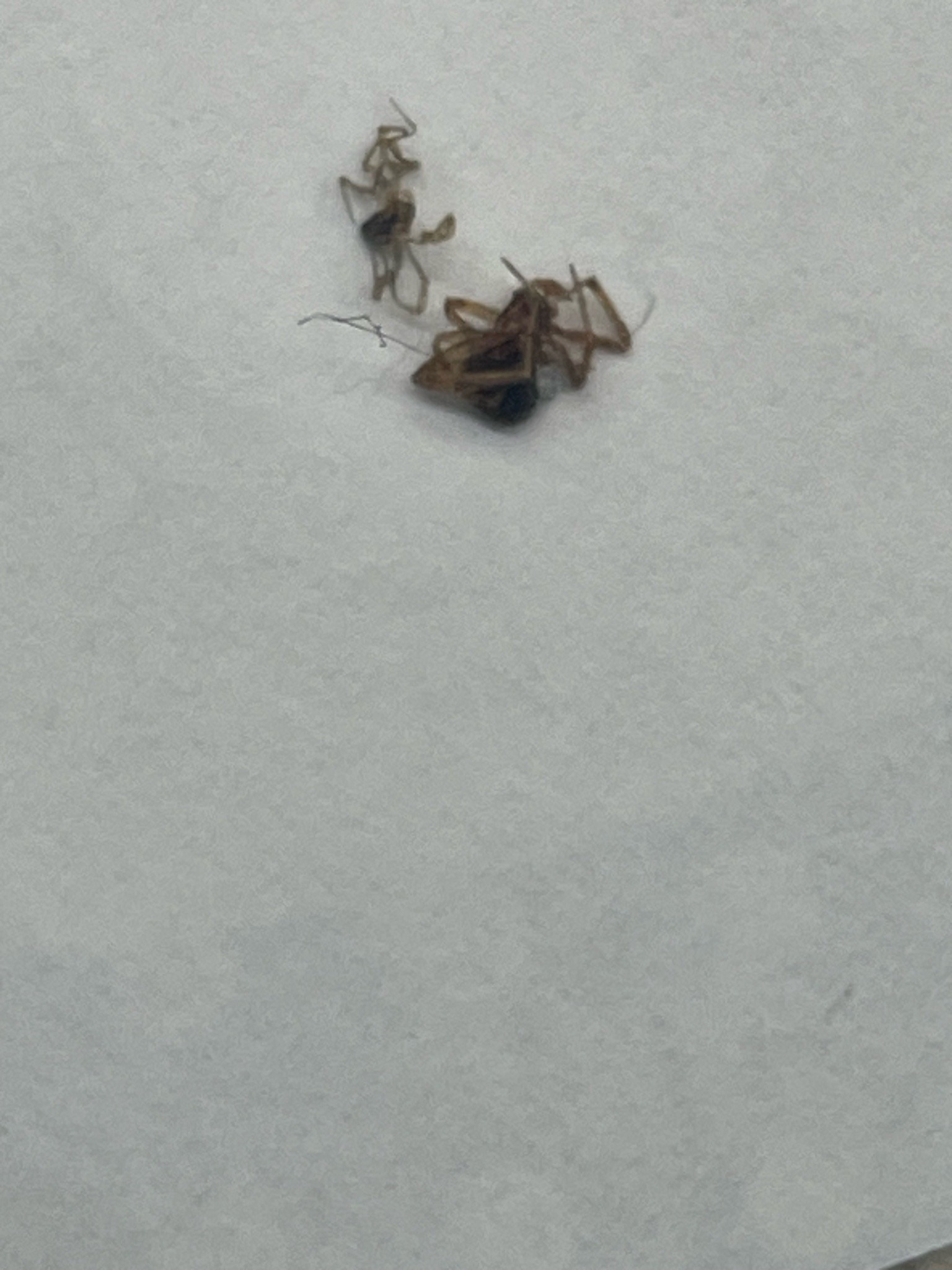
Community identification
Ants (likely winged or dead worker ants)
Formicidae sp.
- Order & Family
- Hymenoptera; Formicidae
- Size
- Typically 2–15 mm long; reproductive winged ants may be larger.
Natural Habitat
Common in soil, wall voids, wood, gardens, and buildings, depending on species. The pictured individuals appear dead or trapped together.
Diet & Feeding
Varies by species: sugars such as nectar and honeydew, dead insects, seeds, and food scraps. Some species actively hunt small arthropods.
Behavior Patterns
Highly social, living in colonies with queens, workers, and reproductive males/females. Winged reproductives often emerge seasonally for mating flights, after which males die and queens establish colonies.
Risks & Benefits
Most are harmless and benefit ecosystems by aerating soil, recycling organic matter, and preying on pests. Some species can sting or bite, contaminate food, or damage wood and structures.