
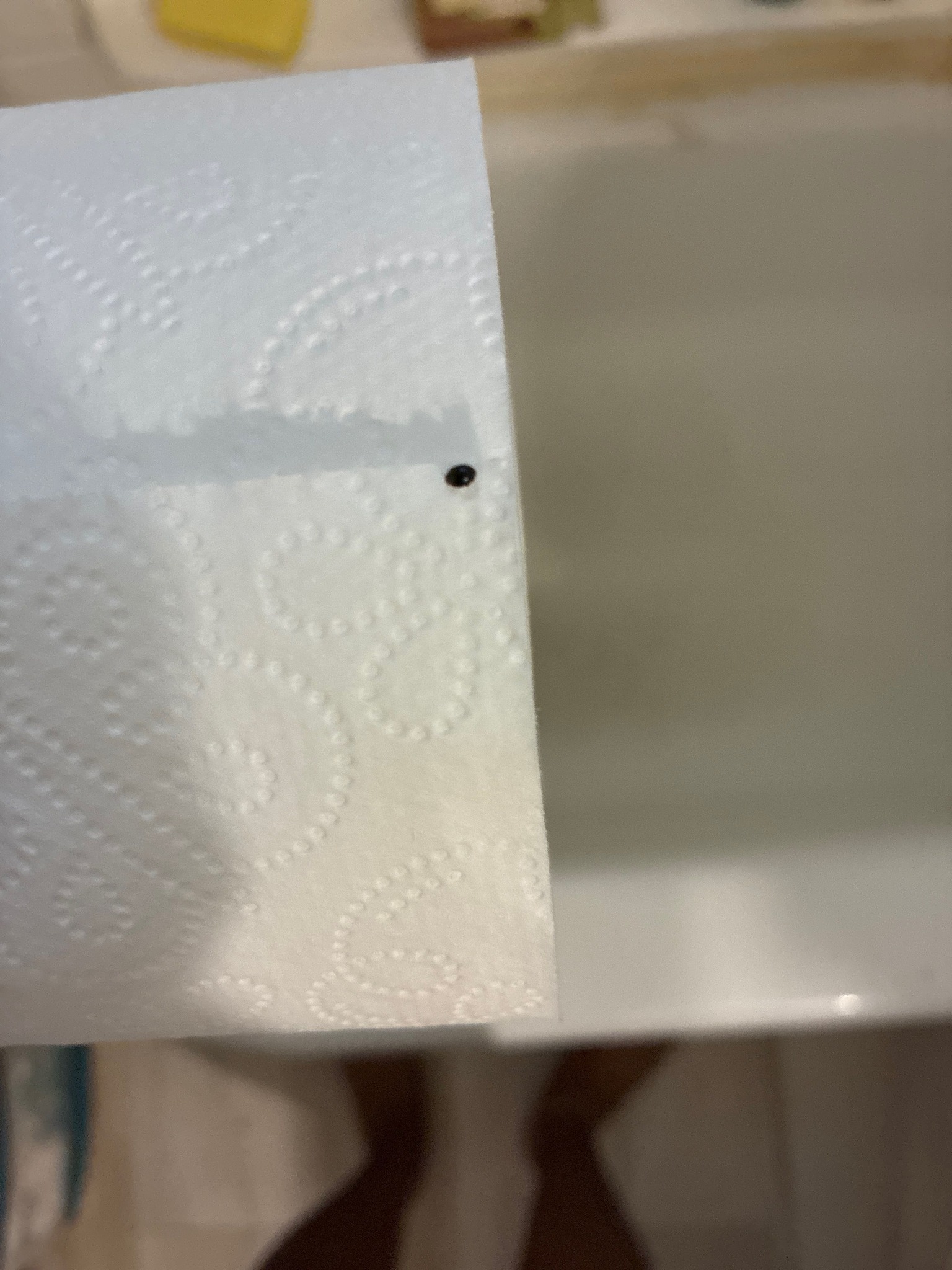
Community identification
Flea (tentative identification)
Siphonaptera; species cannot be determined from the image
- Order & Family
- Order Siphonaptera; family likely Pulicidae
- Size
- Typically 1–3 mm long; the pictured insect appears consistent with this scale, though the photograph is not diagnostic.
Natural Habitat
Carpets, bedding, upholstery, pet resting areas, and other sheltered indoor sites. Adults commonly remain on cats, dogs, or wildlife.
Diet & Feeding
Adults consume blood from vertebrate hosts. Larvae feed mainly on organic debris and dried blood in the environment.
Behavior Patterns
Wingless, laterally flattened, and capable of powerful jumping; adults move through fur or fabrics and reproduce rapidly when hosts are available. Eggs and larvae develop off-host in household materials.
Risks & Benefits
Bites cause itchy papules and allergic reactions, and fleas can transmit pathogens or serve as tapeworm hosts. They have no meaningful household benefit; confirm identification before treatment, especially if pets are present.