
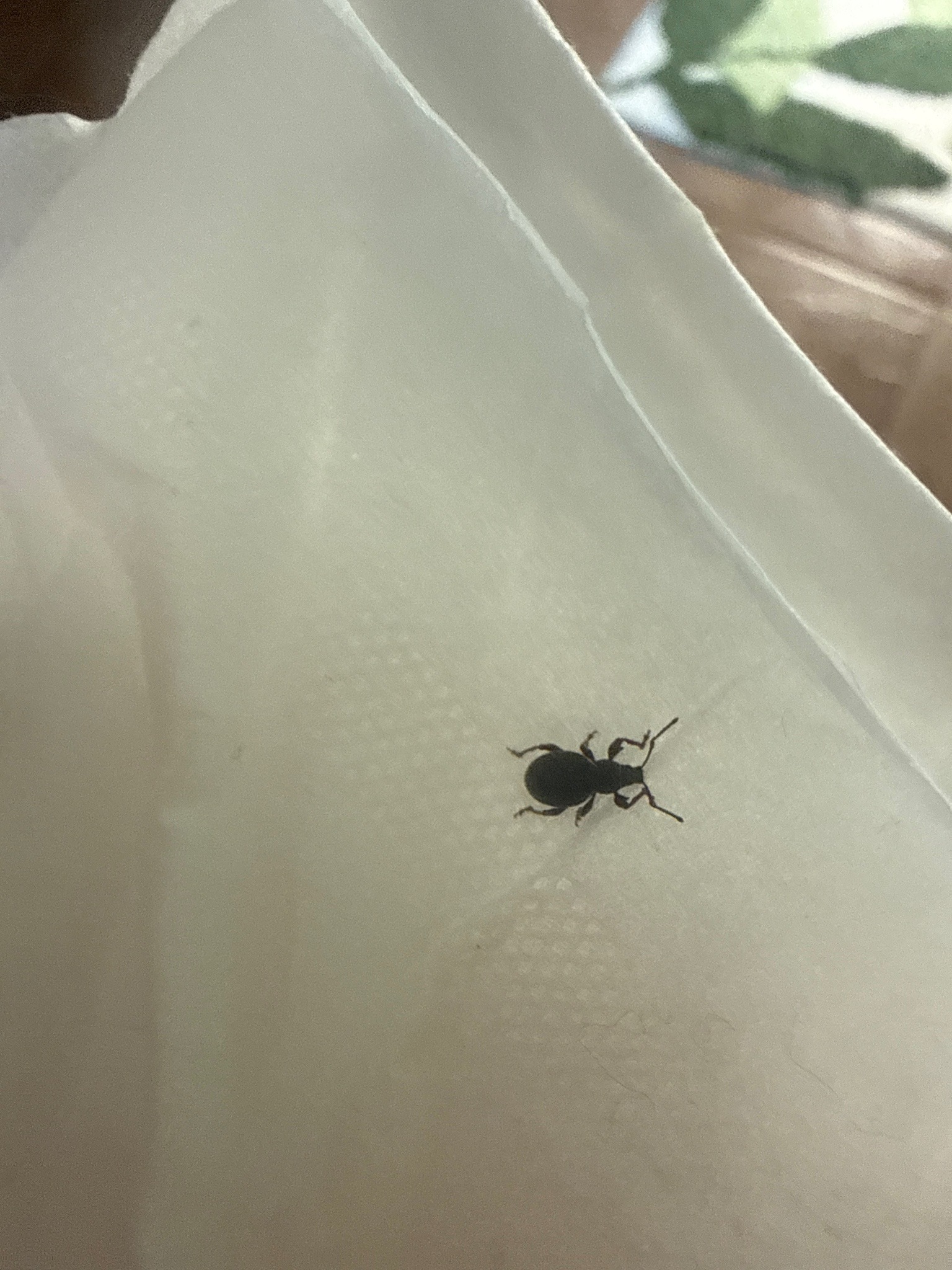
Black Vine Weevil
Otiorhynchus sulcatus
- Order & Family
- Coleoptera (Beetles), Curculionidae (True Weevils)
- Size
- 8 mm to 11 mm (0.3 to 0.4 inches)
Natural Habitat
Gardens, nurseries, forests, agricultural fields, and occasionally indoor spaces when seeking shelter
Diet & Feeding
Herbivorous; adults feed on leaves of over 100 plant species (including rhododendrons, yews, and strawberries), leaving characteristically notched leaf edges. Larvae feed underground on plant roots.
Behavior Patterns
Flightless and nocturnal, adults hide in soil, leaf litter, or dark crevices during the day and climb host plants at night. Reproduction is primarily parthenogenetic (females lay unfertilized eggs without males).
Risks & Benefits
Risks: Significant agricultural and horticultural pest. Larval root feeding can stunt growth, cause wilting, or kill ornamental and crop plants. Benefits: Minimal, mainly serving as a food source for ground beetles, birds, and small mammals.