
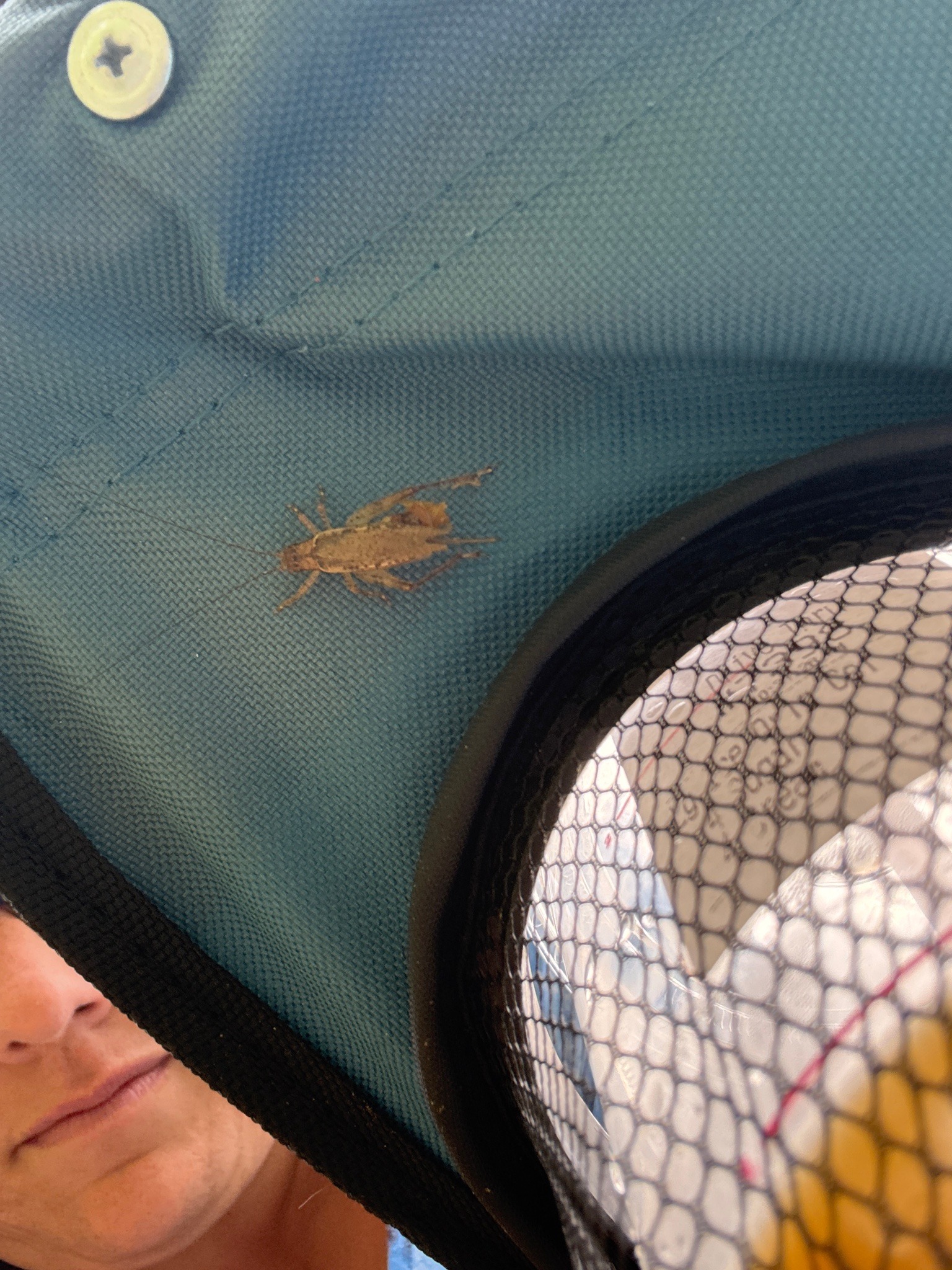
Community identification
Lacewing larva (aphid lion)
Chrysopidae, likely *Chrysoperla* species
- Order & Family
- Neuroptera; Chrysopidae
- Size
- About 3–10 mm long as a larva, depending on age and species.
Natural Habitat
Vegetation, gardens, crops, and sheltered outdoor surfaces where aphids and other small arthropods occur.
Diet & Feeding
Larvae are active predators that suck fluids from aphids, mites, whiteflies, thrips, and insect eggs. Adults usually feed on nectar, pollen, honeydew, or sometimes small insects.
Behavior Patterns
The larva has sickle-shaped jaws and may camouflage itself with debris or prey remains, though this individual appears relatively exposed. It develops through complete metamorphosis into a delicate, net-winged adult.
Risks & Benefits
Harmless to humans and pets, with no sting or bite of medical significance. It is beneficial in gardens and agriculture because it suppresses aphid and other pest populations.