
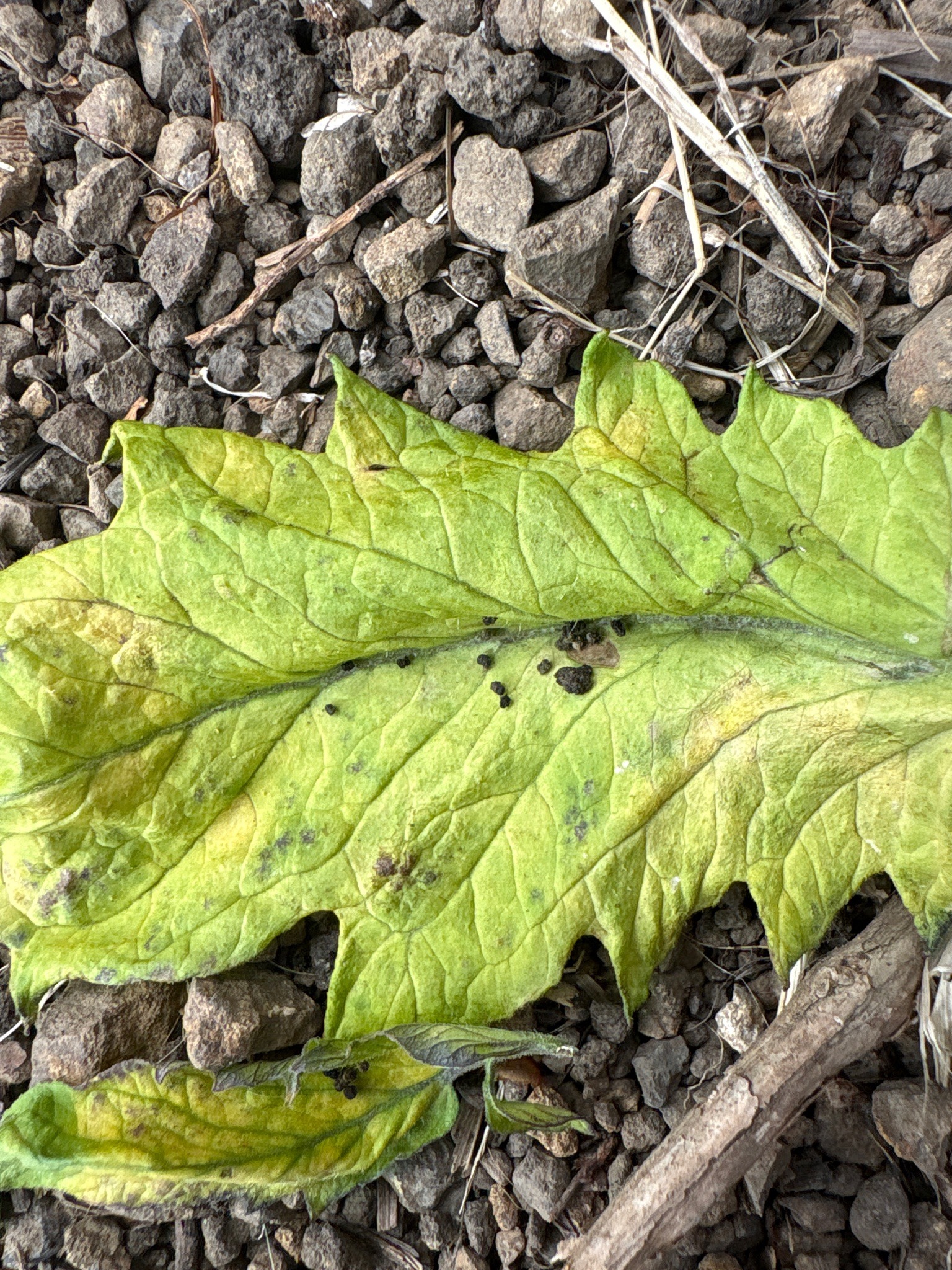
Black bean aphid (likely)
Aphis fabae
- Order & Family
- Hemiptera; Aphididae
- Size
- Adults are about 1.5–3 mm long; winged forms are slightly larger and more slender.
Natural Habitat
Colonies occur on the undersides and stems of broad-leaved plants, especially beans, beet, spinach, weeds, and some ornamentals. They are common in gardens, fields, and disturbed habitats.
Diet & Feeding
They pierce plant tissues with sucking mouthparts and consume phloem sap. Feeding can cause curling, yellowing, stunting, and sticky honeydew deposits.
Behavior Patterns
These aphids cluster in dense colonies, reproduce rapidly by live birth during favorable seasons, and may produce winged adults when crowded or plants deteriorate. They are often attended and protected by ants attracted to honeydew.
Risks & Benefits
They can weaken crops and transmit several plant viruses, though identification from the image is not definitive. They provide food for lady beetles, lacewings, hoverfly larvae, and parasitic wasps.