
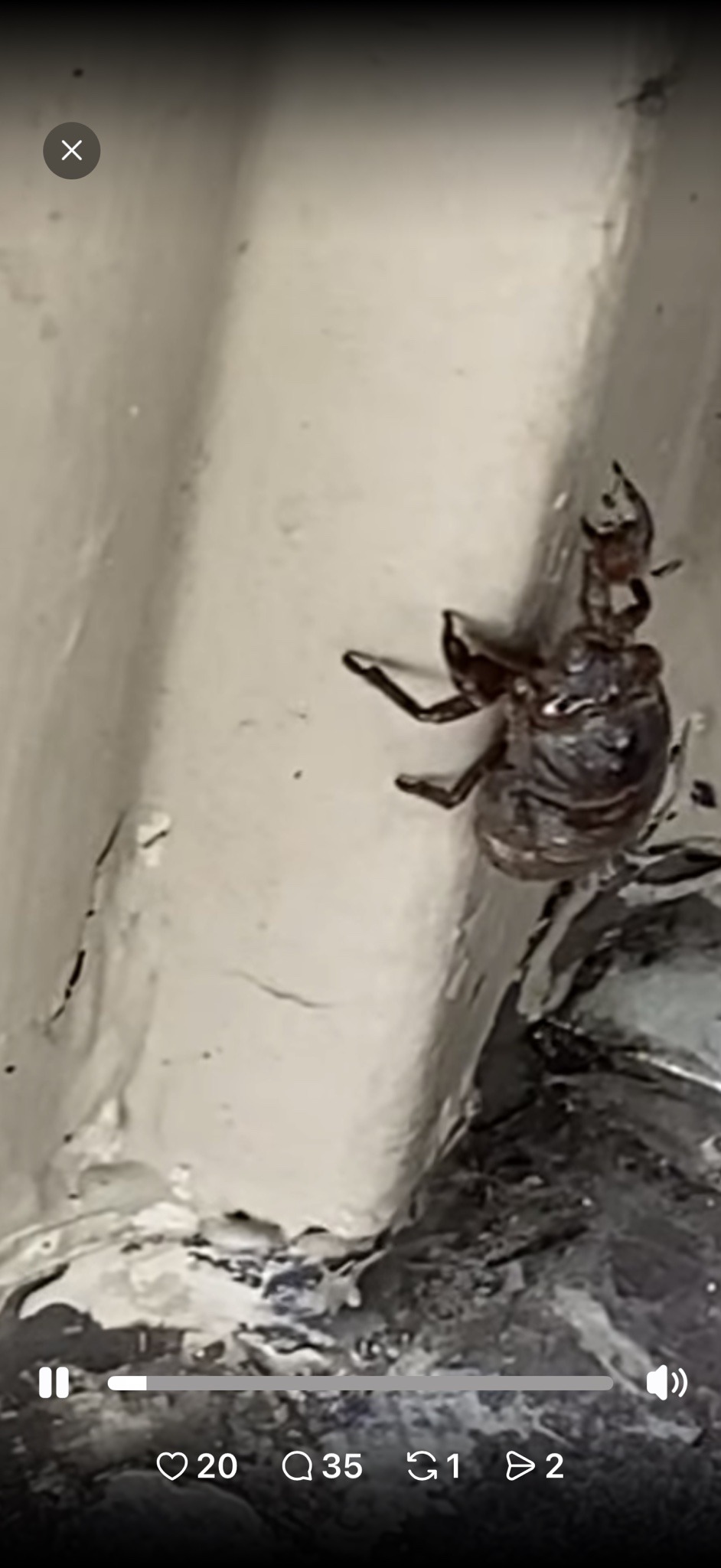
Black widow spider (likely)
Latrodectus spp., possibly Latrodectus hesperus
- Order & Family
- Araneae; Theridiidae (cobweb spiders)
- Size
- Adult females are about 8–13 mm in body length, with legs spanning roughly 25–40 mm; males are much smaller.
Natural Habitat
Dark, sheltered, undisturbed sites such as wall gaps, garages, sheds, crawlspaces, and debris. Common in warm, dry regions, including around buildings.
Diet & Feeding
Carnivorous; captures flies, mosquitoes, beetles, and other arthropods in an irregular, sticky cobweb, then immobilizes prey with venom and digestive enzymes.
Behavior Patterns
Primarily nocturnal and reclusive, usually remaining in its web retreat. Females produce silk egg sacs and may bite defensively when trapped or pressed, rather than attacking people.
Risks & Benefits
A bite can cause severe muscle pain, cramping, sweating, nausea, and other latrodectism symptoms; medical evaluation is warranted for significant symptoms. It benefits ecosystems by controlling insects, but the image alone cannot confirm species.