
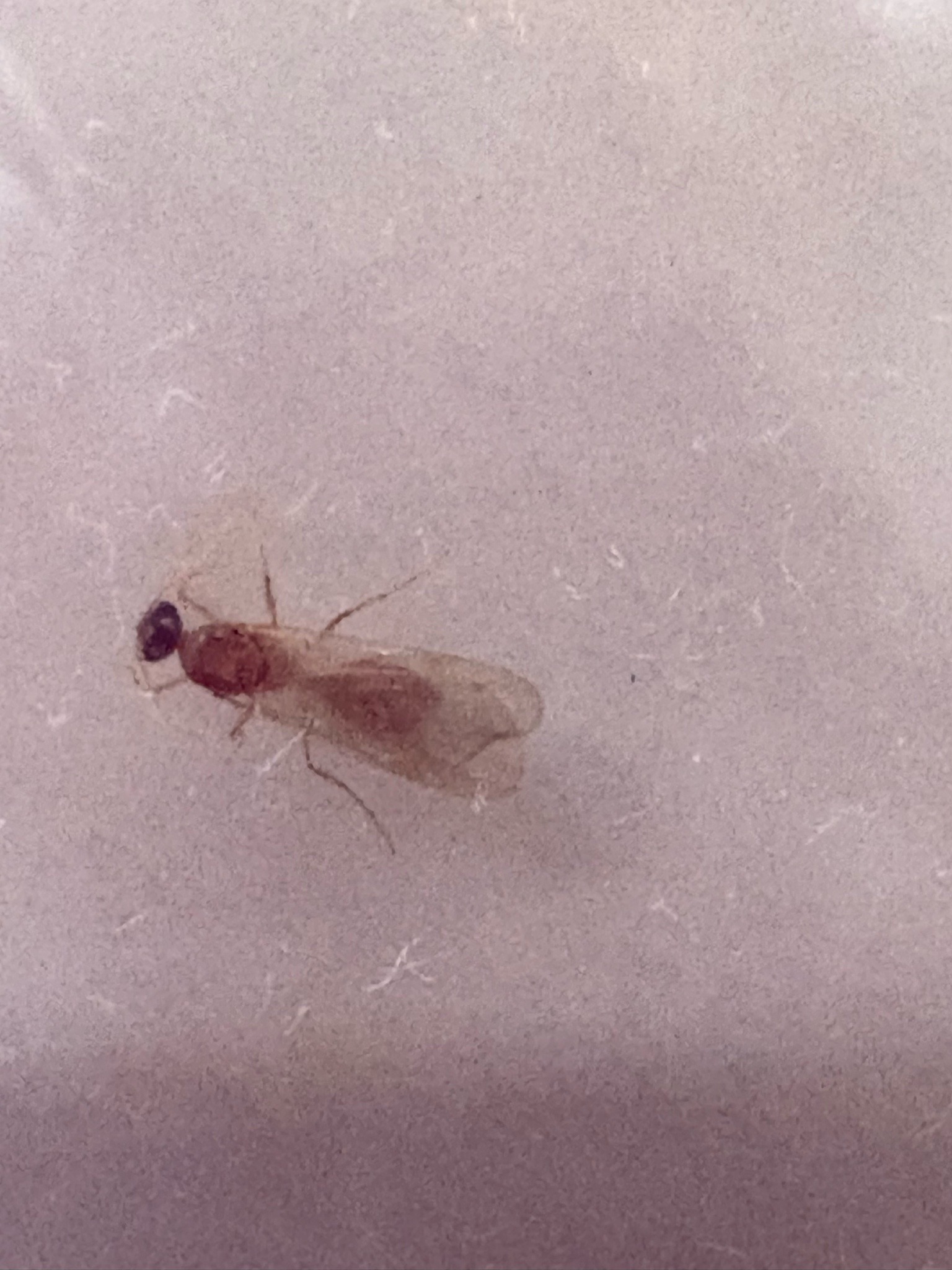
Community identification
Winged ant (reproductive alate)
Formicidae; species not identifiable from the photo
- Order & Family
- Hymenoptera; Formicidae
- Size
- Ant alates commonly measure about 3–15 mm, depending on species.
Natural Habitat
Usually nests in soil, wood, or buildings; winged reproductives may appear indoors while swarming.
Diet & Feeding
Adults may take nectar or other sugary liquids; larvae are fed by workers, often with insects or food brought to the colony.
Behavior Patterns
Reproductives fly in mating swarms, then fertilized queens shed their wings and start colonies. The narrow waist and elbowed antennae distinguish ants from termite swarmers.
Risks & Benefits
Harmless as an individual and not a stinging threat in this form; established colonies can contaminate food or damage wood in some species. Ants also recycle nutrients and prey on other insects.