
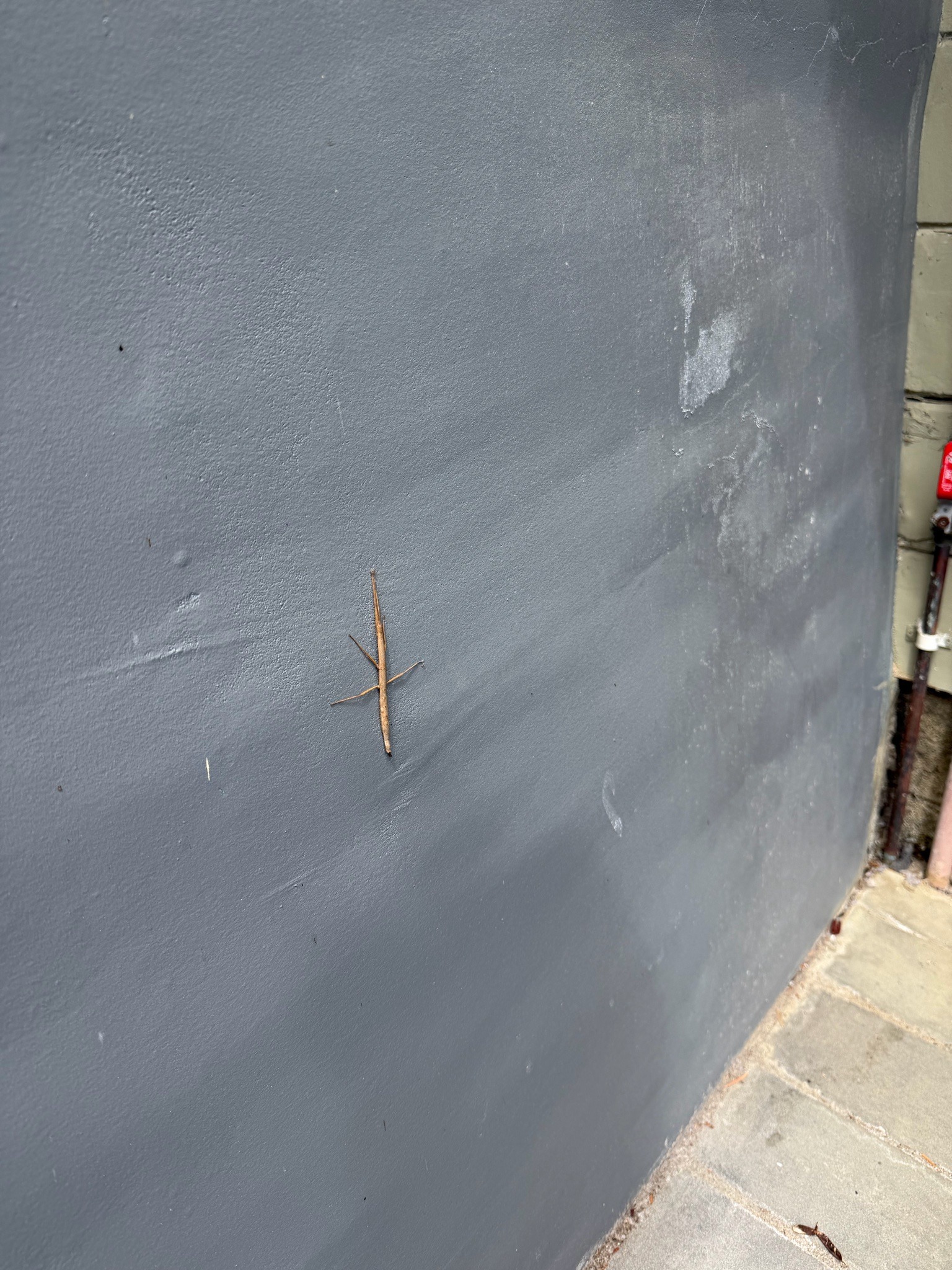
Community identification
Walking stick (stick insect)
Order Phasmatodea; likely a species of Diapheromerinae
- Order & Family
- Phasmatodea; family identification cannot be confirmed from this image
- Size
- This individual appears approximately 7–10 cm (3–4 in) long; walking sticks commonly range from 2–15 cm, depending on species.
Natural Habitat
Vegetation, shrubs, woodland edges, and gardens, especially in warm regions; often rests motionless on stems, walls, or fences.
Diet & Feeding
Herbivorous, feeding mainly on leaves from trees and shrubs. Nymphs and adults typically chew foliage at night.
Behavior Patterns
Primarily nocturnal and relies on twig-like camouflage; it may sway to imitate a branch moving in the wind. Most species undergo incomplete metamorphosis, with nymphs resembling small adults.
Risks & Benefits
Generally harmless to people and pets, though a few species can release irritating defensive chemicals. They contribute to leaf consumption and serve as prey for birds, reptiles, spiders, and other predators.