
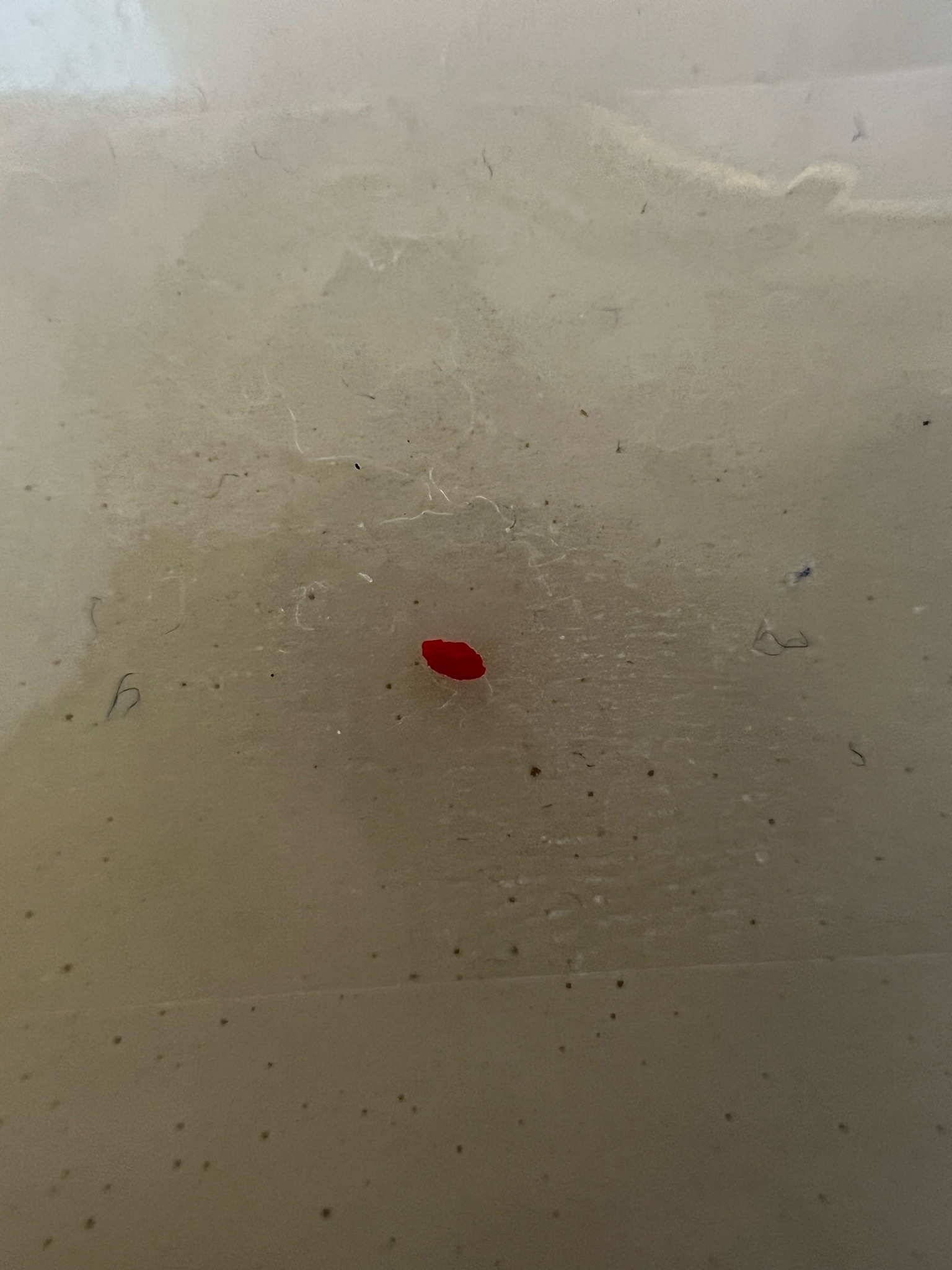
Red flour beetle (probable)
Tribolium castaneum
- Order & Family
- Coleoptera; Tenebrionidae
- Size
- About 3–4 mm (⅛ inch) long; reddish-brown, elongated, and flattened.
Natural Habitat
Stored-food areas, pantries, grain bins, mills, and food-processing facilities; adults may wander onto walls and floors.
Diet & Feeding
Adults and larvae feed on flour, cereals, grains, baking mixes, nuts, and other dried plant products, often contaminating food rather than consuming whole kernels.
Behavior Patterns
They hide in cracks and packaging, reproduce rapidly in warm conditions, and can produce multiple generations annually. The pictured object is too blurred and small for certain identification; a bright red beetle could also be another stored-product species.
Risks & Benefits
Not known to bite or transmit disease, but infestations contaminate stored food with bodies, odors, and waste. They have little direct ecological benefit indoors, though related darkling beetles contribute to decomposition outdoors.