
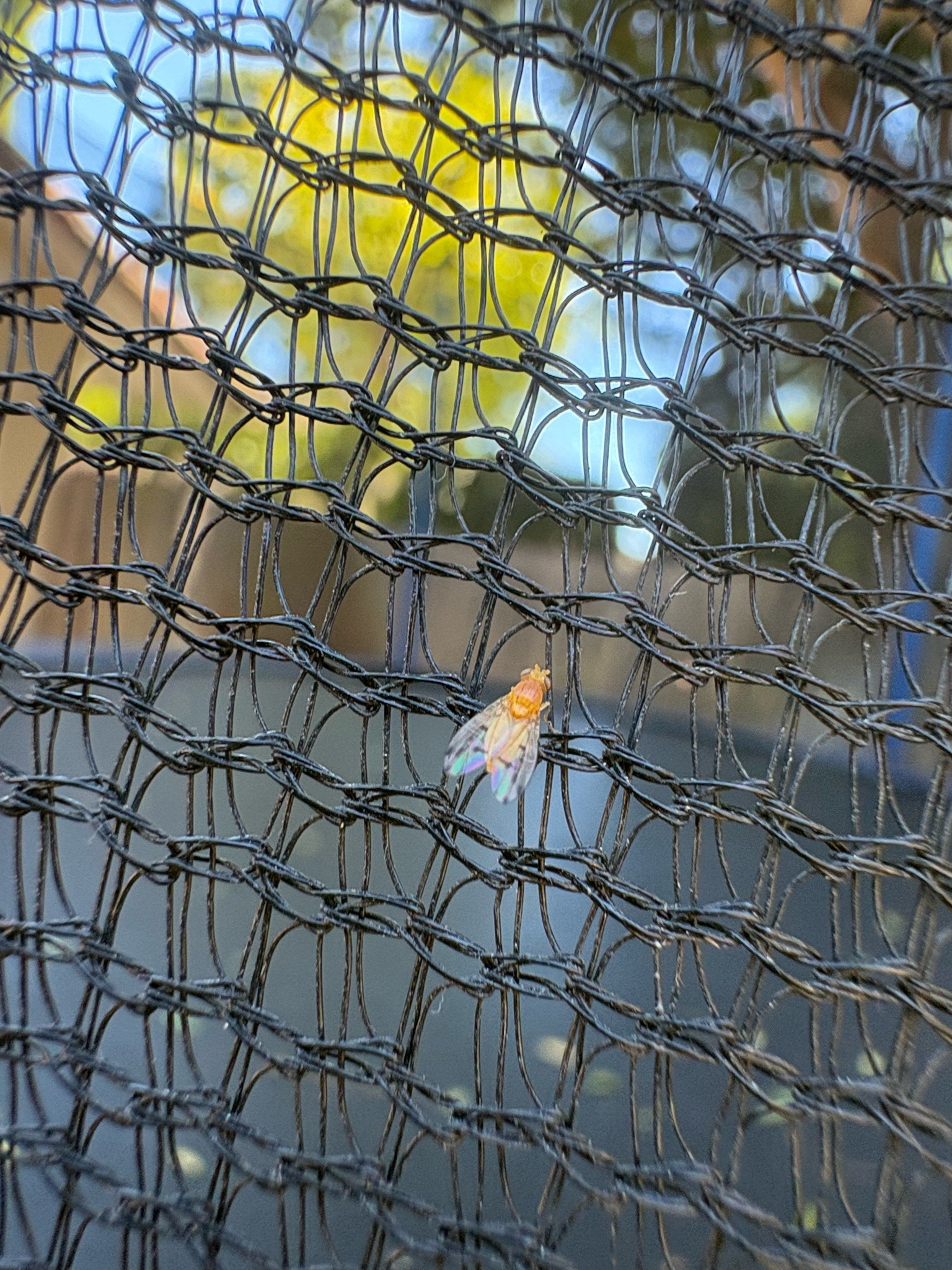
Fruit Fly / Vinegar Fly
Drosophila melanogaster
- Order & Family
- Diptera: Drosophilidae
- Size
- 2 to 4 mm (0.08 to 0.16 inches)
Natural Habitat
Found worldwide near rotting, fermenting, or overripe fruit and vegetation, as well as around compost, garbage, and damp organic environments.
Diet & Feeding
Larvae feed on micro-organisms like yeast and bacteria growing on fermenting fruit and plant matter; adults feed on liquid fluids from decaying fruits and sugary substances.
Behavior Patterns
Attracted strongly to acetic acid (vinegar) and alcohol scents. Highly prolific with extremely rapid reproduction cycles, completing a generation in as little as 7-10 days under warm conditions.
Risks & Benefits
Risks: Can be a persistent household nuisance and contaminate food with bacteria. Benefits: Vital biological model organism in genetics, developmental biology, and neuroscience research; serves as a decomposer in ecosystems.