
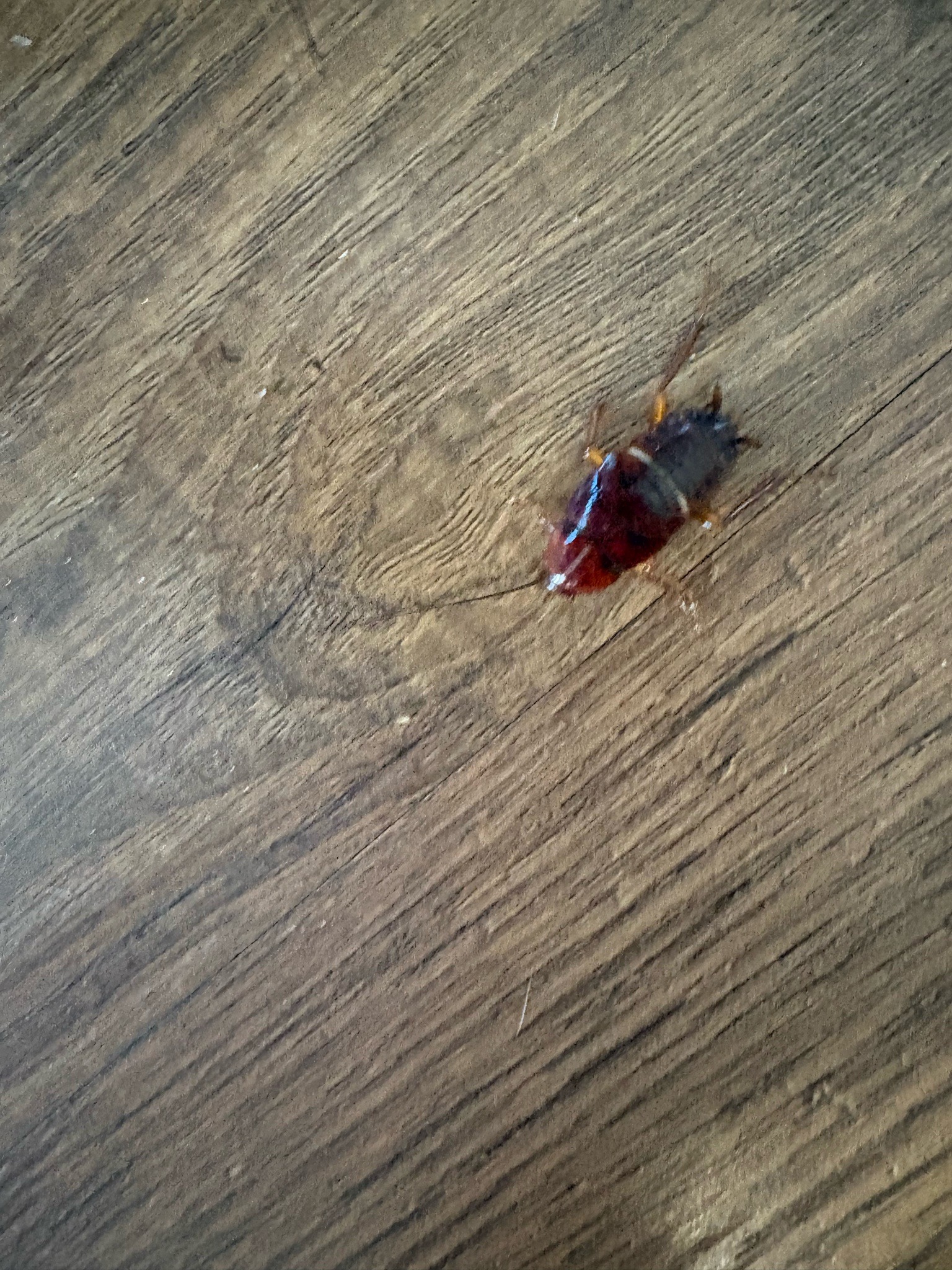
Community identification
Oriental cockroach (likely)
Blatta orientalis
- Order & Family
- Blattodea; Blattidae
- Size
- Adults are typically 20–27 mm (0.8–1.1 in) long; females are broader and often wingless, while males have short wings.
Natural Habitat
Cool, damp, dark locations such as basements, drains, crawl spaces, mulch, and areas beneath flooring or debris. It may enter buildings through cracks, pipes, and door gaps.
Diet & Feeding
An omnivorous scavenger that feeds on decaying organic matter, food scraps, starches, and occasionally dead insects or animal material.
Behavior Patterns
Mostly nocturnal, hiding by day and moving along floor-level edges at night. It prefers moisture and warmth, has incomplete metamorphosis, and reproduces via egg cases (oothecae).
Risks & Benefits
Can contaminate food and surfaces and mechanically spread bacteria, allergens, and cockroach fragments that may aggravate asthma. It contributes modestly to decomposition outdoors but is generally considered a household pest.