
Community identification
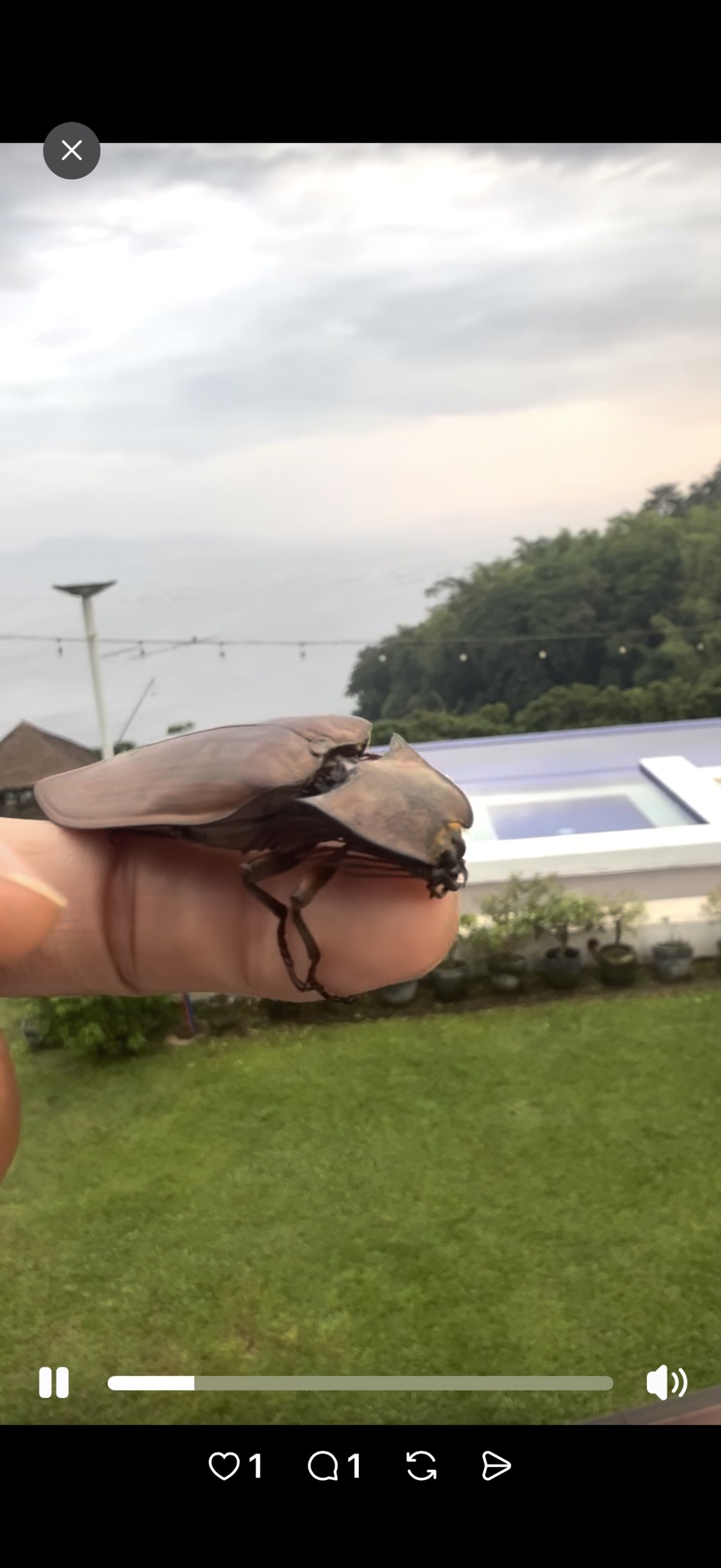
Hercules beetle (likely female)
Dynastes hercules
- Order & Family
- Coleoptera; Scarabaeidae (subfamily Dynastinae)
- Size
- Adults are typically 5–17 cm long, including the male’s horns; females are generally shorter and hornless.
Natural Habitat
Tropical and subtropical forests of Central and South America and the Caribbean, especially humid lowland and montane forest.
Diet & Feeding
Larvae consume decaying wood and organic soil matter. Adults mainly feed on fruit, tree sap, and other plant juices.
Behavior Patterns
Mostly nocturnal and attracted to lights; adults fly strongly and males may wrestle using their horns. Larvae develop in rotting wood for many months to years before pupating.
Risks & Benefits
Harmless to people and not venomous, though its grip and claws can pinch. Larvae help decompose wood and recycle nutrients; adults contribute modestly to forest food webs and pollination.