
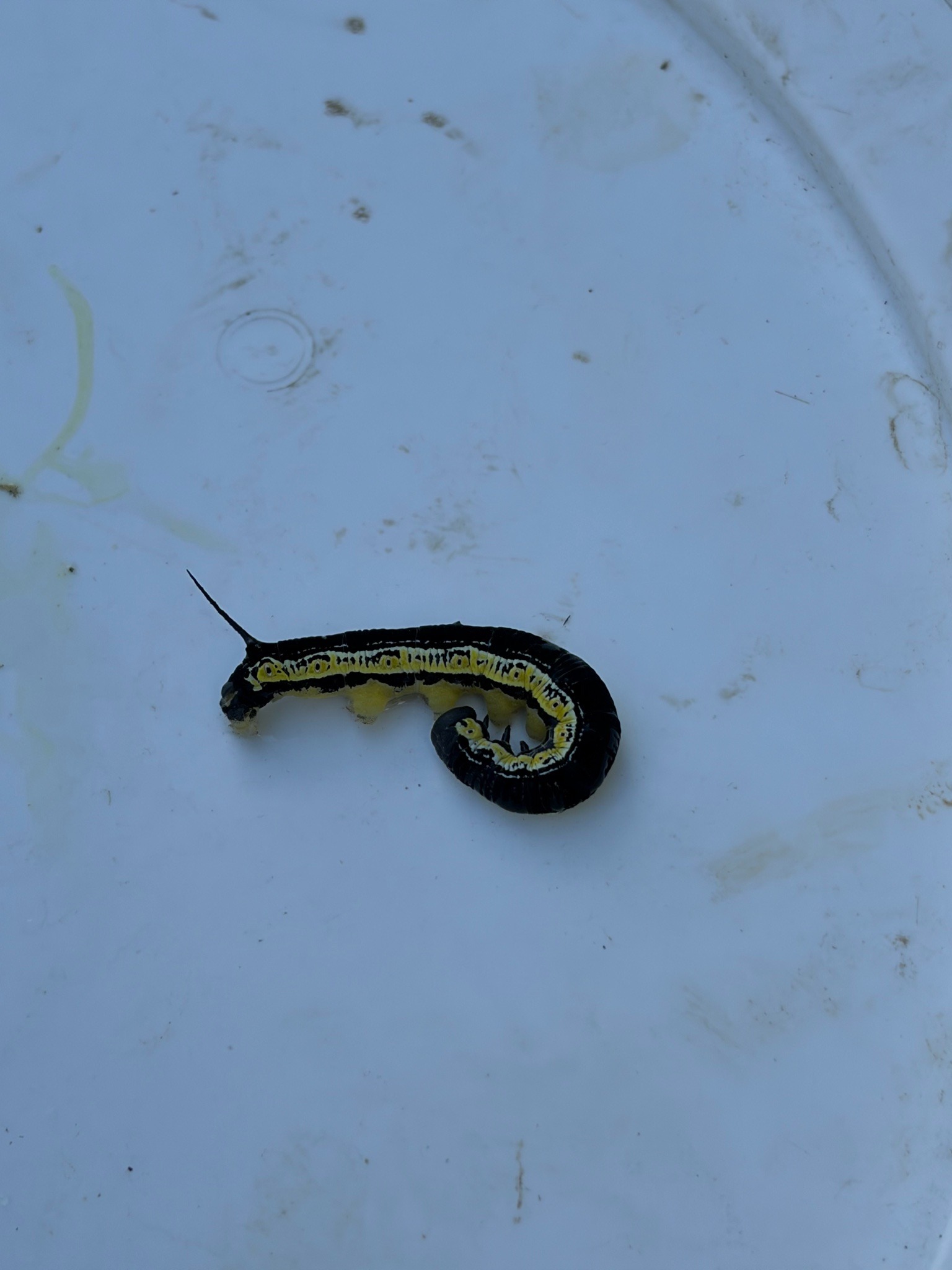
Wireworm (click beetle larva), likely a mealworm-like beetle larva
Elateridae larva; exact species cannot be determined from the image
- Order & Family
- Coleoptera; family Elateridae
- Size
- Typically 1–40 mm long, depending on species and age; this specimen appears roughly 15–25 mm.
Natural Habitat
Usually in soil, under bark, leaf litter, or decaying wood; many species occur in gardens and agricultural ground.
Diet & Feeding
Larvae commonly eat roots, seeds, decaying plant material, or other soil organisms. Some are significant crop pests, while others are predatory or decomposer-associated.
Behavior Patterns
Cylindrical, hard-bodied larvae live mostly underground and move slowly; they pupate in soil or wood before emerging as adult click beetles. The curled posture shown is likely a defensive response.
Risks & Benefits
Some wireworms damage potatoes, grains, vegetables, and seedlings by tunneling into roots or tubers. Other elaterid larvae help decompose organic matter or prey on soil pests; they do not pose a meaningful danger to people.