
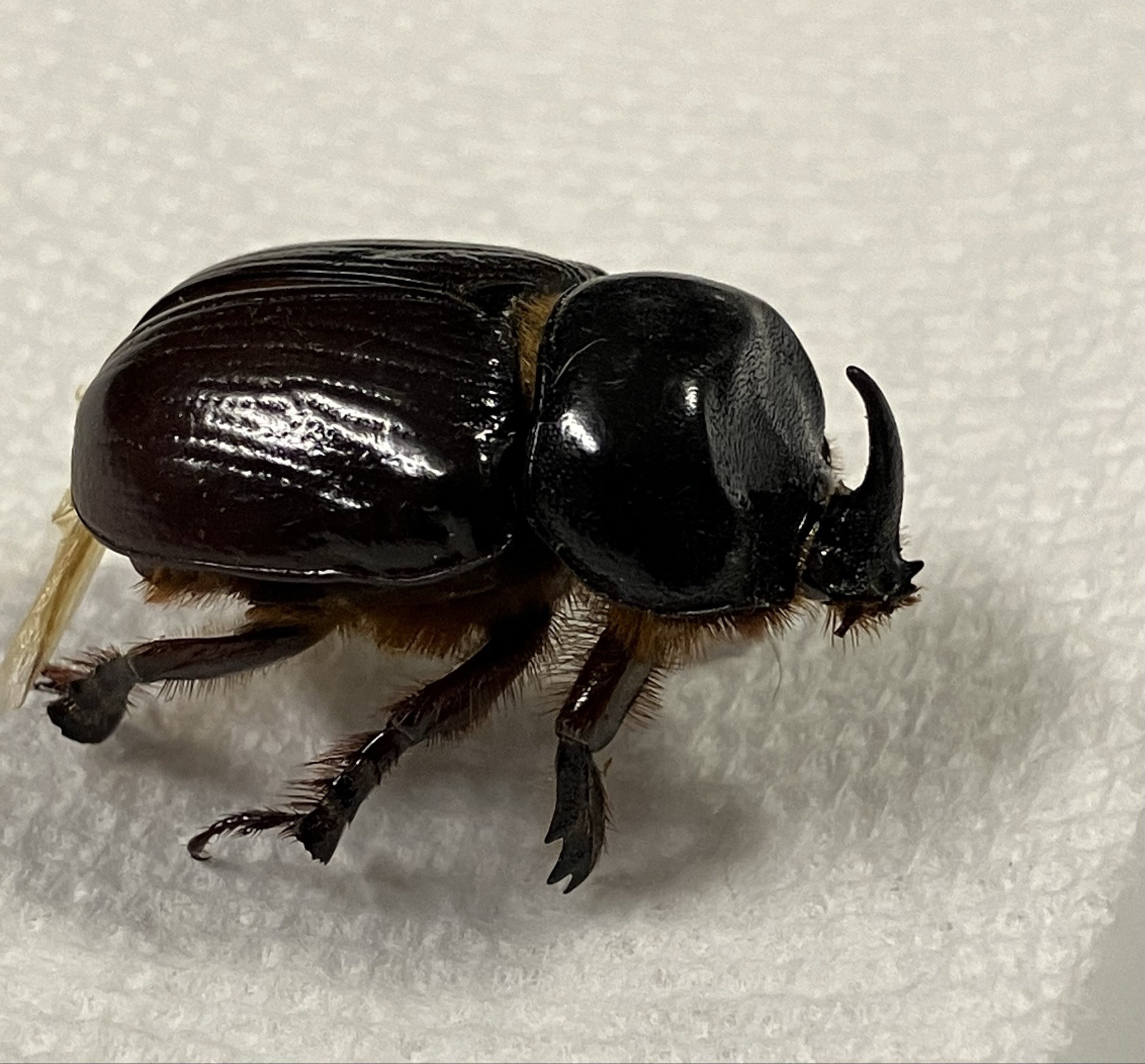
Community identification
Rhinoceros beetle (likely European rhinoceros beetle)
Oryctes nasicornis
- Order & Family
- Coleoptera; Scarabaeidae (scarab beetles), Dynastinae
- Size
- Adults typically 20–40 mm long; males are generally larger and horned.
Natural Habitat
Dead wood, compost, decaying plant material, woodland soils, gardens, and urban areas. Larvae develop in rotting organic matter.
Diet & Feeding
Adults consume little or no food, sometimes feeding on sap or soft plant material. Larvae eat decomposing wood, roots, and other organic debris.
Behavior Patterns
Mostly nocturnal and strong-flying; males use the prominent horn in contests for females. Development from egg to adult commonly takes several years, depending on temperature and food quality.
Risks & Benefits
Harmless to humans and unable to sting or bite effectively. Larvae help decompose woody material and recycle nutrients; adults may occasionally damage ornamental plants, but serious crop injury is uncommon.