
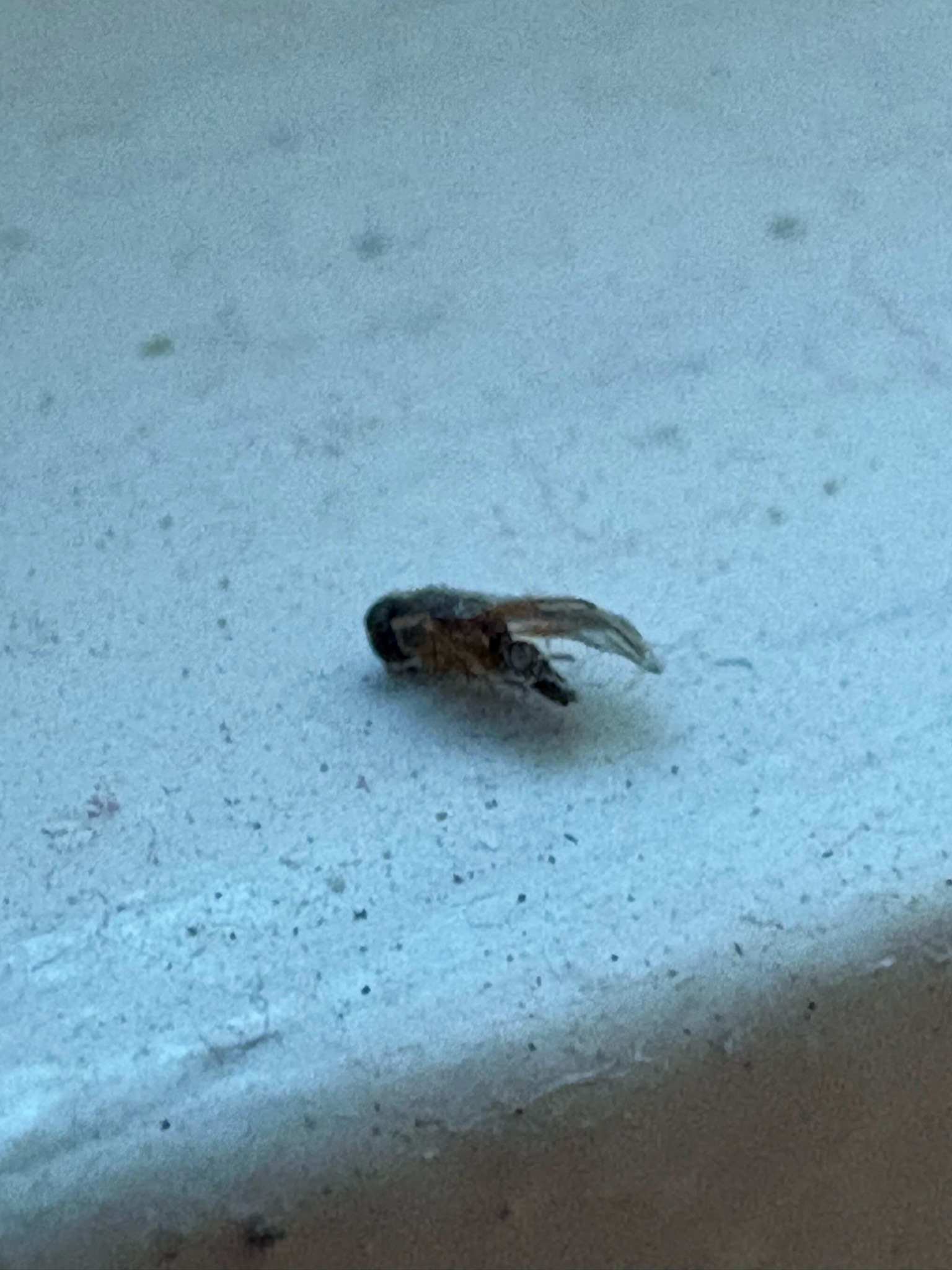
Community identification
Honey Bee (Decomposed/Damaged Specimen)
Apis mellifera
- Order & Family
- Hymenoptera: Apidae
- Size
- 12 - 15 mm (0.5 - 0.6 inches)
Natural Habitat
Gardens, meadows, forests, agricultural fields, and urban areas near flowering plants
Diet & Feeding
Adults feed on nectar and pollen; larvae feed on royal jelly, bee bread, and honey provided by workers
Behavior Patterns
Highly social insects living in colonies with a single queen, thousands of female workers, and male drones. Communicates via waggle dances to share food location information. Highly active during warm daylight hours
Risks & Benefits
Benefits: Crucial pollinators for agricultural crops, wild plants, and ecosystems; produces honey and beeswax. Risks: Females possess a sting used for colony defense which can cause pain, localized swelling, or severe allergic reactions (anaphylaxis) in sensitive individuals.