
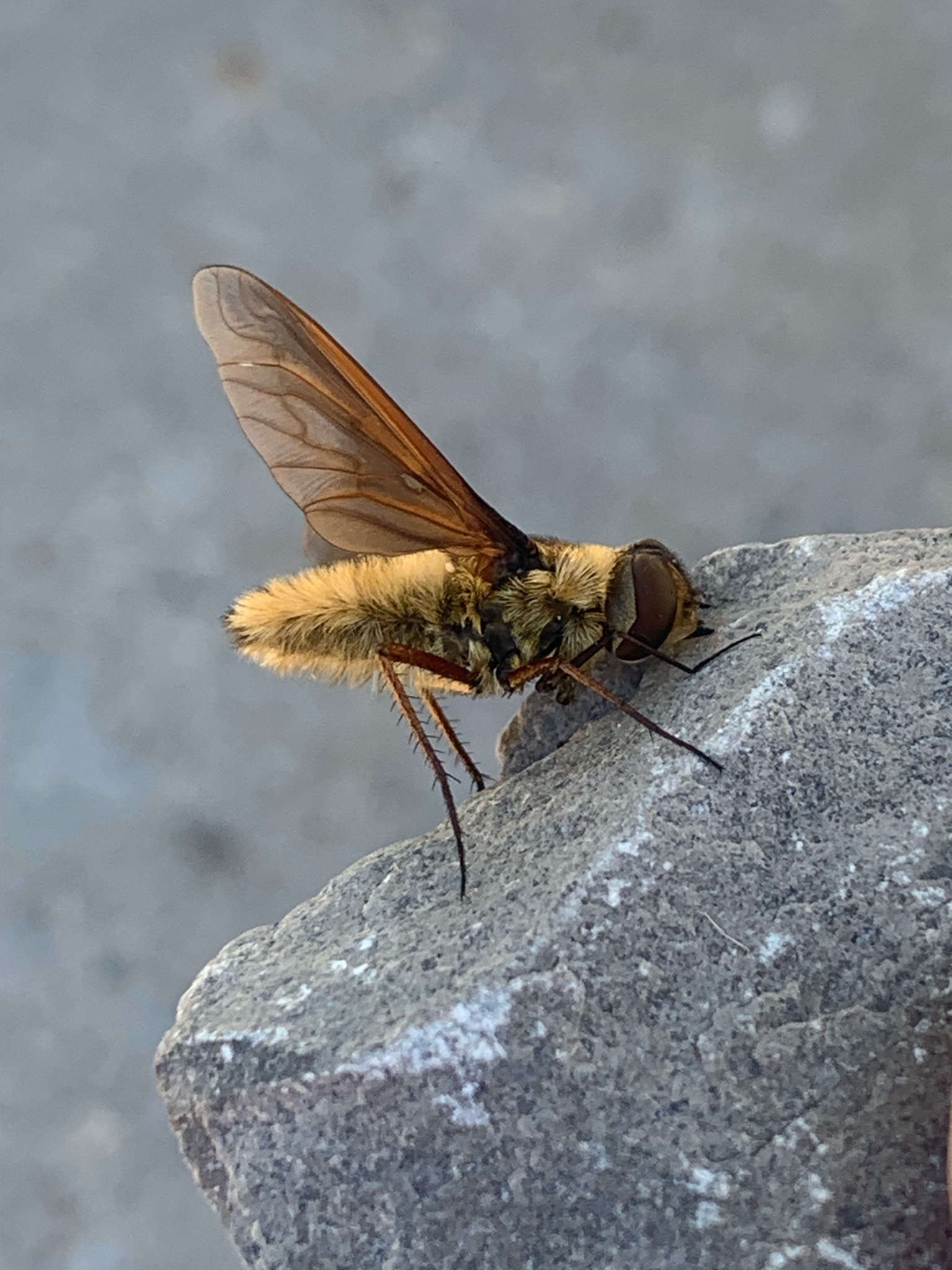
Community identification
Bee fly
Bombylius major
- Order & Family
- Diptera (true flies), Bombyliidae (bee flies)
- Size
- About 10–16 mm (0.4–0.6 in) long, excluding the wings.
Natural Habitat
Sunny, open habitats including gardens, woodland edges, meadows, and rocky areas; adults commonly rest on warm surfaces and visit flowers.
Diet & Feeding
Adults feed mainly on flower nectar and sometimes pollen using a long proboscis. Larvae are parasitoids or predators of solitary bee and wasp larvae and their provisions.
Behavior Patterns
Adults hover or dart rapidly while foraging, often mimicking bees with a fuzzy body and patterned wings. Females scatter eggs near solitary-bee nests; larvae enter nests and consume the host or its food stores.
Risks & Benefits
Harmless to people and unable to sting; the pictured species does not bite. Adults pollinate flowers, while larvae regulate solitary bee and wasp populations.