
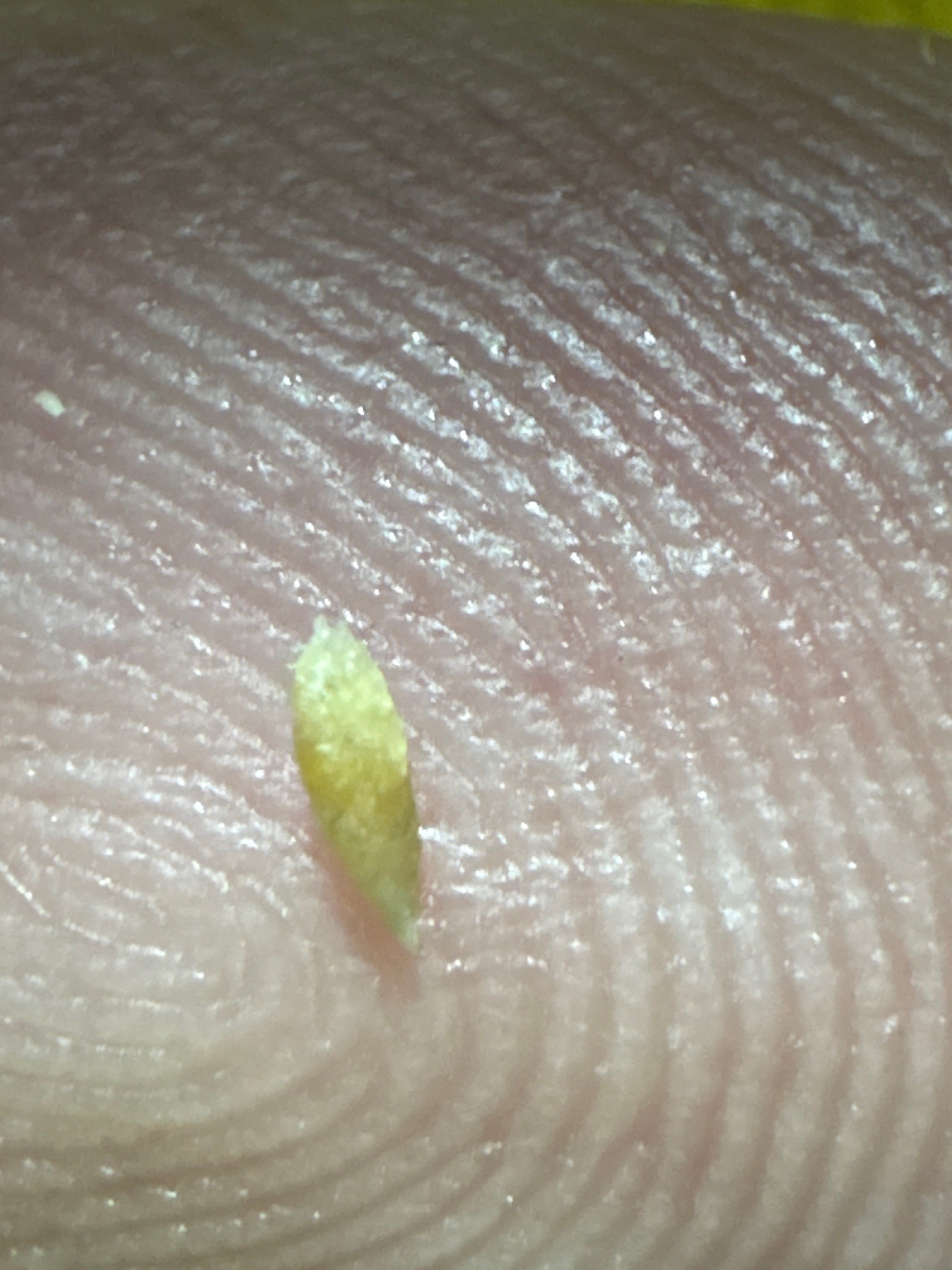
Community identification
Green lacewing larva (aphid lion), likely carrying debris
Chrysopidae; species indeterminate
- Order & Family
- Neuroptera, family Chrysopidae
- Size
- Larvae are typically 3–10 mm long; this individual appears about 5–7 mm.
Natural Habitat
Vegetation, gardens, crops, and wooded areas where aphids and other small arthropods occur.
Diet & Feeding
Predatory larvae pierce and suck aphids, mites, whiteflies, thrips, and insect eggs. Adults generally eat nectar, pollen, honeydew, or small prey, depending on species.
Behavior Patterns
Larvae are active hunters and may camouflage themselves with plant debris, shed skins, or prey remains carried on their backs. They later spin a spherical silken cocoon and emerge as winged adults.
Risks & Benefits
Harmless and beneficial: lacewings provide natural biological control of crop and garden pests. A bite is uncommon and causes, at most, minor localized irritation.