
Community identification
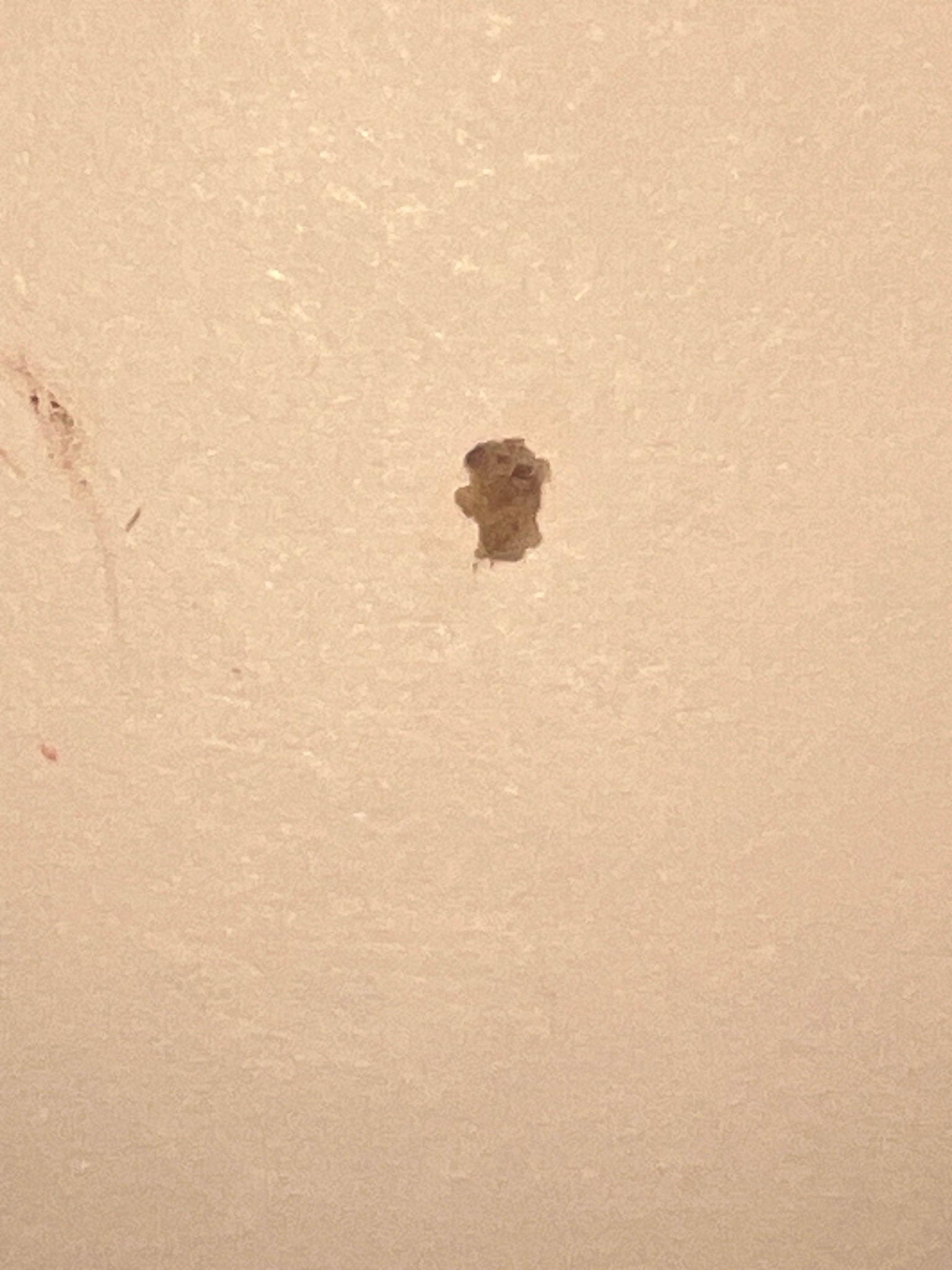
Unidentified small moth or moth case
Not determinable from the photograph
- Order & Family
- Likely Lepidoptera; family cannot be determined
- Size
- Approximately 3–6 mm in the image; true body size cannot be measured reliably from the photograph.
Natural Habitat
The object appears attached to an indoor wall, where small household moths or their portable cases may occur; species identification requires a clearer, closer image.
Diet & Feeding
Case-bearing larvae commonly consume lint, hair, feathers, wool, and other keratin-containing debris; adult moths generally do not feed.
Behavior Patterns
Larvae hide in silk or debris cases and crawl over walls or ceilings before pupating; adults are typically nocturnal and attracted to light.
Risks & Benefits
Usually harmless to people, but larvae can damage wool, fur, feathers, carpets, and stored textiles. They also help decompose organic debris.