
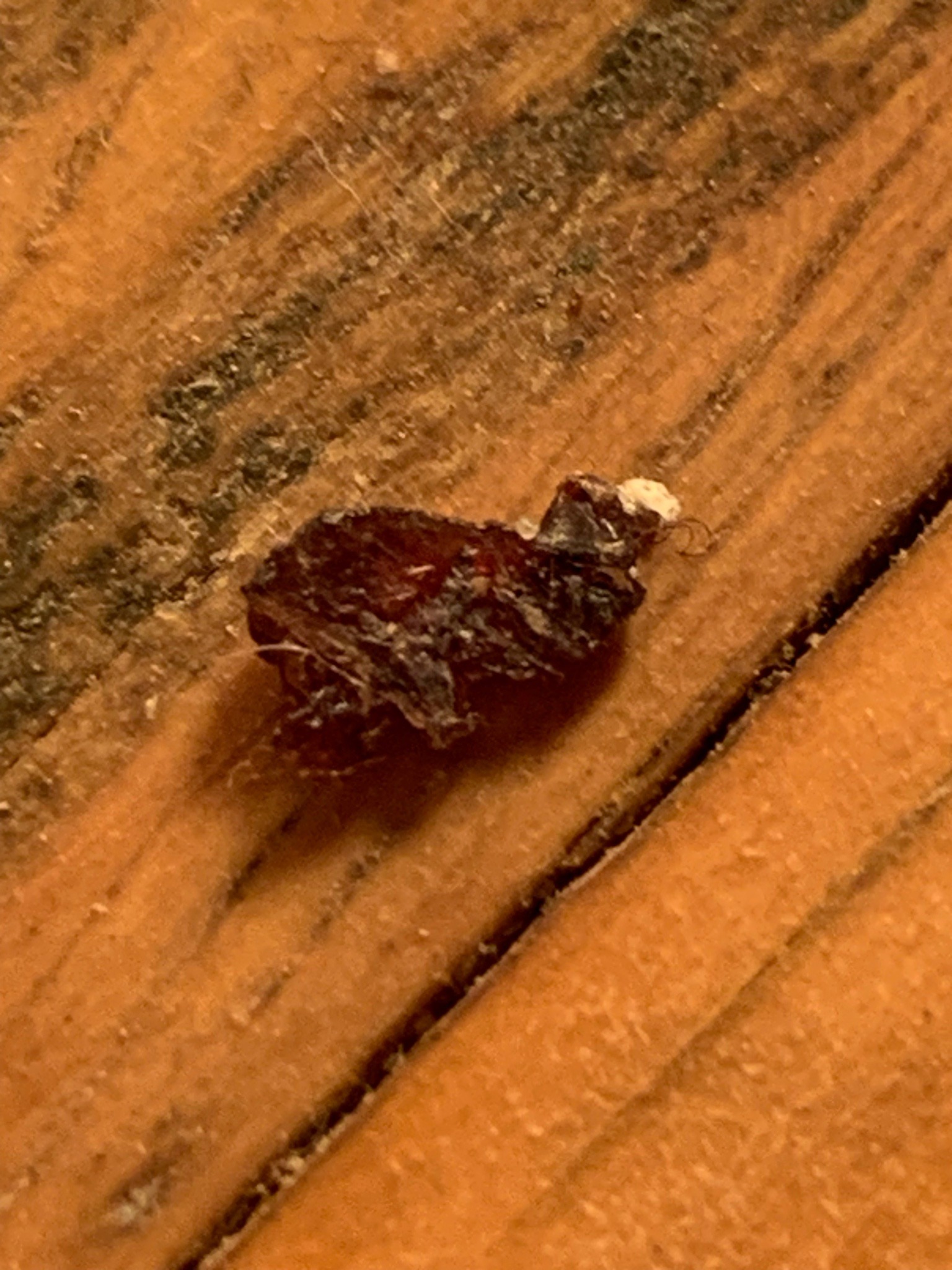
Community identification
Masked hunter (nymph), likely
Reduvius personatus
- Order & Family
- Hemiptera; Reduviidae (assassin bugs)
- Size
- Nymphs are about 3–8 mm; adults typically reach 17–22 mm.
Natural Habitat
Dry, sheltered places in buildings, including basements, wall voids, attics, and woodpiles; widespread in temperate regions.
Diet & Feeding
Predatory; uses a piercing-sucking beak to inject enzymes and consume insects, spiders, and other arthropods.
Behavior Patterns
Immature nymphs camouflage themselves by coating their bodies with dust and debris, producing the fuzzy appearance shown. They are mainly nocturnal and develop through several nymphal stages before becoming winged adults.
Risks & Benefits
Helpful indoors because it preys on flies, cockroaches, moths, and other pests. It is not aggressive, but can inflict a painful defensive bite if handled; the bite is not medically significant for most people.