
Community identification
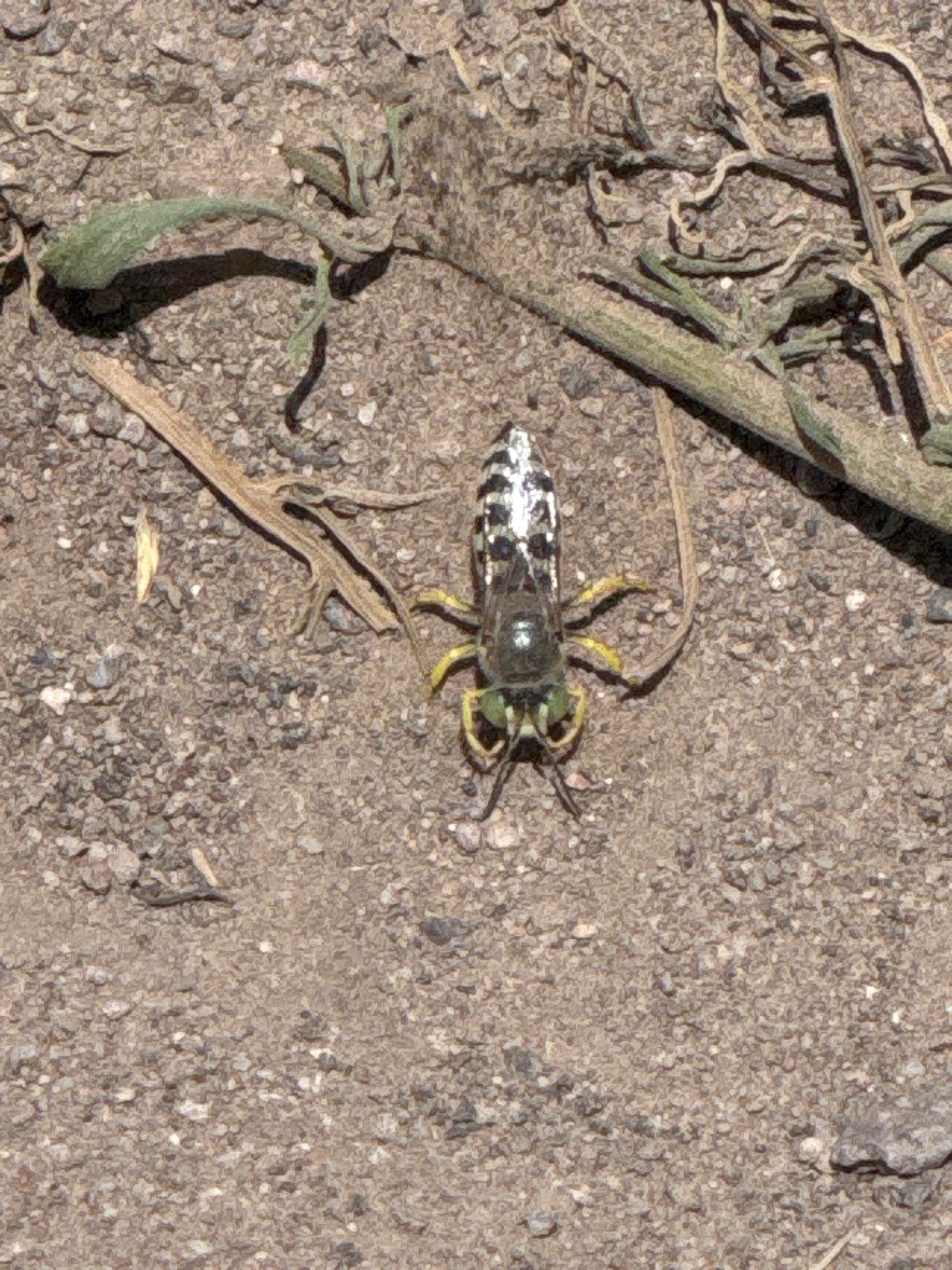
Sand Wasp
Bembix americana
- Order & Family
- Hymenoptera: Crabronidae
- Size
- 15 - 20 mm (0.6 - 0.8 inches)
Natural Habitat
Sandy soils, beaches, dunes, and open gardens near bare sandy ground
Diet & Feeding
Adults feed on flower nectar. Larvae are carnivorous and fed flies (Diptera) brought back by the female.
Behavior Patterns
Solitary burrowing wasps. Females dig tunnels in sandy soil to raise larvae, provisioning each nest cell with paralyzed flies. They are fast flyers and often hover low over sandy terrain.
Risks & Benefits
Highly beneficial naturally occurring pest control, especially for fly populations. Females possess a sting used to paralyze prey, but they are non-aggressive toward humans and rarely sting unless forcefully handled.