
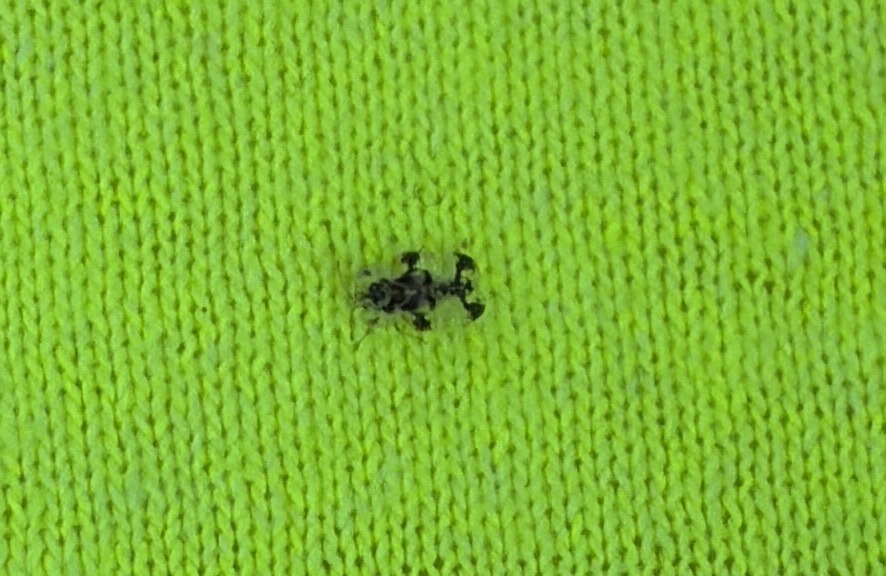
Community identification
Ant (possibly a small black ant)
Formicidae sp.
- Order & Family
- Hymenoptera; Formicidae
- Size
- Approximately 2–5 mm based on the fabric scale; exact size is uncertain.
Natural Habitat
Common in soil, leaf litter, lawns, gardens, buildings, and other sheltered terrestrial sites. The image is too indistinct for species-level identification.
Diet & Feeding
Many species are omnivorous, feeding on sugars, dead insects, seeds, and small invertebrates. Workers may collect honeydew from aphids.
Behavior Patterns
Social insects living in colonies with queens, workers, and sometimes winged reproductive forms. Workers forage cooperatively and communicate primarily through pheromones.
Risks & Benefits
Usually harmless and beneficial, recycling nutrients, aerating soil, dispersing seeds, and preying on other insects. Some species can bite or sting, contaminate food, or invade buildings.