
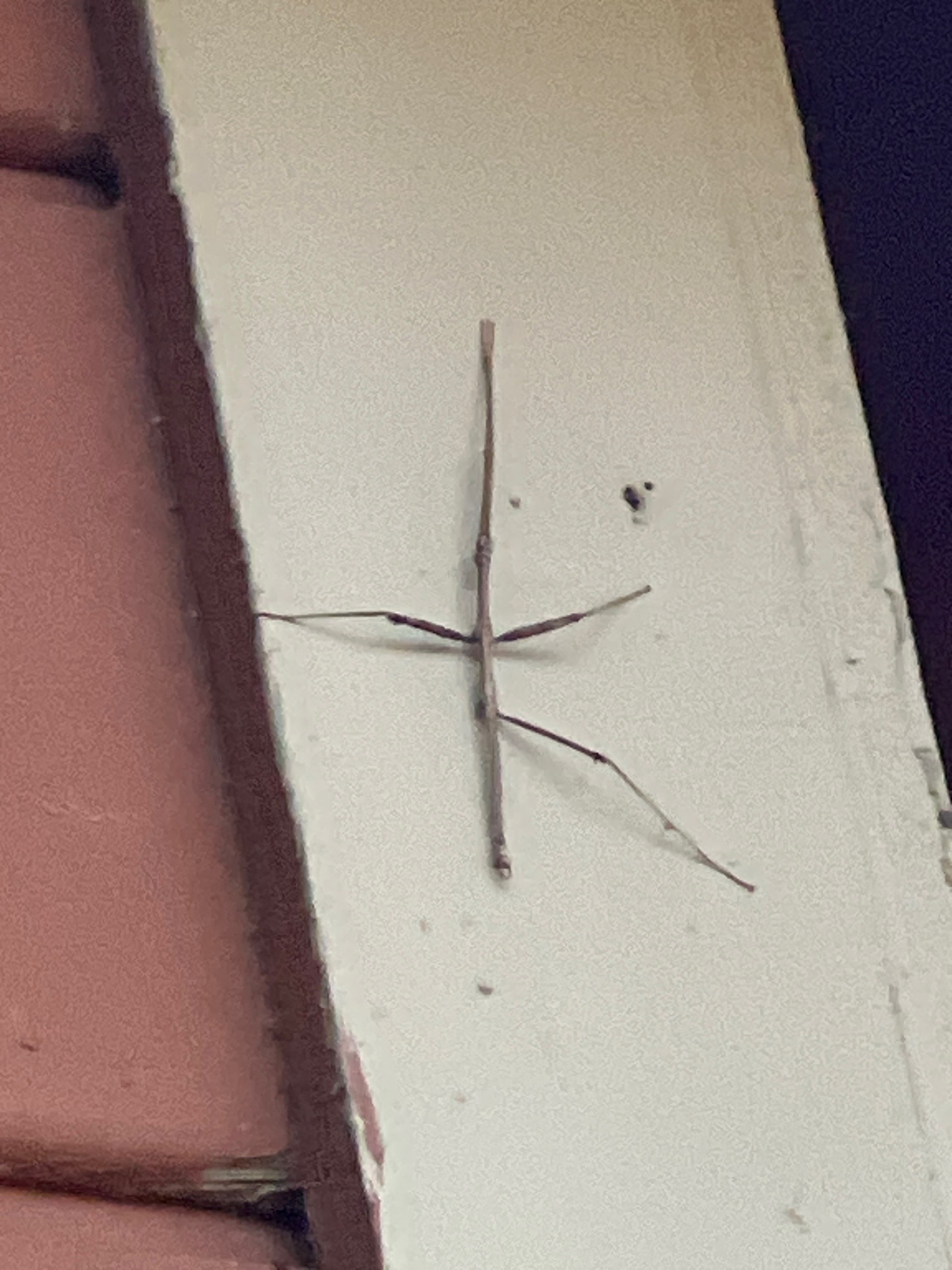
Community identification
Walkingstick (stick insect)
Likely *Diapherodes* species or another local phasmid; species-level identification is not reliable from this image
- Order & Family
- Phasmatodea; family likely Phasmatidae
- Size
- Approximately 5–15 cm (2–6 in), depending on species; this individual appears about 10 cm long.
Natural Habitat
Vegetation, shrubs, trees, and gardens in warm regions; often rests motionless on walls or branches.
Diet & Feeding
Herbivorous, feeding primarily at night on leaves from trees and shrubs.
Behavior Patterns
Slow-moving and highly camouflaged, often swaying like a twig; many species are nocturnal and can regenerate lost legs. Reproduction may be sexual or, in some species, parthenogenetic.
Risks & Benefits
Harmless to humans and nonvenomous; occasional leaf feeding may affect ornamental plants. Walkingsticks are part of food webs and contribute to nutrient cycling.