
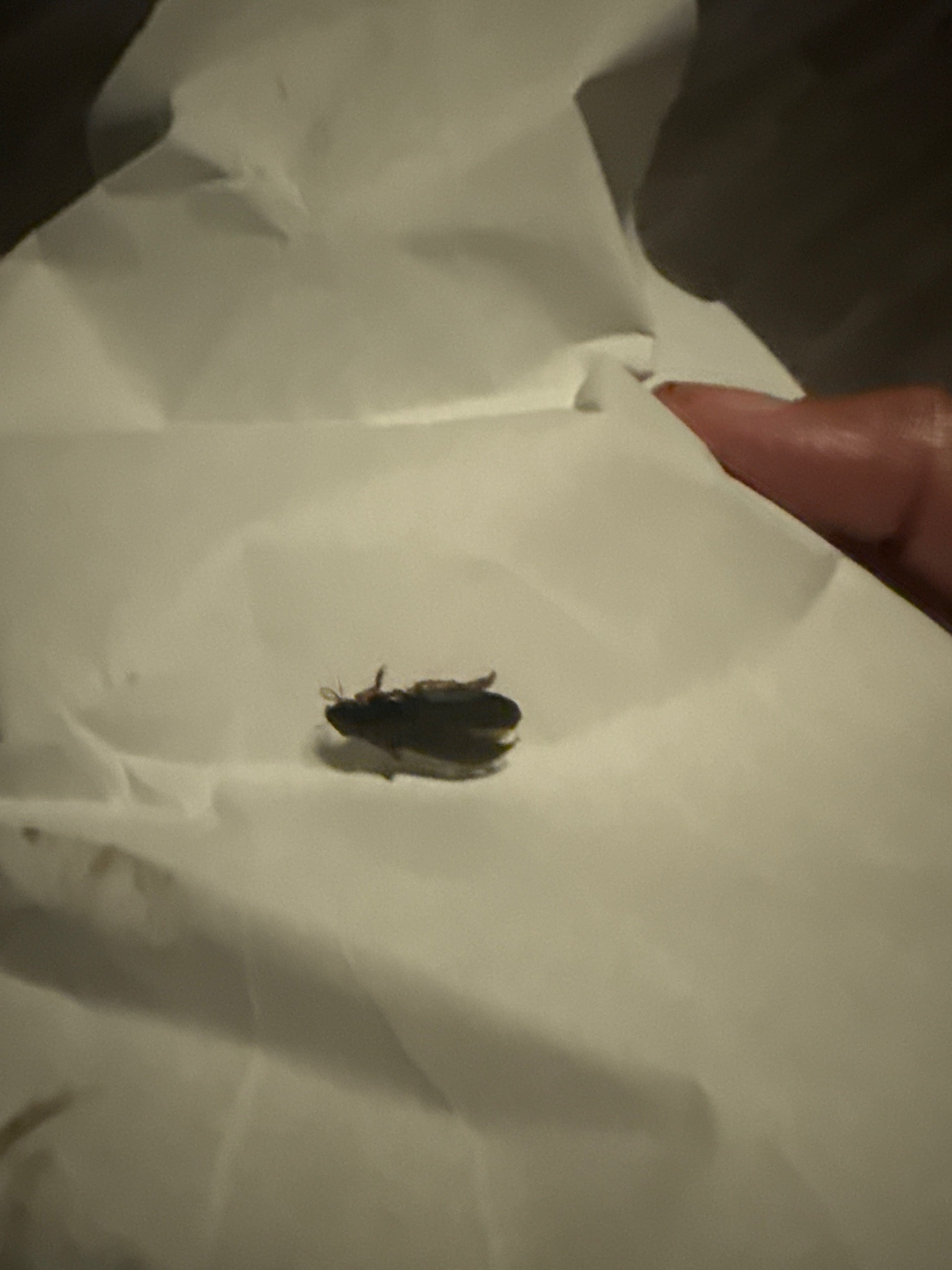
Community identification
Darkling beetle (likely a mealworm beetle)
Tenebrio sp., possibly Tenebrio molitor
- Order & Family
- Coleoptera; Tenebrionidae
- Size
- About 12–20 mm long, depending on species.
Natural Habitat
Stored grain, flour, animal feed, compost, and other dry, decaying organic material; adults may wander indoors.
Diet & Feeding
Larvae consume grains, flour, cereals, and decaying organic matter; adults feed on similar materials and may scavenge.
Behavior Patterns
Mostly nocturnal and ground-dwelling. Complete metamorphosis occurs through egg, larva (mealworm), pupa, and adult stages; adults are generally slow-moving and may emit an odor when disturbed.
Risks & Benefits
Generally harmless to people and pets, though infestations can contaminate stored food. Larvae are useful as feed for birds, reptiles, and fish, and darkling beetles help recycle organic material.