
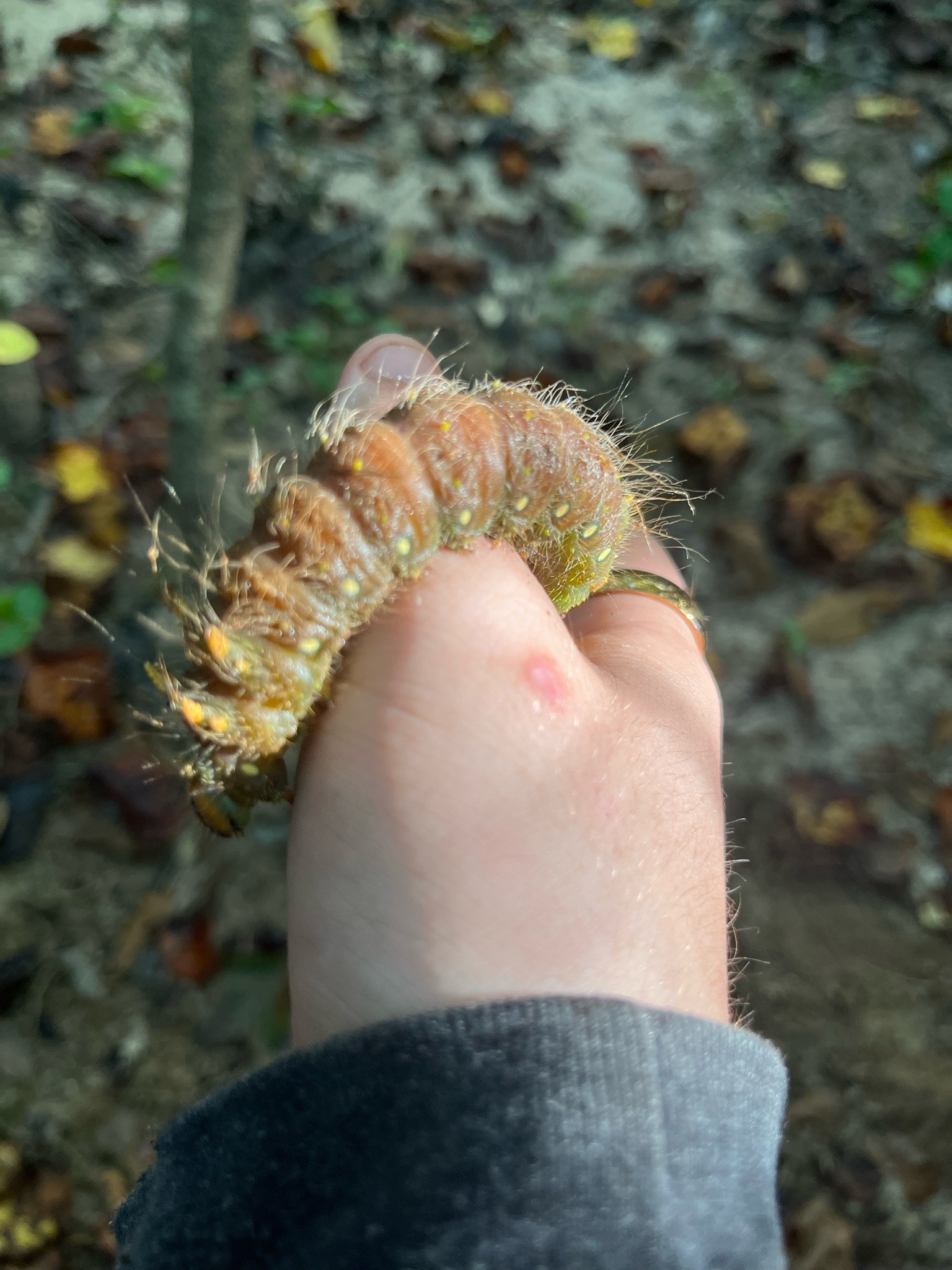
Imperial Moth Caterpillar
Eacles imperialis
- Order & Family
- Lepidoptera: Saturniidae
- Size
- 75 to 100 mm (3 to 4 inches) when fully grown
Natural Habitat
Deciduous and mixed forests, woodlands, parks, and suburban areas across eastern North America.
Diet & Feeding
Herbivorous larva; feeds on foliage from a wide variety of trees including pine, oak, maple, sweetgum, birch, sassafras, and walnut.
Behavior Patterns
Caterpillars undergo dramatic color changes through instars, ranging from green to reddish-brown or dark brown before pupation. When mature, they crawl down to the ground to burrow into the soil or leaf litter to pupate. The adult moths do not feed and live only about a week to mate and lay eggs.
Risks & Benefits
Risks: While they possess fine hairs, they are not venomous or stinging, though sensitive individuals might experience mild contact irritation. They can consume tree leaves but rarely cause serious damage. Benefits: Acts as an important native herbivore and food source for birds, small mammals, and predatory insects; adult moths are striking native wildlife.