
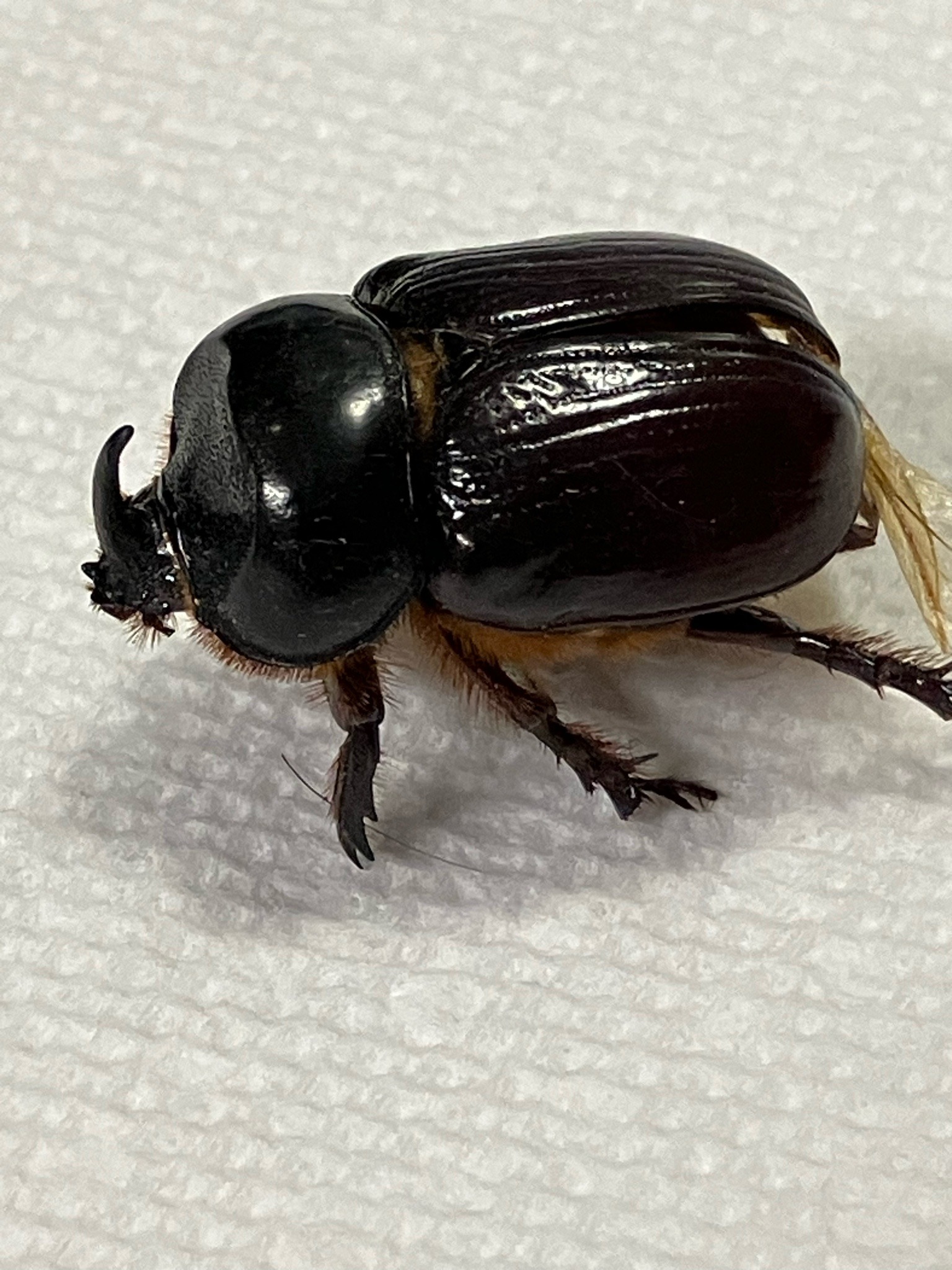
Community identification
Hercules beetle (female or related rhinoceros beetle)
Dynastes sp. (likely Dynastes tityus)
- Order & Family
- Coleoptera; Scarabaeidae (subfamily Dynastinae)
- Size
- About 25–60 mm long, depending on species and sex; females are typically shorter and lack the male’s large horn.
Natural Habitat
Woodlands, forests, and wooded suburban areas, especially around decaying logs and leaf litter in eastern North America.
Diet & Feeding
Larvae consume rotting wood and organic soil debris. Adults mainly eat sap, fruit, and plant juices, often feeding little.
Behavior Patterns
Mostly nocturnal and attracted to lights; adults emerge in warm months, while larvae develop for one to two years in decaying wood or soil.
Risks & Benefits
Harmless to people and does not sting or bite defensively. Larvae aid decomposition and nutrient cycling; adults may occasionally damage soft fruit.