
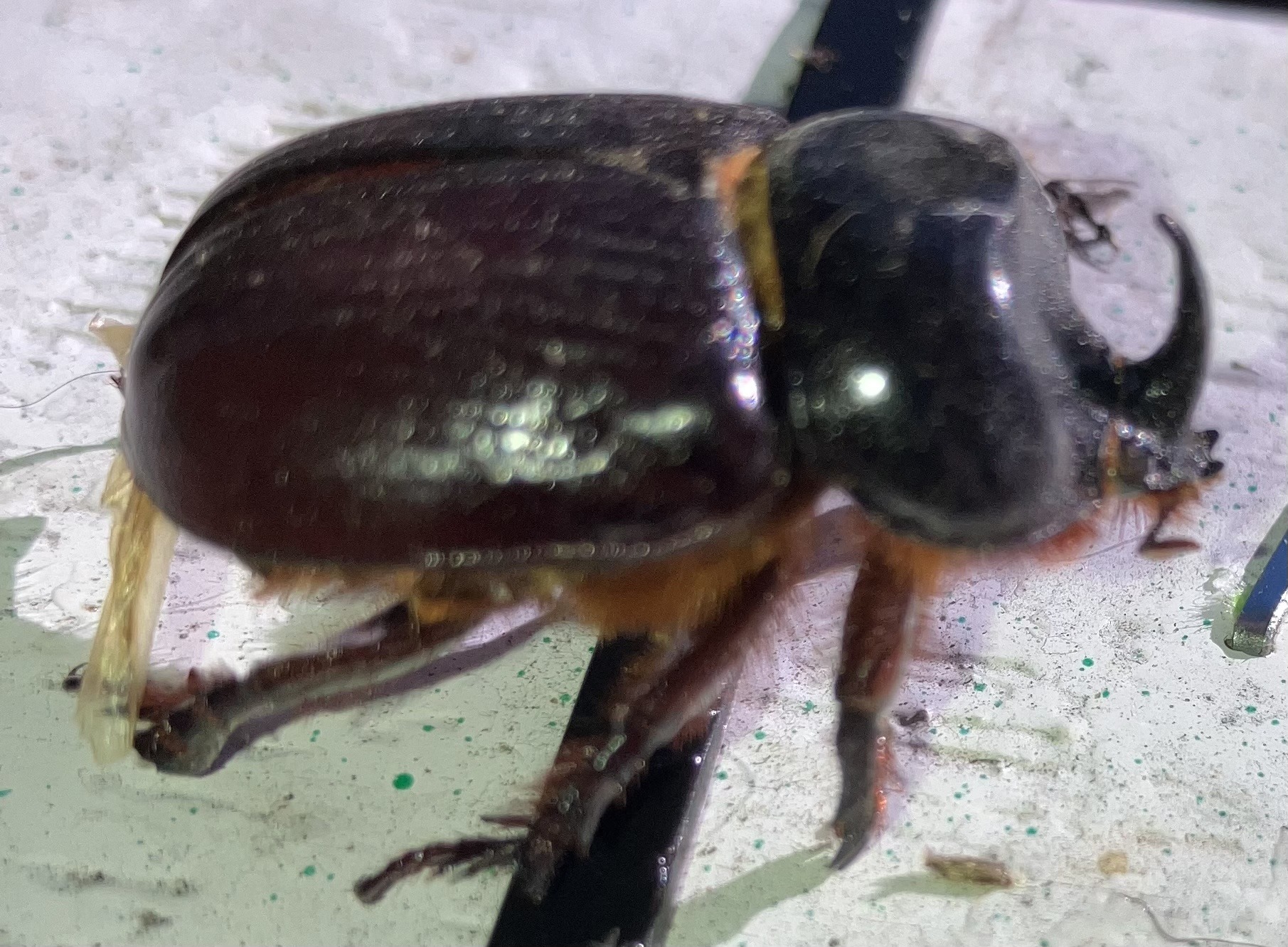
Community identification
Hercules beetle (female), likely
Dynastes hercules
- Order & Family
- Coleoptera; Scarabaeidae (subfamily Dynastinae)
- Size
- Adults typically measure 5–17 cm, including the male’s horn; females are usually about 5–8 cm and lack the large horn.
Natural Habitat
Tropical forests of Central and South America and the Caribbean, especially humid lowland and montane forest. Adults are often found near lights at night.
Diet & Feeding
Larvae feed on decaying wood and organic debris. Adults mainly consume fruit, tree sap, and occasionally nectar.
Behavior Patterns
Nocturnal and generally solitary; adults fly strongly and are attracted to lights. Larvae develop in rotting logs for roughly one to two years before pupating.
Risks & Benefits
Harmless to people, though adults can pinch if restrained. Larvae help decompose wood and recycle nutrients; the species is also valued in biodiversity research and ecotourism.