
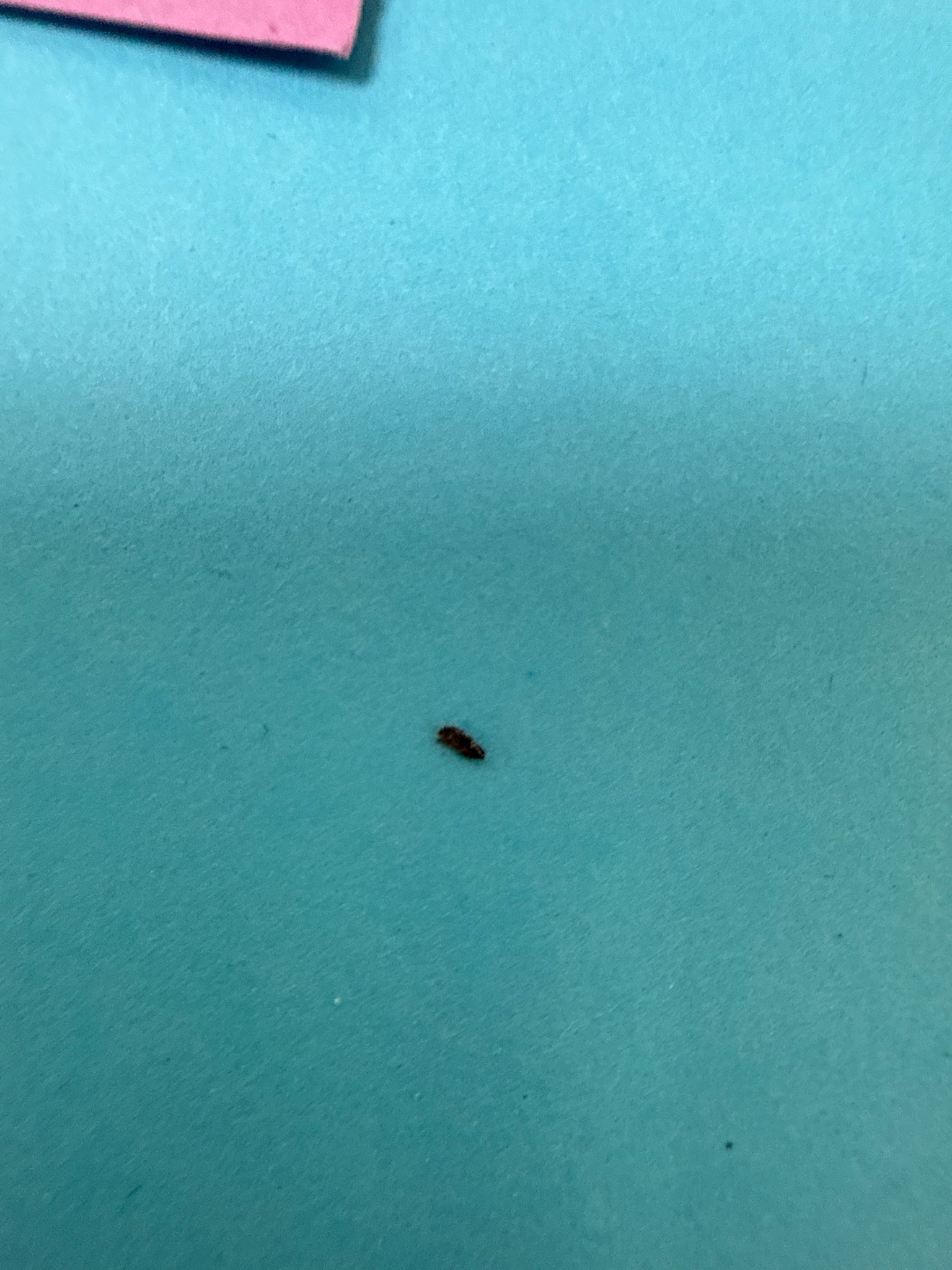
Cat Flea / Flea
Ctenocephalides felis
- Order & Family
- Siphonaptera, Pulicidae
- Size
- 1.5 to 3.3 mm (1/16 to 1/8 inch)
Natural Habitat
Indoors on domestic pets, carpets, bedding, and furniture, as well as outdoors in shaded areas where host animals rest.
Diet & Feeding
Adults feed on the blood of mammals (primarily cats, dogs, and humans). Larvae feed on organic debris, including flea dirt (fecal blood from adults).
Behavior Patterns
Wingless insects that are laterally flattened to move easily through host fur. They are remarkable jumpers, using specialized hind legs to jump onto hosts. Females lay eggs directly on the host, which then drop off into the surrounding environment.
Risks & Benefits
Risks: Their bites cause itchy, red welts and allergic dermatitis in pets and humans. Heavy infestations can cause anemia in young animals. They can also transmit tapeworms (Dipylidium caninum) and flea-borne typhus. Benefits: None to humans; serve as a food source for spiders, ants, and predatory mites in nature.