
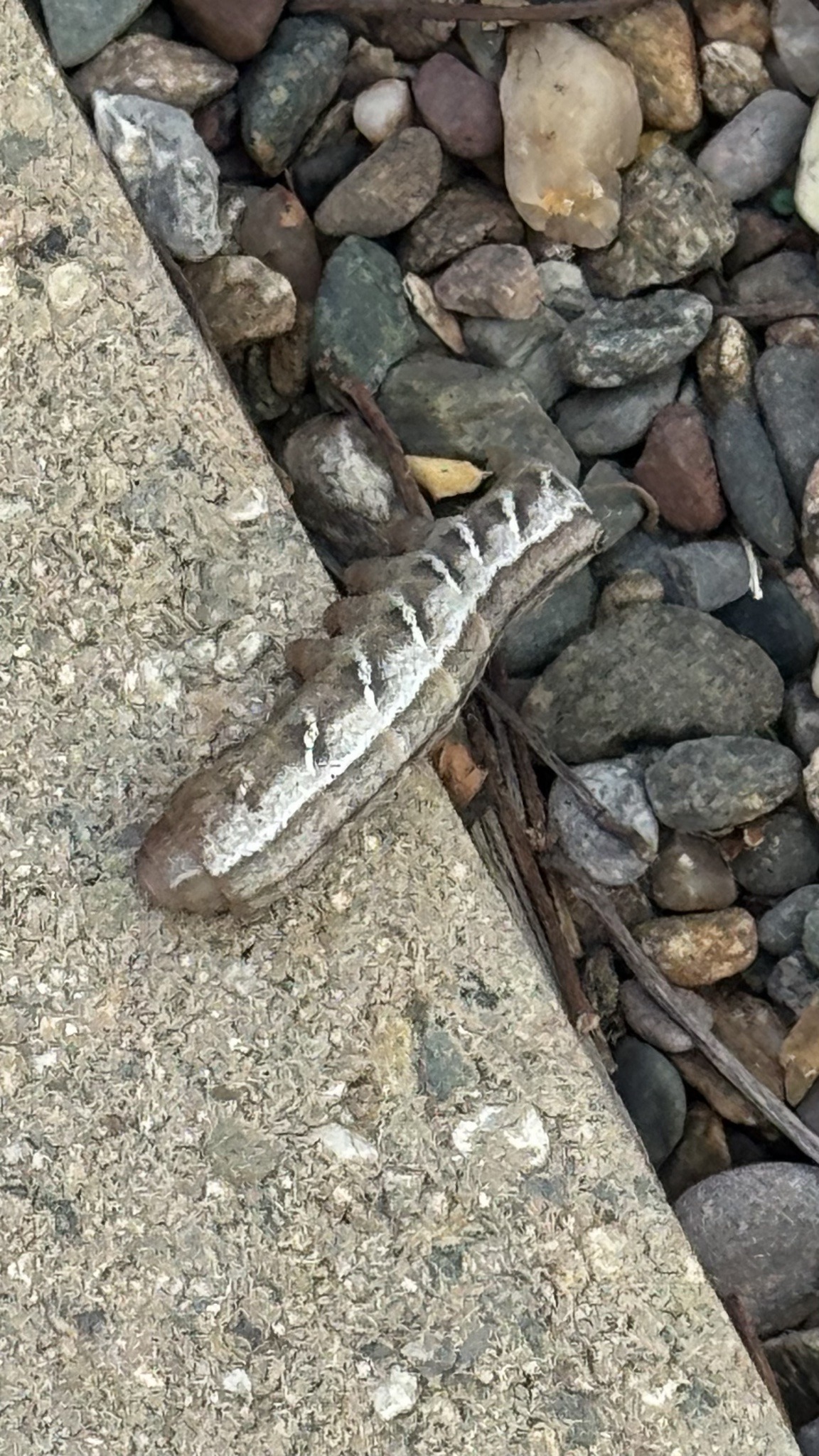
Community identification
Banded sphinx moth caterpillar (likely)
Eumorpha fasciatus
- Order & Family
- Lepidoptera; family Sphingidae
- Size
- Typically 50–70 mm (2–2.75 in) long when mature.
Natural Habitat
Moist, vegetated habitats such as stream edges, gardens, woodland margins, and wetlands. Caterpillars often rest on soil, rocks, or pavement while seeking pupation sites.
Diet & Feeding
Larvae chew leaves, especially plants in the evening primrose family (Onagraceae), including willowherb and evening primrose. Adults feed on nectar from flowers.
Behavior Patterns
Mostly nocturnal; larvae may hide during the day and wander to pupate underground or beneath debris. Several generations can occur in warm climates.
Risks & Benefits
Harmless to people and nonvenomous; it does not sting. It is a native pollinator as an adult and a food source for birds and other predators, though larvae can occasionally defoliate host plants.