
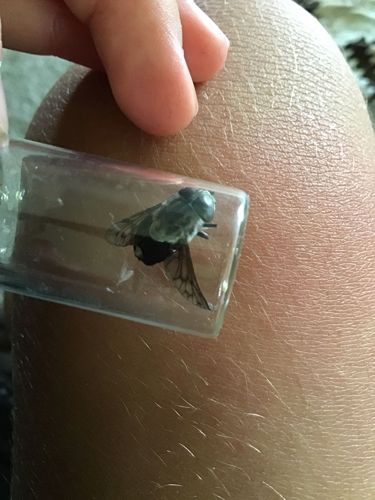
Horse Fly
Tabanus spp. (many species within the genus)
- Order & Family
- Order: Diptera, Family: Tabanidae
- Size
- Typically 10-30 mm (0.4-1.2 inches) in length, varying by species.
Natural Habitat
Horse flies are typically found near bodies of water such as ponds, lakes, marshes, and swamps, as their larvae develop in aquatic or semi-aquatic environments. Adults are often found in pastures, woodlands, and open fields, especially where livestock or wildlife are present.
Diet & Feeding
Adult female horse flies are sanguivorous (feed on blood) of mammals, including humans, livestock, and wildlife. Adult males feed on nectar, plant sap, and honeydew. Larvae are carnivorous, preying on other insect larvae and small invertebrates in their aquatic or semi-aquatic environments.
Behavior Patterns
Horse flies are strong fliers and are most active during warm, sunny days, especially in hot, humid weather. They are attracted to large, dark, moving objects and carbon dioxide. Females require a blood meal for egg development, while males feed on nectar. Larvae are aquatic or semi-aquatic and are predatory, feeding on small invertebrates.
Risks & Benefits
Risks: Horse flies deliver painful bites, which can cause significant irritation, welts, and allergic reactions in sensitive individuals. They are mechanical vectors for several diseases, including anaplasmosis and equine infectious anemia, and can transmit tularemia. Their bites can stress livestock, leading to reduced weight gain and milk production. Benefits: Larvae play a role in controlling populations of other aquatic invertebrates. Adult flies can act as pollinators to a minor extent when feeding on nectar.