
Community identification
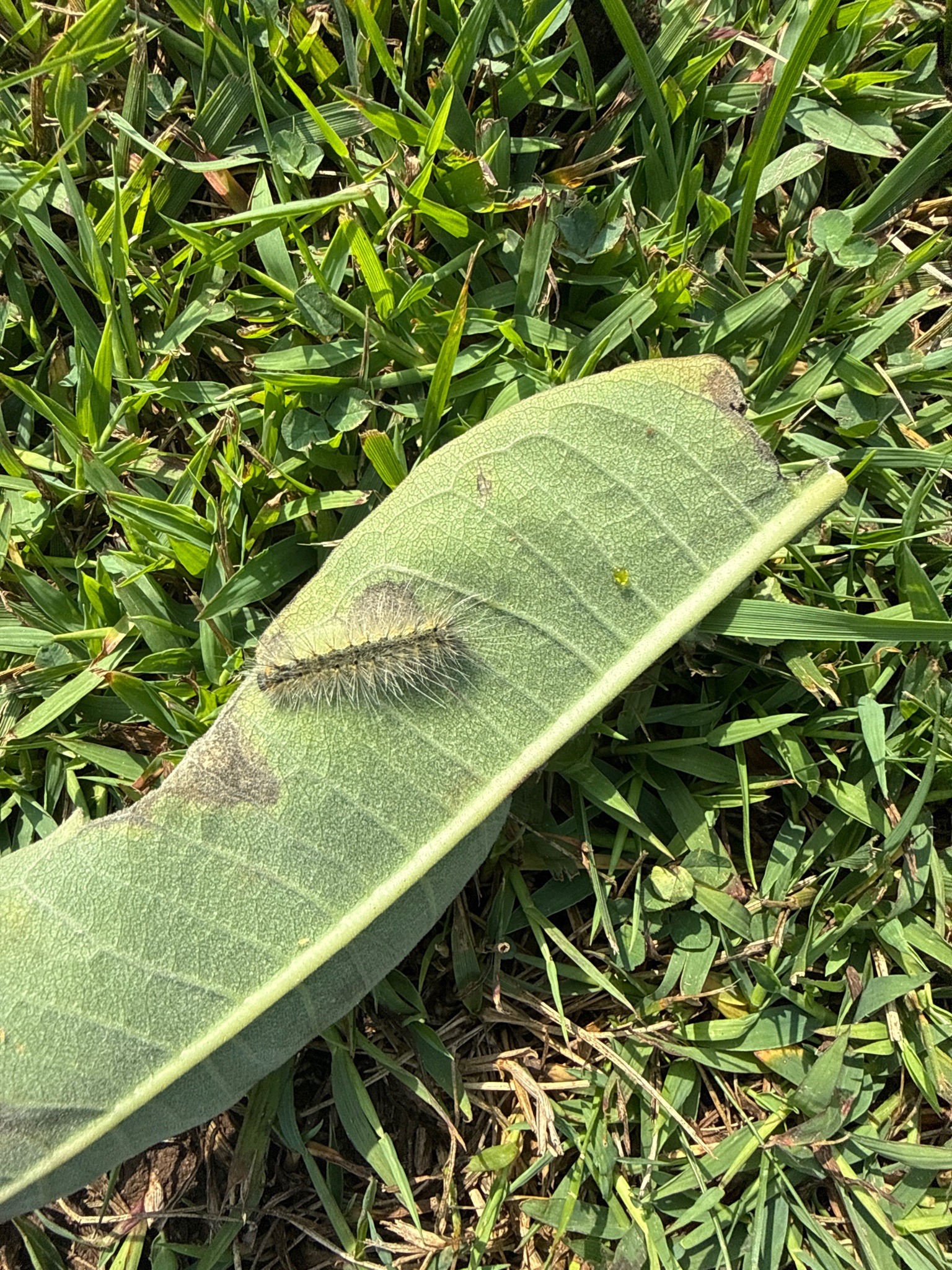
Bagworm moth larva (case-bearing caterpillar)
Likely Psychidae species; exact species cannot be determined from the image
- Order & Family
- Lepidoptera, family Psychidae
- Size
- Larvae commonly measure about 5–30 mm, depending on species and development.
Natural Habitat
Vegetated areas, gardens, forests, and ornamental plants, especially where host foliage is abundant.
Diet & Feeding
The caterpillar feeds on leaves, including the apparent broadleaf host here, while carrying a portable case made from silk and plant fragments.
Behavior Patterns
Larvae remain camouflaged in their cases and extend only the head and thorax to feed or move. Mature larvae attach the case to vegetation, pupate inside, and adults emerge; females of many species are wingless.
Risks & Benefits
Usually harmless to people and animals. Large populations can defoliate ornamental plants or trees, while larvae and adults contribute to food webs.